LISTEN
EXPLORE
THE CAROLS
All twenty-four carols, one for each day of Advent, in the four sequences of the book: The Hope, The Message, The Baby, and The King of Kings. Each carol carries its credits and soloists from the printed booklet, and the note Antony Pitts wrote for it.
- The Hope
-
1O come, o come, Emmanuel5:58
Music: ?13th-century, arranged by Antony Pitts. Words: after the Advent ‘O’ Antiphons, John M. Neale and Antony Pitts.
O come, o come, Emmanuel is a paraphrase of the seven Advent ‘O’ Antiphons in an arrangement coloured by the gradual developments in Western harmony over the last two thousand years. Antony Pitts
-
2Of the Father's heart begotten4:37
Music: Piae Cantiones (1582), arranged by Antony Pitts. Words: after Prudentius, John M. Neale and Henry Baker, adapted by Antony Pitts.
Of the Father's heart begotten contrasts the eternal nature of the Son of God with the outworking of prophecy at a specific point in Time; the tune is set alternately against a simple repeating bass-line and in three-, two- and four-part canon. Antony Pitts
-
3O quickly come2:51
Music: Antony Pitts. Words: Laurence Tuttiett.
O quickly come is a new carol in a lively 7/8 rhythm, reiterating with greater urgency the pleas for the King to come. Antony Pitts
-
4Verbum Patris umanatur, O, O1:17
Music: ?13th-century, arranged by Antony Pitts. Words: Anon. (?13th-century), translated by David Pitts.
Verbum Patris umanatur, O, O is a re-working of a polyphonic mediaeval carol, resounding with joy at the extraordinary event of the Incarnation – God becoming Man. Antony Pitts
-
5Lo! He comes4:29
Music: T. Olivers and M. Madan, arranged by Antony Pitts. Words: after John Cennick, Charles Wesley.
This Advent sequence is crowned with the famous hymn Lo! He comes in which the hopes of the ancient prophets of Israel and the Church are ultimately rewarded. Antony Pitts
- The Message
-
6The holly and the ivy2:41
Music: collected by C.J. Sharp and Antony Pitts, arranged by Antony Pitts. Words: Trad., collected by Cecil J. Sharp and Antony Pitts.
The holly and the ivy finds hints in the natural world of Jesus's suffering on the cross, with two traditional tunes intertwined (the little-known tune was written down from a tape in the BBC archives). Antony Pitts
Sung by: solo, Joanna Forbes; duet, Rebecca Hickey and Francis Brett; duet, Alexander L'Estrange and Richard Eteson; duet, Kathryn Oswald and Alexander Hickey; duet, Joanna Forbes and Simon Grant.
-
7Lo, there a Rose is blooming2:24
Music: ?Praetorius, arranged by Antony Pitts. Words: after the German, Antony Pitts and John M. Neale.
The symbolism of plants and their flowers is further explored in Lo, there a Rose is blooming. Antony Pitts
Sung by: quartet, Rebecca Hickey and Alexander L'Estrange and Richard Eteson and Simon Grant.
-
8Alleluya – a new work6:05
Music: English, 15th-century, arranged by Antony Pitts. Words: Anon. (15th-century), adapted by Antony Pitts.
Alleluya – a new work is a fresh take on a late-mediaeval carol with two angels answering each other across the heavens (here the husband-and-wife team of Joanna Forbes and Alexander L'Estrange). Antony Pitts
Sung by: duet, Joanna Forbes and Alexander L'Estrange; organ, Antony Pitts.
-
9Ding! dong! merrily on high1:39
Music: J. Tabourot, arranged by Antony Pitts. Words: G.R. Woodward.
The rollicking tune of Ding! dong! merrily on high is put through its paces as the bells of heaven peal in celebration at the birth of the Saviour. Antony Pitts
-
10While shepherds watched2:32
Music: C. Tye and G. Kirbye, arranged by Antony Pitts. Words: Nahum Tate (?).
While shepherds watched is sung to one of its most familiar melodies, but with a rough-hewn arrangement vaguely reminiscent of shape-note and other popular choral styles. Antony Pitts
Sung by: duet, Kathryn Oswald and Simon Grant.
-
11The Song of Angels1:16
Music: O. Gibbons, arranged by Antony Pitts. Words: Anon..
Following on immediately is The Song of Angels – one of Orlando Gibbons' exquisite tunes from Hymnes and Songs of the Church. Antony Pitts
Sung by: solo, Rebecca Hickey.
-
12Hark! the herald angels sing2:50
Music: F. Mendelssohn, arranged by Antony Pitts. Words: Charles Wesley, adapted by George Whitefield and Martin Madan.
All join together for Hark! the herald angels sing in which the breathtaking consequences of the Christmas story are elegantly summarised. Antony Pitts
- The Baby
-
13Silent night3:53
Music: F. X. Gruber, arranged by Antony Pitts. Words: after Joseph Mohr, John F. Young.
Silent night is sung as a lullaby, with the opening motif of the tune mirrored at various speeds in the other voices. Antony Pitts
Sung by: solo, Richard Eteson.
-
14Away in a manger2:19
Music: W.J. Kirkpatrick, arranged by Antony Pitts. Words: William J. Kirkpatrick and Charles H. Gabriel.
Away in a manger, one of the most popular children's carols, reflects the humble setting of Jesus' birth. Antony Pitts
-
15Baby Jesus, hush! now sleep3:33
Music: Czech Trad., arranged by Antony Pitts. Words: after the Czech Trad., Antony Pitts.
Another lullaby follows, and in the final verse points forward from the intimate tranquillity of mother and child to Calvary, where Mary will later see her son being executed: Baby Jesus, hush! now sleep. Antony Pitts
Sung by: solo, Joanna Forbes; duet, Joanna Forbes and Alexander L'Estrange.
-
16O little town of Bethlehem5:01
Music: John Michael Pitts, arranged by Antony Pitts. Words: Phillips Brooks.
The well-known words of O little town of Bethlehem are clothed with a new tune. Antony Pitts
-
17Jesu, the very thought is sweet4:50
Music: 17th-century, figured by J.S. Bach, realized by Antony Pitts. Words: (Jesu dulcis memoria) John M. Neale.
The classic chorale tune O Jesulein süss is newly-combined with the age-old words of Jesu dulcis memoria: Jesu, the very thought is sweet. Antony Pitts
-
18O come, all ye faithful4:02
Music: ?J.F. Wade (collector), arranged by Antony Pitts. Words: after Anon., F. Oakeley.
The sequence ends as the worshippers, both ancient and modern, meet to adore the new-born Saviour in O come, all ye faithful. Antony Pitts
- The King of Kings
-
19Personent hodie2:06
Music: Piae Cantiones (1582), arranged by Antony Pitts. Words: Piae Cantiones (1582), translated by David Pitts.
Personent hodie is notable for the repeated syllables (particularly the “vir” of “virgineo” in the first verse), and in the final verse includes the tune of the following track as an organ descant. Antony Pitts
-
20In dulci jubilo2:46
Music: M. Praetorius, J.S. Bach, and J. Stainer, arranged by Antony Pitts. Words: 14th-century (?), Valentin Triller, and Antony Pitts, translated by David Pitts.
In dulci jubilo is a post-modern collage of settings by Praetorius, J. S. Bach and Stainer, with similarly-juxtaposed words in Latin and English. Antony Pitts
-
21Good King Wenceslas1:50
Music: Piae Cantiones (1582), arranged by Antony Pitts. Words: John M. Neale.
Good King Wenceslas introduces a king with little relation to the Christmas story except for his Christ-like compassion; the musical setting is a straightforward response to the narrative. Antony Pitts
-
22We three kings of Orient are3:08
Music: J.H. Hopkins, arranged by Antony Pitts. Words: John Henry Hopkins.
In We three kings of Orient are the “three kings” introduce themselves one by one (the Gospel refers, in fact, to “wise men from the east”), and the three gifts point to Jesus as “King and God and sacrifice”. Antony Pitts
Sung by: solo, Joanna Forbes; solo, Kathryn Oswald; solo, Richard Eteson.
-
23I saw three ships come sailing in1:23
Music: English Trad., arranged by Antony Pitts. Words: Trad. (English).
I saw three ships come sailing in is an example of a carol that has weathered over time (in the case of the words, enough to obscure their original meaning) but the overall intent to rejoice is clear. Antony Pitts
Sung by: solos, Joanna Forbes and Francis Brett and Rebecca Hickey and Richard Eteson and Kathryn Oswald and Simon Grant and Alexander Hickey and Alexander L'Estrange.
-
24Hail to the Lord's Anointed5:42
Music: Antony Pitts. Words: after Psalm 72, James Montgomery.
The sequence closes with a carol marrying traditional words (based on Psalm 72) with a recent tune: Hail to the Lord's Anointed. Antony Pitts
THE STORY
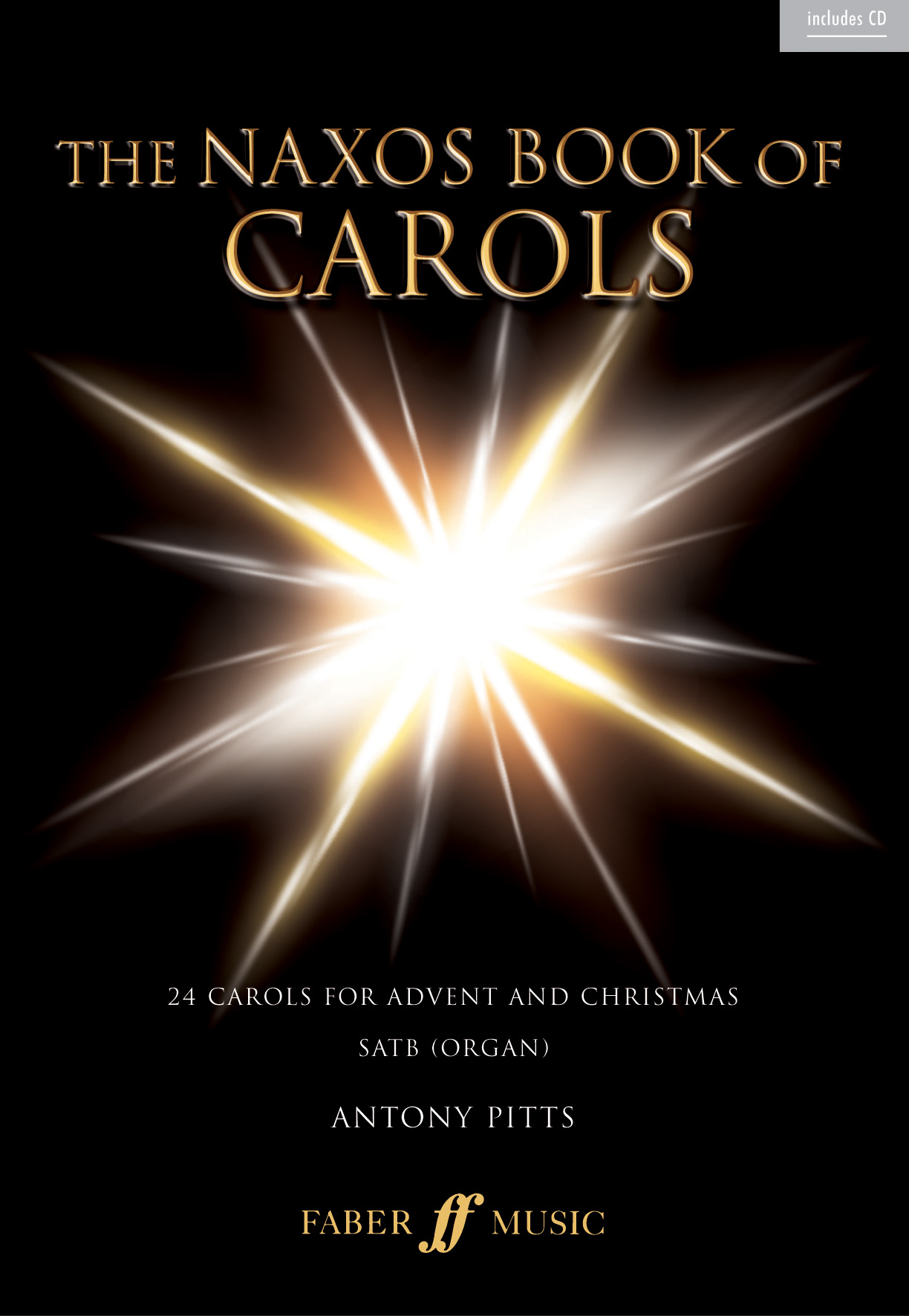
Putting together a collection of carols at the beginning of the 21st Century is at once a daunting and a liberating task: tunes and words alike have acquired the privilege of tradition, but also its plasticity. Carols are part of a living ritual which grows and evolves every generation: composers, singers, and listeners have each added their interpretations and memories, which makes finding the ‘authentic’ version of a Christmas carol usually both hopeless and pointless. This collection is made up of 24 carols arranged in four sequences, each focusing on a different part of the Christmas story. The arrangements are all new, commissioned by Naxos specially for this recording, and tread a careful line between familiarity and novelty. The arrangements are designed for widespread use: it should be possible to sing along with the tune in each verse, while the choral parts are almost never in more than the standard four: soprano, alto, tenor and bass.
ORIGINS
Naxos commissioned the book in 2003, after TONUS PEREGRINUS’s début recording for the label, Arvo Pärt’s Passio, reached No. 1 in the UK (BBC Music Magazine, June 2003). The ensemble was founded at New College, Oxford in 1990 and takes its name from the ‘wandering tone’, one of the Church’s ancient psalm tones. The carols were recorded in two days in July 2003 at St Jude-on-the-Hill, Hampstead Garden Suburb, released that November, and published by Faber Music. The recording is dedicated to victims of persecution around the world, to all those unable to sing and worship freely.
PEOPLE
Antony Pitts
Arranger of all twenty-four carols, composer of the tunes of O quickly come and Hail to the Lord's Anointed, author of the words of Baby Jesus, hush! now sleep, director, and editor of the recording; organ in Alleluya – a new work.
Antony Pitts was born in 1969 and sang as a boy in the Chapel Royal, Hampton Court Palace. He was an Academic Scholar and later Honorary Senior Scholar at New College, Oxford where he founded TONUS PEREGRINUS. He graduated in 1990 with First-Class Honours in Music and joined the BBC in 1992, where he now works part-time as a Senior Producer. In 1996 he received the Radio Academy BT Award for an interactive internet experiment called Facing the Radio, and for the turn of the Millennium on BBC Radio 3 he devised an eighteen-hour history of Western music called The Unfinished Symphony.
Joanna Forbes
Soprano: solos in The holly and the ivy, Baby Jesus, hush! now sleep, We three kings of Orient are, and I saw three ships come sailing in; duets in The holly and the ivy, Alleluya – a new work, and Baby Jesus, hush! now sleep.
Joanna Forbes studied cello and piano from a young age and went on to read Music at Hertford College, Oxford. Graduating in 1993, she began singing with TONUS PEREGRINUS and many other professional ensembles specialising in early and contemporary music. She is currently Musical Director of the world-renowned a cappella group the swingle singers.
Rebecca Hickey
Soprano: solos in The Song of Angels and I saw three ships come sailing in; duet in The holly and the ivy; quartet in Lo, there a Rose is blooming.
Rebecca Hickey has sung in choirs from a very early age. She started her formal singing studies whilst at university in York and now sings in a number of small choirs and vocal ensembles, as well as working part-time in music publishing.
Kathryn Oswald
Alto: solos in We three kings of Orient are and I saw three ships come sailing in; duets in The holly and the ivy and While shepherds watched.
Kathryn Oswald read Music at Worcester College, Oxford, where she held a Music Scholarship. She now pursues a busy and varied musical career, performing regularly with other leading choirs and ensembles, and also as a solo recitalist. She features as a voice-over artist for BBC Radio 3 and Unknown Public Radio, and is editorial director at Faber Music.
Alexander L'Estrange
Countertenor: solo in I saw three ships come sailing in; duets in The holly and the ivy, Alleluya – a new work, and Baby Jesus, hush! now sleep; quartet in Lo, there a Rose is blooming.
Alexander L'Estrange was a chorister at New College, Oxford and later read Music at Merton College, singing in the choir of Magdalen College and graduating in 1994 with First Class Honours. Besides singing countertenor professionally, he is also much in demand as a composer, arranger and jazz double bass player.
Richard Eteson
Tenor: solos in Silent night, We three kings of Orient are, and I saw three ships come sailing in; duet in The holly and the ivy; quartet in Lo, there a Rose is blooming.
Richard Eteson has been singing all his life. From an early age he was a chorister at King's College, Cambridge, and later a choral scholar there. He has since sung tenor in many of London's finest choirs and vocal ensembles whilst being in demand up and down the country as a soloist of Oratorio.
Alexander Hickey
Tenor: solo in I saw three ships come sailing in; duet in The holly and the ivy.
Alexander Hickey started singing as a chorister in Hereford Cathedral, went up to Christ Church, Oxford as a choral scholar and now practises as a barrister. He regularly sings with renowned amateur and professional choirs in and around London.
Francis Brett
Bass: solo in I saw three ships come sailing in; duet in The holly and the ivy.
Francis Brett was a choral scholar at King's College, Cambridge where he read Music. He studied as a postgraduate at the Royal College of Music and has since performed a wide variety of music including opera at Covent Garden and many of the major works of Oratorio.
Simon Grant
Bass: solo in I saw three ships come sailing in; duets in The holly and the ivy and While shepherds watched; quartet in Lo, there a Rose is blooming.
Simon Grant is much in demand as a solo and consort singer, working with the Taverner and Gabrieli Consorts, the New London Consort, Tenebrae, Les Arts Florissants, the Consort of Musicke and The Scholars. His many solo recordings include Monteverdi's Vespers, Orfeo and Bach's Magnificat.
Nicholas Chalmers
Organ.
Nicholas Chalmers is the acting Assistant Organist of Westminster Abbey and Director of Music at Westminster Abbey Choir School. He studied music at Oxford University where he was Organ Scholar of Lincoln College and conductor of the Oxford University Chamber Choir.
Jeremy Summerly
Producer.
Geoff Miles
Engineer.
John Michael Pitts
Composer of the tune of O little town of Bethlehem.
David Pitts
Translations of Verbum Patris umanatur, Personent hodie, and In dulci jubilo.
MUSOGRAPHY
The musography: this folio's own influences, drawn live from the Equal Music graph and linked to where each one comes from.
ADVENT CALENDAR
Twenty-four windows, one for each day from the first of December to Christmas Eve. Behind each one is that number’s carol from The Naxos Book of Carols: the recording and the note from the booklet. Each window also names the carol standing at the same number in The Patmos Book of Carols, the book that answered this one twenty-one years later.
-
O come, o come, EmmanuelMusic: ?13th-century, arranged by Antony Pitts. Words: after the Advent ‘O’ Antiphons, John M. Neale and Antony Pitts.
O come, o come, Emmanuel is a paraphrase of the seven Advent ‘O’ Antiphons in an arrangement coloured by the gradual developments in Western harmony over the last two thousand years.
In The Patmos Book of Carols: Advent 'O' Carol
-
Of the Father's heart begottenMusic: Piae Cantiones (1582), arranged by Antony Pitts. Words: after Prudentius, John M. Neale and Henry Baker, adapted by Antony Pitts.
Of the Father's heart begotten contrasts the eternal nature of the Son of God with the outworking of prophecy at a specific point in Time; the tune is set alternately against a simple repeating bass-line and in three-, two- and four-part canon.
In The Patmos Book of Carols: The Angel Gabriel
-
O quickly comeMusic: Antony Pitts. Words: Laurence Tuttiett.
O quickly come is a new carol in a lively 7/8 rhythm, reiterating with greater urgency the pleas for the King to come.
In The Patmos Book of Carols: I will hold Him
-
Verbum Patris umanatur, O, OMusic: ?13th-century, arranged by Antony Pitts. Words: Anon. (?13th-century), translated by David Pitts.
Verbum Patris umanatur, O, O is a re-working of a polyphonic mediaeval carol, resounding with joy at the extraordinary event of the Incarnation – God becoming Man.
In The Patmos Book of Carols: Let all mortal flesh keep silence
-
Lo! He comesMusic: T. Olivers and M. Madan, arranged by Antony Pitts. Words: after John Cennick, Charles Wesley.
This Advent sequence is crowned with the famous hymn Lo! He comes in which the hopes of the ancient prophets of Israel and the Church are ultimately rewarded.
In The Patmos Book of Carols: It came upon the midnight clear
-
The holly and the ivyMusic: collected by C.J. Sharp and Antony Pitts, arranged by Antony Pitts. Words: Trad., collected by Cecil J. Sharp and Antony Pitts.
The holly and the ivy finds hints in the natural world of Jesus's suffering on the cross, with two traditional tunes intertwined (the little-known tune was written down from a tape in the BBC archives).
In The Patmos Book of Carols: In the bleak mid-winter
-
Lo, there a Rose is bloomingMusic: ?Praetorius, arranged by Antony Pitts. Words: after the German, Antony Pitts and John M. Neale.
The symbolism of plants and their flowers is further explored in Lo, there a Rose is blooming.
In The Patmos Book of Carols: Once in royal David's city
-
Alleluya – a new workMusic: English, 15th-century, arranged by Antony Pitts. Words: Anon. (15th-century), adapted by Antony Pitts.
Alleluya – a new work is a fresh take on a late-mediaeval carol with two angels answering each other across the heavens (here the husband-and-wife team of Joanna Forbes and Alexander L'Estrange).
In The Patmos Book of Carols: Hark! the herald angels sing
-
Ding! dong! merrily on highMusic: J. Tabourot, arranged by Antony Pitts. Words: G.R. Woodward.
The rollicking tune of Ding! dong! merrily on high is put through its paces as the bells of heaven peal in celebration at the birth of the Saviour.
In The Patmos Book of Carols: On Christmas Night (Sussex Carol)
-
While shepherds watchedMusic: C. Tye and G. Kirbye, arranged by Antony Pitts. Words: Nahum Tate (?).
While shepherds watched is sung to one of its most familiar melodies, but with a rough-hewn arrangement vaguely reminiscent of shape-note and other popular choral styles.
In The Patmos Book of Carols: An Earthly Tree
-
The Song of AngelsMusic: O. Gibbons, arranged by Antony Pitts. Words: Anon..
Following on immediately is The Song of Angels – one of Orlando Gibbons' exquisite tunes from Hymnes and Songs of the Church.
In The Patmos Book of Carols: Love came down at Christmas
-
Hark! the herald angels singMusic: F. Mendelssohn, arranged by Antony Pitts. Words: Charles Wesley, adapted by George Whitefield and Martin Madan.
All join together for Hark! the herald angels sing in which the breathtaking consequences of the Christmas story are elegantly summarised.
In The Patmos Book of Carols: A Jolly Wassel-Bowl
-
Silent nightMusic: F. X. Gruber, arranged by Antony Pitts. Words: after Joseph Mohr, John F. Young.
Silent night is sung as a lullaby, with the opening motif of the tune mirrored at various speeds in the other voices.
In The Patmos Book of Carols: Lully lulla (Coventry Carol)
-
Away in a mangerMusic: W.J. Kirkpatrick, arranged by Antony Pitts. Words: William J. Kirkpatrick and Charles H. Gabriel.
Away in a manger, one of the most popular children's carols, reflects the humble setting of Jesus' birth.
In The Patmos Book of Carols: For unto us a Child is born
-
Baby Jesus, hush! now sleepMusic: Czech Trad., arranged by Antony Pitts. Words: after the Czech Trad., Antony Pitts.
Another lullaby follows, and in the final verse points forward from the intimate tranquillity of mother and child to Calvary, where Mary will later see her son being executed: Baby Jesus, hush! now sleep.
In The Patmos Book of Carols: Unto us is born a Son
-
O little town of BethlehemMusic: John Michael Pitts, arranged by Antony Pitts. Words: Phillips Brooks.
The well-known words of O little town of Bethlehem are clothed with a new tune.
In The Patmos Book of Carols: Miryam's Lullaby
-
Jesu, the very thought is sweetMusic: 17th-century, figured by J.S. Bach, realized by Antony Pitts. Words: (Jesu dulcis memoria) John M. Neale.
The classic chorale tune O Jesulein süss is newly-combined with the age-old words of Jesu dulcis memoria: Jesu, the very thought is sweet.
In The Patmos Book of Carols: Lute-book Lullaby
-
O come, all ye faithfulMusic: ?J.F. Wade (collector), arranged by Antony Pitts. Words: after Anon., F. Oakeley.
The sequence ends as the worshippers, both ancient and modern, meet to adore the new-born Saviour in O come, all ye faithful.
In The Patmos Book of Carols: In the bleak midwinter
-
Personent hodieMusic: Piae Cantiones (1582), arranged by Antony Pitts. Words: Piae Cantiones (1582), translated by David Pitts.
Personent hodie is notable for the repeated syllables (particularly the “vir” of “virgineo” in the first verse), and in the final verse includes the tune of the following track as an organ descant.
In The Patmos Book of Carols: The Holy Innocents
-
In dulci jubiloMusic: M. Praetorius, J.S. Bach, and J. Stainer, arranged by Antony Pitts. Words: 14th-century (?), Valentin Triller, and Antony Pitts, translated by David Pitts.
In dulci jubilo is a post-modern collage of settings by Praetorius, J. S. Bach and Stainer, with similarly-juxtaposed words in Latin and English.
In The Patmos Book of Carols: The Oxen
-
Good King WenceslasMusic: Piae Cantiones (1582), arranged by Antony Pitts. Words: John M. Neale.
Good King Wenceslas introduces a king with little relation to the Christmas story except for his Christ-like compassion; the musical setting is a straightforward response to the narrative.
In The Patmos Book of Carols: Song of the Angels
-
We three kings of Orient areMusic: J.H. Hopkins, arranged by Antony Pitts. Words: John Henry Hopkins.
In We three kings of Orient are the “three kings” introduce themselves one by one (the Gospel refers, in fact, to “wise men from the east”), and the three gifts point to Jesus as “King and God and sacrifice”.
In The Patmos Book of Carols: O Holy of Holies & Reges Tharsis
-
I saw three ships come sailing inMusic: English Trad., arranged by Antony Pitts. Words: Trad. (English).
I saw three ships come sailing in is an example of a carol that has weathered over time (in the case of the words, enough to obscure their original meaning) but the overall intent to rejoice is clear.
In The Patmos Book of Carols: Alleluya - a nywe werk
-
Hail to the Lord's AnointedMusic: Antony Pitts. Words: after Psalm 72, James Montgomery.
The sequence closes with a carol marrying traditional words (based on Psalm 72) with a recent tune: Hail to the Lord's Anointed.
In The Patmos Book of Carols: Lord Jesus, come!
PERFORM
SHEET MUSIC
PRINTED MUSIC
The book, from its publisher.
CONNECT
Share this page as you see it, or pick exactly what to share.