THE FILMS
In November 2025 members of TONUS PEREGRINUS returned to New College, Oxford, where the ensemble was founded in 1990, to sing the music of the Eton Choirbook from its original notation. The teaser’s notes say: “A full-length documentary film and public performances are forthcoming.” There is no release date yet. Opening The Eton Choirbook is a film in the making; a teaser trailer is on YouTube. Film-makers credited on the teaser: Dian Schramke, Tom Hughes, and Lyndon Jones.
IN ETON LIBRARY
In October 2023 TONUS PEREGRINUS sang from the Choirbook itself in Eton College Library. Five short films from that session are on the ensemble’s channel. By kind permission of the Provost and Fellows of Eton College. Credits: Joanna Forbes L’Estrange, Rebecca Hickey, Kathryn Knight, Alexander L’Estrange, Richard Eteson, Alexander Hickey, Alex Knight, Antony Pitts, and Francis Brett, with Dr Carlotta Barranu; filmed by Ben Weston.
FURTHER LINKS
- NaxosNaxos 8.572840
 Apple Music
 SpotifyThe complete album, 7 tracks, released 2012.
 DeezerThe complete album, 7 tracks, released 2012.
 YouTube MusicThe album playlist on YouTube Music (YouTube’s own album page, not the TONUS PEREGRINUS playlist the ALBUM tab plays).
- Amazon (CD)
- Music from the Eton Choirbook (Naxos catalogue page)
- The Eton Choirbook ProjectNewcastle University’s project page for the 2012 recording by TONUS PEREGRINUS.
- New College Chapel Music List, Michaelmas Term 2025The College’s published list, which shows TONUS PEREGRINUS singing Evensong on 3 and 4 November 2025 (PDF).
- ABC Radio National, The Music Show, 9 February 2019Antony Pitts on the Choirbook and The Song Company’s tour; 28 minutes 33 seconds.
- Transiens: a two-minute excerptAntony Pitts’s extension of Wylkynson’s canon to 25 parts, in the world première recording by The Song Company, on the album Burden of Truth.
 Burden of Truth (Bandcamp)The album by The Song Company that holds the world première recording of Transiens, released 21 May 2021.
THE HISTORY
THE ETON CHOIRBOOK
Eton College has produced twenty British prime ministers but only one Choirbook. The giant manuscript of the Eton Choirbook is one of the greatest surviving glories of pre-Reformation England, consisting of sacred music for many voices, originally sung by the Choir as part of the daily liturgy. Yet reading its intricate and colourful notation is an almost-lost art today. After exploring this notation for more than a quarter of a century in workshops and performances in Europe and Australia with Cappella Pratensis, TONUS PEREGRINUS, The Song Company, and TONUS AUSTRALIS, it is undeniable that performing from the very instructions the original musicians used brings us closer to the music – closer both to the way it sounded and to the psycho-physical experience of the 15th- and 16th-century performers and their community. The simple act of turning over the pages of a giant early 16th-century choirbook produces a visceral response that opens another world: historical, musical, physiological, even theological.
There is a proverb contemporary with the Eton Choirbook, written down in the late 16th-century Dow Partbooks: “Galli cantant, Italiae capriant, Germani ululant, Anglici jubilant” – roughly, “The French sing, the Italians quaver, the Germans wail, and the English make a joyful noise!”. English musicians had loved successions of joyful-sounding thirds for generations before the Choirbook. By experimenting with full triads, John Dunstaple, the first truly great English composer, took this jubilation to a new level – such that in 1475 the musicologist Tinctoris could claim that music had been transformed within his own lifetime into a “new art”. This “joyful noise” remained a quintessentially English characteristic through the extremes of Tallis’s forty-part Spem in alium and Gibbons’s ravishing Hymnes and Songs of the Church, right down to composers of the 20th and 21st centuries. But in the Eton Choirbook itself some unsurpassed heights of musical ecstasy were reached, mirroring the lofty Perpendicular style of 15th- and early 16th-century architecture.
ETON COLLEGE
Founded along with King’s College, Cambridge in the early 1440s by Henry VI, Eton College was to be a haven of education, devotion, and charity in the middle of political turbulence – the final stages of the Hundred Years’ War with France, the so-called ‘Wars of the Roses’, and later, the reforms and counter-reforms of Henry VIII and his children. That turbulence devastated many libraries including the Chapel Royal library, making the surviving 126 of the original 224 leaves in Eton College Manuscript 178 all the more precious. Eton’s chapel library itself had survived a forced removal in 1465 to Edward IV’s St George’s Chapel – a stone’s throw away in Windsor – during a temporary fall from royal favour. Under Henry VII, who claimed the throne for the Tudors in 1485 at the Battle of Bosworth, the repertoire of the Eton Choirbook particularly flourished, and the book itself was compiled around 1500 – described in a 1531 inventory as “a grete ledger of prick song secundo folio tum cuncta”. Putting together a choirbook was no mean feat: as Magnus Williamson notes in his introduction to the DIAMM facsimile, not only would it have cost something like an entire year’s salary for a senior chaplain, it would also have “required the skins of 112 average-sized calves”! However magnificent, the Choirbook’s music was just the tip of a titanic schedule of devotions in the late Gothic acoustics of the College Chapel. Each day some seven masses were said or sung, in addition to various observances that had sprung up around Mary, the virgin mother of Jesus. Feastdays required yet more celebration, with particular emphasis on Passiontide and Holy Week. The College’s statutes of 1443/4 made provision for, among others, 16 choristers and 4 clerks, who were to have good voices and be skilled in reading, song, and polyphony.
ETON COMPOSERS AND THEIR MUSIC
Of the 25 composers represented in the Choirbook, several had strong links with Eton itself: Walter Lambe and, quite possibly, John Browne were there in the late 1460s as boys. Browne, the composer of the astounding six-part Stabat mater dolorosa (and very possibly of the carol Jesu, mercy, how may this be? in the early 16th-century Fayrfax Manuscript), may have gone on to New College, Oxford. Richard Davy, the first named composer of a Passion setting, was at Magdalen College, Oxford in the 1490s. We can imagine these composers and their fellow-singers grouped around the huge Choirbook on a lectern – seven or so men, and in front, ten boys singing treble and “mean” (or “medius”), whose undimmed eyesight could still read the top of the very large pages. The size of the pages meant parchment was necessary, and to be legible in uncertain candlelight the music was solidly inscribed on staves some 2cm high. Each voice-part is written by itself (without barlines) on one part of the open spread: unlike a modern score, there is no vertical alignment, and little to show the tactus – or beat – apart from note-groupings. The noteheads are almost all in “black-full” notation (i.e. filled-in semibreves and minims), which survived longer in England than on the Continent, rather than the more familiar “black-void” notation used in modern sheet music. Red ink conveyed further instructions: red text signals reduced numbers of voices, while red noteheads introduce binary ‘imperfection’ into a mensural world built on Trinitarian proportions – three against two, or what today we call triplets and hemiolas.
The original index lists more than 60 antiphons – all votive antiphons designed for daily extraliturgical use and fulfilling Mary’s prophecy: “From henceforth all generations shall call me blessed”. One of the best known is Lambe’s Nesciens mater, weaving some of the loveliest polyphony around the plainchant tenor. The Magnificat is Mary’s song of praise in response to her cousin Elizabeth’s salutation: “Blessed art thou among women, and blessed is the Fruit of thy womb”. At some point no fewer than 24 versions of the Magnificat were added to the Choirbook, including the ebullient four-part setting by William, Monk of Stratford, which we sing in alternating (and finally combined) choirs of upper and lower voices. Stratford’s polyphony includes quirky, audible examples of rhythmic word-painting – such as a lost beat between “the rich” and “He hath sent empty away”, and an extra beat at “his seed for ever”. Almost the final addition to the entire Choirbook is the first surviving Passion setting by a named composer. The opening pages of Davy’s St Matthew Passion are lost, so the story begins in this performance with Jesus standing before Pilate. Davy’s polyphony sets the spoken parts of the narrative, with the rest intoned by a single voice, and is notable for its intense, quick-changing response to the text – for instance, the sonic contrast between the names of Barrabas and of Jesus. A main index was compiled after these pieces had been added; the only two works not listed are by Robert Wylkynson, presumably appended between 1500 and 1515 during his tenure as Informator choristarum at Eton. One of these is on the manuscript’s final page: Jesus autem transiens / Credo in Deum – a canonic setting, for 13 voices, of the Apostles’ Creed. The twelve apostles’ names are inscribed above successive phrases, and the opening chant “But Jesus passing through them” can be heard passing from one voice to another [see the front page of the programme].
SINGING FROM THE SOURCE
In my interpretation of the Eton Choirbook over more than a quarter of a century – first with the pioneering Cappella Pratensis, then on record for Naxos with TONUS PEREGRINUS, then with The Song Company in Australia, and now again from original notation with TP, as part of my research as William Byrd Fellow & Ambassador at Excelsia University College – I have paid particular attention to an aspect of the music largely lost over the centuries. Together we try to bring the dots on the page to life by recovering their often vibrant harmonic colour. Our main tool for this restoration is the careful addition of momentary sharps and flats beyond those scattered in the manuscript. Here we draw on three resources: the writings of contemporary theorists on musica ficta and related practices such as the tierce de Picardie; a composer-editor’s ear for consistency and harmonic direction (i.e. when “beauty” should triumph over “necessity”); and many hours of rehearsal trying out different possibilities for each vocal line in the ensemble. The result will never be identical to what was sung 500 years ago – but we can be confident that these supposed “wrong notes” are on the right track, as once-pallid polyphony bursts into resonant combinations matching the vivid reds, blues, and golds of the Choirbook itself. Reading directly and learning the music from the Choirbook is a huge challenge for modern singers, but it opens the door into a world where melodies and counter-melodies tell a new story together, and where the resulting harmonies ring with a particular sense of community and purpose. This beauty of purpose underlies everything we do in TONUS PEREGRINUS, whether the music was written 500 years ago or yesterday, and we look forward to Opening The Eton Choirbook and sharing this glorious polyphony with audiences far and wide. Antony Pitts, 2025.
OUR STORY
The notation of the Eton Choirbook has been explored by Antony Pitts for more than a quarter of a century, in workshops and performances in Europe and Australia.
- May 1999 The Eton Choirbook was the subject of a workshop week at the Brabants Conservatorium, Tilburg, in May 1999: Antony Pitts, Guest Lecturer, co-led the course on performing it from facsimile with Cappella Pratensis.
- July 2011 TONUS PEREGRINUS recorded the album Music from the Eton Choirbook at St Alban the Martyr, Holborn, London.
- 2012 Naxos released the album Music from the Eton Choirbook, 8.572840.
- February 2019 The Song Company, directed by Antony Pitts, toured Treble Helix Unlocked: The Eton Choirbook at the crossroads of the Renaissance, five Choirbook works sung around facsimiles, in ten concerts from Blackheath to Wollongong (9 February to 2 March). On 9 February he talked about it on ABC Radio National’s The Music Show. Reviews: CutCommon, “It is moments like this when even the most atheistic audience member sits back and accepts that surely there must be a higher power, for nothing this sublime could be created by a mere man.” (Alex Siegers, 7 March 2019); ArtsHub, “But the outstanding highlight of the program was John Browne’s exquisite setting in six parts of Stabat mater dolorosa, and the final ‘Amen’ with its intricate cross relations reached a point of near ecstasy.” (David Barmby, 14 February 2019); Limelight, “… the parts accumulating to create an impenetrable, seething – yet ultimately resplendent – wall of sound.” (Angus McPherson, 14 February 2019).
- 2021 Singing from the Source: SongCo LAB workshops in reading from partbooks and the Eton Choirbook, with the Academy of St James.
- 21 May 2021 Transiens, begun on a road trip from Uluru to Kakadu in January 2020, extended Wylkynson’s 13-part canon to 25 parts; recorded in lockdown by The Song Company; first performed 21 May 2021 at St Michael’s Uniting Church, Melbourne; released digitally on 1equalmusic and as a special limited edition translucent red LP.
- October 2023 TONUS PEREGRINUS sang from the Eton Choirbook itself in Eton College Library, in five short films filmed by Ben Weston.
- 27 October 2024 The Eton Choirbook was the subject of a paper, ‘Outward and Visible Signs in Eton’s Choirbook’, that Antony Pitts presented in the programme of the International Network for Music Theology conference at Durham University, 26 to 27 October 2024.
- 13 March 2025 The Eton Choirbook was the subject of the same paper, which Antony Pitts presented in the programme of the annual meeting of the Society for Christian Scholarship in Music at Belmont University, Nashville, 13 to 15 March 2025.
- 3 November 2025 TONUS PEREGRINUS were in residence at New College, Oxford, in early November, filmed in New College Chapel, and sang Evensong twice, including two Choirbook works from a facsimile of the manuscript, Stratford’s Magnificat and Lambe’s Nesciens mater.
- January 2026 TONUS PEREGRINUS published the teaser trailer for Opening The Eton Choirbook.
- March 2026 TONUS PEREGRINUS published the extended trailer for the concert programme.
- 26 April 2026 TONUS PEREGRINUS published the concert programme notes, narrated by Kathryn Knight, as a film.
- 1 May 2026 New College presented an open rehearsal with TONUS PEREGRINUS on the Eton Choirbook in the Antechapel of New College, Oxford.
- 7 May 2026 TONUS PEREGRINUS and Antony Pitts gave a pre-concert workshop.
- 7 May 2026 TONUS PEREGRINUS sang The Eton Choirbook – Crossroads of the Renaissance at St Martin-in-the-Fields, London.
- 2027 The Eton Choirbook – Crossroads of the Renaissance is available for future performances by TONUS PEREGRINUS, in 2027 to 2028.
- 2027 Opening The Eton Choirbook – a documentary film (release date TBA).
PICTURES
THE FACSIMILE
- The Eton College catalogue entryThe Eton Choirbook is Eton College Library MS 178, made at Eton between about 1500 and 1504; 126 of its original 224 folios survive. It was inscribed on the UK Memory of the World register in 2018. Each voice-part is written on its own, in black notation without bar lines. Red ink marks passages for fewer voices and rhythmic ‘imperfection’.
- The Eton Choir Book at UNESCO in the UKThe UK Memory of the World register entry for the manuscript: inscribed in 2018, nominated by Eton College.
- The facsimile editionA full-colour facsimile of Eton College Library MS. 178 with an introductory study by Magnus Williamson, published by DIAMM and now out of print. The publication won the 2011 Claude V. Palisca Award.
MUSOGRAPHY
PEOPLE
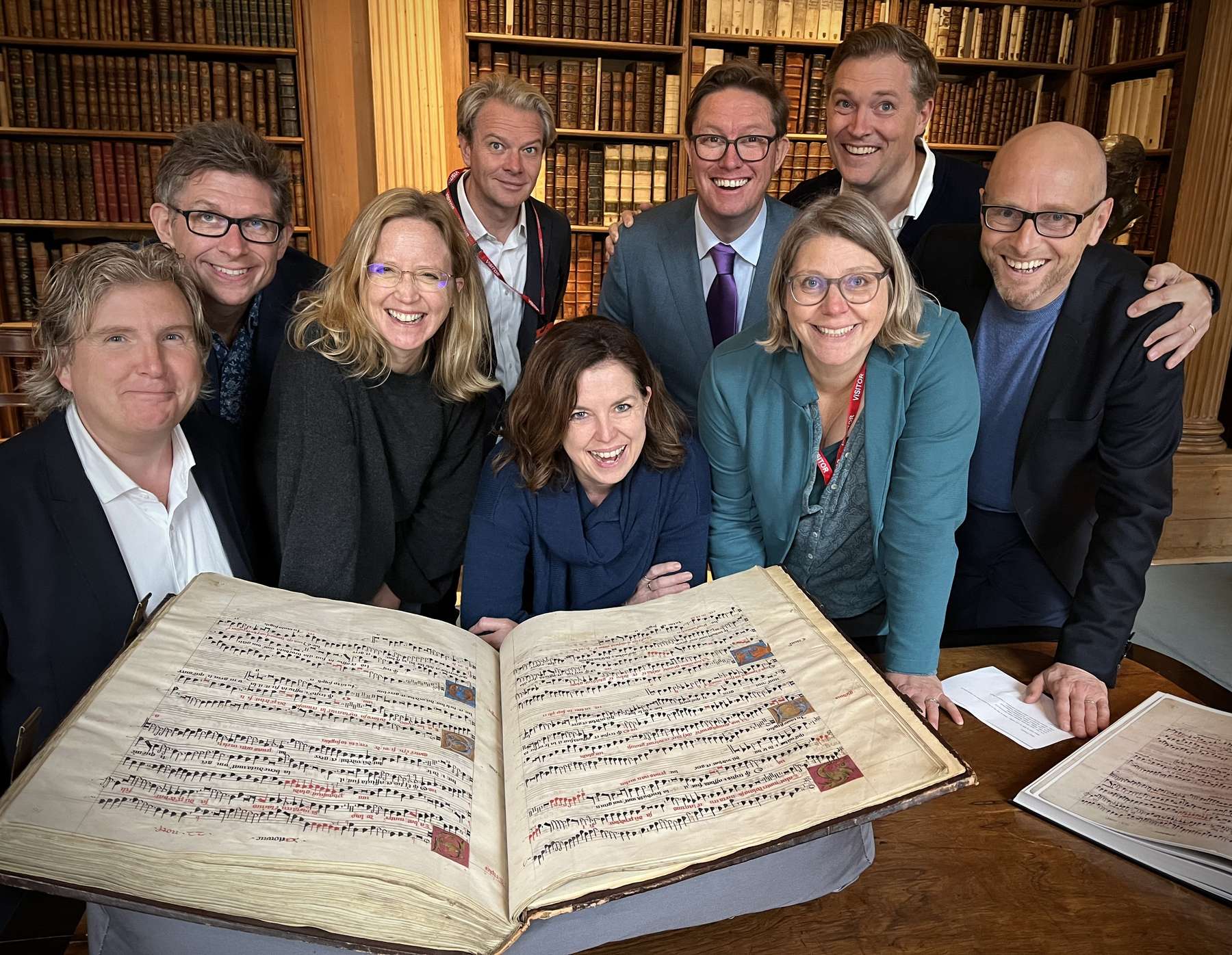
TONUS PEREGRINUS
was founded by Antony Pitts in 1990 at New College, Oxford.
Sung on 7 May 2026 at St Martin-in-the-Fields
Joanna Forbes L’Estrange and Rebecca Hickey (soprano), Kathryn Knight (alto), Alexander L’Estrange (countertenor), Gautam Rangarajan (haute-contre), Will Wright, Luke Pitts, Alex Knight, and Alexander Hickey (tenor), Nick Flower and Robert Macdonald (bass), directed by Antony Pitts.
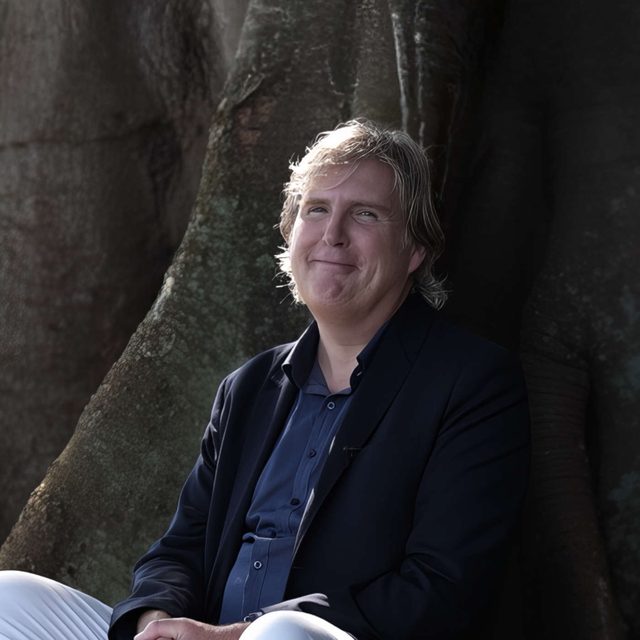
Antony Pitts
Director of TONUS PEREGRINUS, and William Byrd Fellow and Ambassador at Excelsia University College, Sydney.
Antony Pitts is an international composer, conductor, producer, and recipient of the Radio Academy BT Award, the Prix Italia, and a Cannes Classical Award. A Chapel Royal treble, Academic and Honorary Senior Scholar at New College, Oxford, founder-director of British ensemble TONUS PEREGRINUS, Senior Lecturer at the Royal Academy of Music, and Senior Producer at BBC Radio 3, he made his Glastonbury Festival debut in 2014, and from 2016 to 2022 led Australia’s The Song Company as Artistic Director, afterwards establishing TONUS AUSTRALIS. In 2023, he was appointed as the inaugural William Byrd Fellow and Ambassador at Excelsia University College in Sydney. Commissioned for Alexander Litvinenko, Cheltenham Festival, King’s College London, New College Oxford, Rundfunkchor Berlin, The Swingles, Westminster Cathedral, and many others, with premières of his music in London’s Wigmore Hall, Amsterdam’s Concertgebouw, and Berlin’s Philharmonie Kammermusiksaal, and album releases on 1equalmusic, Challenge Records, Delphian, Hyperion, Harmonia Mundi, Naxos, Novum, Signum, and Unknown Public, including the Missa Unitatis and the oratorio-musical Jerusalem-Yerushalayim. Critical acclaim for Antony’s music tends towards hyperbole: “...My first impulse on hearing this disc was to commend it unreservedly to each and every man, woman, and child on the planet...” (Fanfare, on Seven Letters). Sydney Philharmonia Choirs commissioned his 50-part motet, XLX – Mente cordis sui, which was premièred at Sydney Opera House. Antony is currently completing his monumental Requiem for the Time of the End, and is working on a music theatre piece with Adrian Self called The Process, while developing a compositional process of “murmuration”.
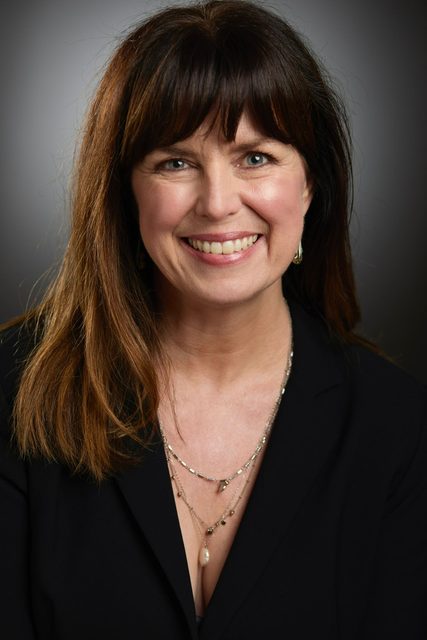
Joanna Forbes L’Estrange
Soprano. Sang on 7 May 2026.
Joanna Forbes L’Estrange is a celebrated British vocalist, composer and conductor known for her versatile artistry. A descendant of an eminent musical family, she earned an MA in Music from Oxford University and began her career with seven years at the helm of the Grammy® Award-winning vocal group The Swingle Singers. As a vocalist she specialises in the performance and recording of contemporary music, from avant-garde works by composers such as Luciano Berio, Steve Reich, John Adams, and Karlheinz Stockhausen, to film and games soundtracks (over 300 to date). She is a popular soprano soloist for Mass in Blue by Will Todd, a work she recorded for the Convivium label. Among her best-selling compositions is A Season to Sing, a revolutionary choral re-imagining of Vivaldi’s The Four Seasons, composed to mark its 300th anniversary. The piece quickly became a global phenomenon, with performances in the UK, Europe, USA, Asia, South Africa and Australia, where the composer conducted its première in Sydney Opera House. The tuneful, singable nature of her choral music has garnered a body of reviews including “Forbes L’Estrange seems to have been born with catchy melodies coursing through her veins” (BBC Music), “a sublime blend of catchy and comforting” (Hyperion) and “full of delicious ear-worms” (Gramophone). Joanna Forbes L’Estrange has gained a reputation as an inspiring choral conductor, drawing vibrant, expressive performances from singers of all ages and abilities. She has judged numerous choral competitions throughout the UK and appeared as a judge for the series SING! Ultimate A Cappella on Sky TV. In 2025 she was made an Honorary Fellow of the Royal School of Church Music.
Rebecca Hickey
Soprano. Sang on 7 May 2026.
Rebecca Hickey started singing in her local church choir at the age of five which fostered an enduring passion for sacred choral music, which is good as she spends much of her time singing it! As well as being a long-standing member of TONUS PEREGRINUS, she sings with the early music vocal ensemble Stile Antico, taking Renaissance polyphony all over Europe, the Americas and Asia. Her solo rendition of Pérotin’s Beata Viscera on TONUS PEREGRINUS’ album Sacred Music from Notre-Dame Cathedral was showcased on BBC Radio 3’s CD Review, and now has over 3 million listens on Spotify. Becky studied English Language and Linguistics at the University of York which perhaps led to her obsession with cryptic crosswords. Her other passions include baking, playing the viola in her local chamber orchestra and walking her dog Gus! She has two (technically adult....) children with husband Alex.

Kathryn Knight
Alto. Sang on 7 May 2026.
Kathryn Knight read Music at Worcester College, Oxford, where she held a Music Scholarship. She has gone on to pursue a busy and varied musical career in publishing, education and technology in both UK and USA, and continues to sing with various choirs and ensembles, as well as a solo recitalist. Kathryn is a founder-director of the national singing programme for schools, Sing Up, and has guest-presented for BBC TV Proms and BBC Radio 3. Kathryn and her husband Alex, who also performs with TONUS PEREGRINUS, have three children.

Alexander L’Estrange
Countertenor. Sang on 7 May 2026.
Alexander L’Estrange (b.1974) is an award-winning British choral composer, arranger and workshop leader of international acclaim. Educated at Oxford, first as a chorister in New College Choir and later at Merton College, he gained a First Class Honours Master of Arts degree in Music. His compositional voice is characterised by his love for jazz harmony and groove (he is a professional jazz pianist and double bassist as well as a jazz examiner and trainer for the ABRSM) and his background in the English choral tradition. Known for his charismatic and engaging leadership style, L’Estrange presents his music at the annual ACDA conference in the States. L’Estrange is best known for his series of large-scale choral works which draw together singers of all ages across the community. The first of these was Zimbe! Come sing the songs of Africa!, a 40-minute fusion of African song and jazz, which received over 150 performances worldwide within its first five years, establishing his reputation as one of Britain’s most popular living composers. Zadok Rules – Hallelujah! , commissioned by the Hanover Band to commemorate the 60th anniversary for Queen Elizabeth II’s reign, is based on Royal music through the ages; Ahoy! Sing for the Mary Rose is an uplifting fusion of sea shanties and Tudor music, commissioned to mark the opening of the Mary Rose Museum; Song Cycle: vive la vélorution! was commissioned for the 2014 grand départ in Yorkshire of the Tour de France, its ten entertaining songs telling the story of cycling; Wassail! Carols of Comfort and Joy, for which he won the Music Teachers Award for Best Classical Education Initiative in 2018, is a joyous sequence of Christmas songs from the folk tradition and; most recently, Freedom! The power of song, written in collaboration with his wife Joanna Forbes L’Estrange, celebrates the role of singing to effect positive change in the world. With the exception of Zadok, each of these works is scored for an SATB choir, unison children’s choir and jazz quintet. Many of L’Estrange’s sacred choral works have been recorded by the award-winning chamber choir Tenebrae, conducted by Nigel Short, on a disc entitled On Eagles’ Wings (SIGNUM label.) His song output includes Love’s Philosophy, three stunning settings of poems by Shelley, Tennyson and Byron, currently on the ABRSM Singing Syllabus, and Winter Songs, another collaboration with Joanna, commissioned to mark the 60th anniversary of the Finchley Children’s Music Group. Most recent is a setting of three movements from The Prophet by Kahlil Gibran for unaccompanied 8-part choir. L’Estrange is the go-to arranger for world-class a cappella groups including The Swingles, Voces 8 and The King’s Singers, for whom he wrote and produced the acclaimed Great American Songbook album. As Consultant Editor of Faber Music’s popular Choral Basics series, he has written hundreds of arrangements of songs from across the musical spectrum. Television credits include the theme tune for the popular CBeebies programme Magic Hands.
Gautam Rangarajan
Haute-contre. Sang on 7 May 2026.
Will Wright
Tenor. Sang on 7 May 2026.
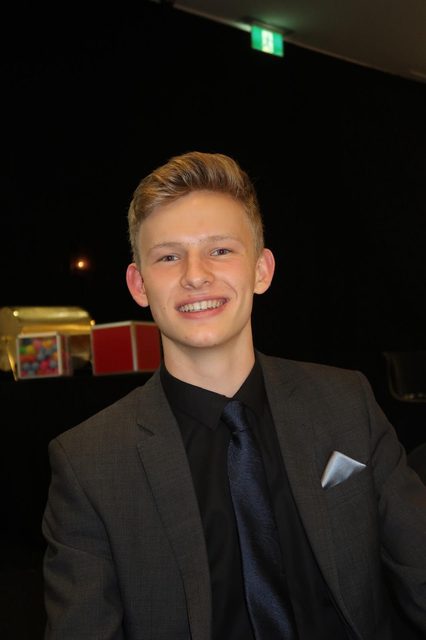
Luke Pitts
Tenor. Sang on 7 May 2026.
Luke Pitts is a Sydney-based tenor specialising in choral, consort, and early music singing. He is currently studying Music at the University of Sydney and is a Choral Scholar at St Mary’s Cathedral, Sydney, where he has sung as both Chorister and Scholar since 2016 under the direction of Thomas Wilson, Daniel Justin, and Richard Butler. Luke has also sung with St Andrew’s Cathedral Choir, Sydney Conservatorium Chamber Choir, and TONUS AUSTRALIS, with work spanning early and contemporary music, consort and solo repertoire, recording, and workshop mentoring. He has performed internationally in England, Italy, and Belgium, in venues including St Martin-in-the-Fields, St Peter’s Basilica, the Duomo di Siena, the Cathedral of Santa Maria del Fiore, and the International Gregorian Chant Festival in Watou. Alongside performance, Luke has assisted in TONUS AUSTRALIS workshops, helping mentor amateur singers in early music and original notation. He is also a regular cantor at Our Lady of the Rosary Cathedral, Waitara, where he assists the Cathedral Choir and supports the growth and development of the Cathedral Youth Choir. Luke first sang with TONUS PEREGRINUS as part of TPII next-generation artists in 2019, and joined them for public performances from the original notation of the Eton Choirbook in Oxford and London in 2026.
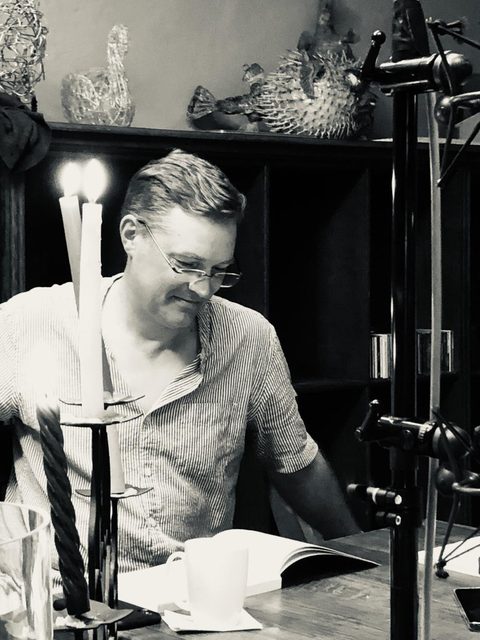
Alex Knight
Tenor. Sang on 7 May 2026.
Alex Knight was a chorister at Christ Church, Oxford and a choral scholar at King’s College, Cambridge. He studied singing at the Royal Academy of Music under David Lowe. He now sings when not working as Chief Executive of the Eton Fives Association and raising children with his wife Kathryn. He has worked with a number of groups including TONUS PEREGRINUS, Collegium Musicum 90 and Close Encounters.

Alexander Hickey
Tenor. Sang on 7 May 2026.
Alexander Hickey KC started singing as a chorister at Hereford Cathedral, went up to Christ Church, Oxford as a choral scholar and now regularly sings with professional choirs in and around London. He combines his singing with a successful career as a barrister specialising in construction law at 4 Pump Court Chambers in the Temple.
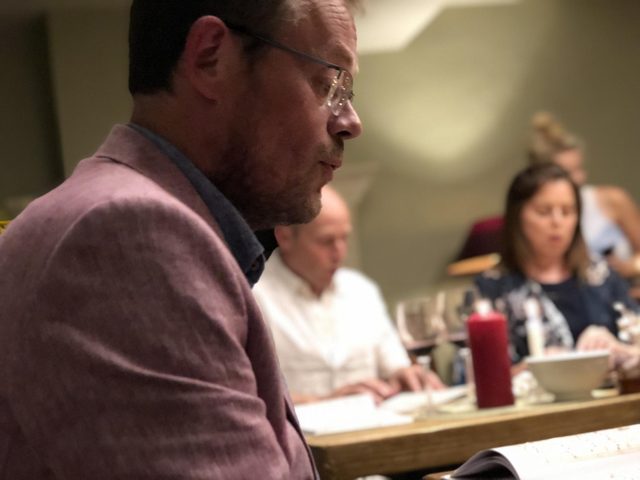
Nick Flower
Bass. Sang on 7 May 2026.
Nick Flower has been sighted singing with TONUS PEREGRINUS, Oxford Camerata, and the Borough Green Occasional Choir.
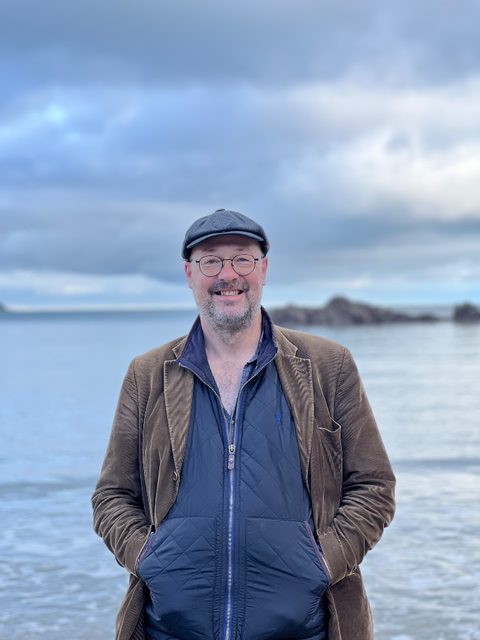
Robert Macdonald
Bass. Sang on 7 May 2026.
Rob Macdonald began singing professionally at an early age as a chorister at Hereford Cathedral under the direction of Dr Roy Massey. Later he was a choral scholar at Christ Church, Oxford where he read Biochemistry and Music. After a short period of study at The Royal Academy of Music Rob has developed a diverse career as both a consort singer and a soloist. In the former capacity he sings regularly with most of the prominent period vocal ensembles of this country including The Tallis Scholars, The King’s consort, and The Hilliard Ensemble while he is also a founder member of two ensembles which have recently won the coveted Gramophone award for Early Music; namely The Cardinall’s Musick and The Clerks’ Group. As a soloist Rob has sung with The City of Birmingham Symphony Orchestra in Symphony Hall, with The Monteverdi Choir under Sir John Eliot Gardiner, for Sir David Willcocks and Raymond Leppard with The London Mozart Players as well as with many choral societies up and down the country. He also has several operatic roles to his name including The Commendatore (Don Giovanni), Sarastro (The Magic Flute), The Abbot (Curlew River) and Il Tempo (Il Ritorno Di Ulisse). Rob was the soloist in the TONUS PEREGRINUS recording of Arvo Pärt’s Passio.

Richard Eteson
Tenor. In the 2023 Eton Library films.
Richard Eteson (b.1975) is a hugely versatile and experienced tenor vocalist, arranger and composer. Starting his musical life as a choirboy in Bingley, West Yorkshire, Richard went on to become Head Chorister at King’s College, Cambridge, a Music Scholar at Shrewsbury School, before returning to King’s as a tenor Choral Scholar (studying Japanese and English) under the direction of Sir Stephen Cleobury. After graduating, Richard became a Choirman of The Temple Church, London and sang with many of London’s finest choirs, consort groups and session choirs (The Gabrieli Consort, Tenebrae, Polyphony, The Cambridge Scholars, Magnificat, TONUS PEREGRINUS, The Brabant Ensemble, The Eric Whitacre Singers, Heritage Voices, The Philharmonia Voices and London Voices). Between 2000-2010 he sang tenor with The Swingle Singers, travelling the world, recording 8 albums and performing in many of the world’s leading venues such as La Scala, Milan; The Concertgebouw, Amsterdam; Suntory Hall, Tokyo; the Esplanade Centre, Singapore; and the Parco della Musica, Rome. In 2010 he founded the London A Cappella Festival. As a tenor oratorio soloist in the UK Richard has given performances of Haydn’s Creation, Bach’s B Minor Mass, Handel’s Messiah, Mendelssohn’s Elijah, Britten’s St. Nicholas, Elgar’s Dream of Gerontius, Stainer’s Crucifixion and performed the Evangelist part in Bach’s St. John Passion and St. Matthew Passion. In the world of contemporary music Richard has given over 50 performances of Berio’s Sinfonia. He has also performed Berio’s a cappella work a ronne & 3 operas by Azio Corghi, and sang chorus and solo tenor parts in the world premiere of Stockhausen’s opera Mittwoch aus Licht with London Voices/Birmingham Opera Company under Graham Vick as part of the London 2012 festival. In recording and live projects he has worked with artists such as Jarvis Cocker, Scott Walker, Hans Zimmer, Sting, Florence & the Machine, Aphex Twin and Goldie. He has made over 50 album recordings and sung on numerous movie soundtracks (e.g. Harry Potter 5/6/7, The Hunger Games and James Bond Spectre). He is frequently called upon as a judge of singing competitions (The Voice Festival UK and various UK schools,) and is a tutor/clinician for the National Youth Choirs of Great Britain and the UK Choir Festival. Richard’s writing is formed from a classical choral heritage but is very much shaped by the large variety of “crossover” vocal work he has taken part in during his professional singing career. His compositional work naturally focuses on the voice, how the music likes to be sung, and how the setting fits the occasion and the place. He writes predominantly with particular voices / choirs in mind rather than generically. In 2023 he completed Under The Hawthorn Tree, a 30 minute song-cycle written for counter-tenor/mezzo & piano, marrying the poems of Hywel John to the natural soundscape of the Preseli hills in Wales.
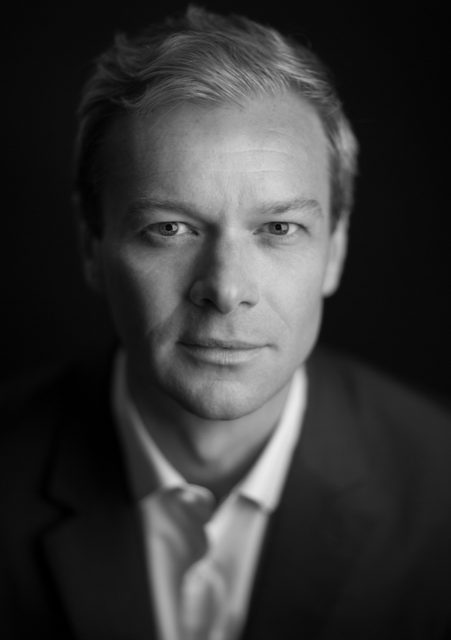
Francis Brett
Bass. In the 2023 Eton Library films.
Francis Brett has sung professionally since graduating from King’s College Cambridge and then the Royal College of Music in 1997. During this period he has enjoyed singing with TONUS PEREGRINUS as well as the Royal Opera House and English National Opera, and small ensembles such as The Sixteen and Exaudi. As a soloist he has worked with conductors such as Andrew Litton, Trevor Pinnock, Richard Hickox, Vladimir Yurowski, and Edward Gardner.
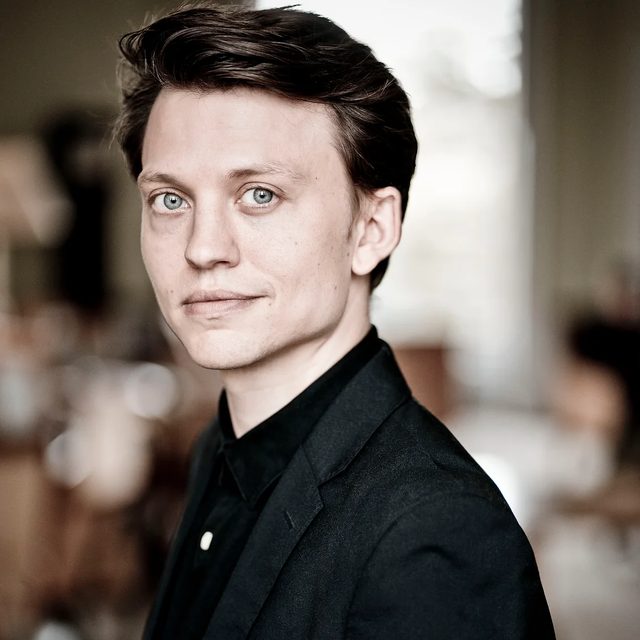
Benedict Hymas
Tenor. Singing with TP since 2008.
Benedict studied at King’s College London and the Royal College of Music. As a concert soloist he works all over the world with conductors such as Philippe Herreweghe and Jos van Veldhoven. He has wide-ranging experience performing the evangelist in Bach’s Passion settings with one reviewer recently remarking, “Benedict Hymas was exemplary in the narrative role of the Evangelist, knowing when to move the story along, and when to linger over important moments – and his smooth, lithe voice is always a delight to listen to.” Recent operatic engagements include leading roles in Acis and Galatea by Handel, and Purcell’s Dido and Aeneas across Belgium and The Netherlands, as well as a role in Poulenc’s Les Mamelles de Tiresias at the Britten Theatre in London. He is an active recording artist with many credits across a broad range of repertoire. His latest project is an album of lute songs with the Dutch lutenist, Arjen Vehage, due for release in mid 2018. He has sung with TONUS PEREGRINUS since 2008.

Daniel Norman
Tenor. Sang in the first TONUS PEREGRINUS concert in 1990 and sings with the group again 35 years later.
Daniel Norman is a British tenor known for his compelling stage presence and versatility across a range of repertoire. Last season, he joined the ensemble at Opernhaus Zürich, where his roles included Scaramuccio Ariadne auf Naxos, Edmondo Manon Lescaut, and Spalanzani Les Contes d’Hoffman. There, he previously performed Kaliboul in Offenbach’s Barkouf and Pirelli in Sweeney Todd. He is highly regarded for his performances of Britten. Roles have included Peter Quint The Turn of the Screw (Glyndebourne), Squeak Billy Budd (ENO), Red Whiskers Billy Budd (Opera North, Aldeburgh Festival, and Glyndebourne), Bob Boles Peter Grimes at the St Endellion Festival, and Captain Vere Billy Budd (Central City Opera, Colorado). He appears regularly in contemporary opera. He performed the role of Mao in Nixon in China (Opera Boston, Staatsoper Hanover, and Verona), and the role of Electrician in Adès’s Powder Her Face (Vienna, Boston, Russia, and a Channel4 film adaptation). In Harrison Birtwistle operas, he has performed the role of Judas in The Last Supper (with the London Sinfonietta and the BBC-SSO), and the role of Orpheus the Myth in The Mask of Orpheus (ENO). In the UK, other recent roles include Monostatos Die Zauberflöte (English National Opera); Basilio Le Nozze di Figaro (Opera Holland Park); Tanzmeister Ariadne auf Naxos (Opera North); Tinca and Gherardo Il Trittico (Welsh National Opera); Laca Jenufa (Longborough Festival); Moser Die Meistersinger and Sellem The Rake’s Progress (Glyndebourne). Daniel has sung with orchestras including the London Symphony Orchestra, CBSO, Minnesota Orchestra, Het Gelders Orkest, Mahler Chamber Orchestra, and the Chamber Orchestra of Belgium. He has also performed at the BBC Proms, Three Choirs Festivals, Aldeburgh Festival, and Oxford Lieder Festival. Britten concert highlights include Les Illuminations with Gianandrea Noseda and the BBC Philharmonic, Nocturne with Edward Gardner, St Nicolas at the Gulbenkian and with the BBC Concert Orchestra, War Requiem for Philharmonia Taiwan and Southbank Sinfonia, and the first official staging of Britten’s Five Canticles at Westminster Abbey. Recordings include four volumes of the Hyperion Schubert Edition with Graham Johnson, a Grammy nominated Beethoven’s 9th Symphony (Vänskä, Minnesota Orchestra), Maintop in Billy Budd, Slender in Sir John in Love (Hickox, Northern Sinfonia), Brett Dean’s Winter Songs with the Berlin Philharmonic Wind Quintet (BIS), Hugh Wood’s Comus (BBCSO, Sir Andrew Davis), and Rimenes in Arne’s Artaxerxes (Classical Opera Company, Linn). He has released three solo discs with pianist Christopher Gould: Winter Words / Who Are These Children? (BIS), Michelangelo and John Donne Sonnets, and Canticles (Stone Records). This season he returns to Opernhaus Zürich to perform the roles Guillot de Morfontaine in Manon and Der Haushofmeister bei Faninal in Rosenkavalier, to Opera North for Basilio in Figaro and Horace Adams in Peter Grimes, and to Glyndebourne for Squeak in Billy Budd. He was a choral scholar at New College, Oxford, where he read Engineering. He later studied in the US and Canada, and at the Royal Academy of Music.
Toby L’Estrange
Next-generation (TPII), singing with TP since 2019.
Harry L’Estrange
Next-generation (TPII), singing with TP since 2019.
Ben Weston
Filmed the five 2023 short films in Eton College Library. Photographer of the Library photographs.
Dr Carlotta Barranu
Credited "with Dr Carlotta Barranu" on the five 2023 short films in Eton College Library.
Lyndon Jones
Recording engineer and producer.
My career might be called eclectic: I’ve been a rock roadie and a classical music producer. I spent 20 years at the BBC, starting as a Studio Manager (radio sound operator) in London before becoming a Producer in the Music Department in Cardiff: from 2003–2008 I was Senior Producer of Radio 3’s Composer of the Week. Since starting my own company, my portfolio of work has extended beyond audio production and engineering to include festival directorship (Swansea International Festival) and management (Ludlow English Song Weekend), sessional lecturing in media production (University of South Wales), filmmaking (Royal Society of Architects in Wales, Brecon Baroque, Rogers Stirk Harbour Architects) and live web-streaming (City of London Sinfonia). I’ve trained many BBC producers in location recording and audio editing techniques; and have been a key member of the selection panel for the BBC’s prestigious Cardiff Singer of the World competition. Recently I’ve had the privilege of sitting next to Britain’s Marxist national treasure Alexei Sayle, on several long train journeys, making three series of Alexei Sayle’s Strangers on a Train (Ride Productions for BBC Radio 4). Other recent jobs: I’ve recorded podcasts with vegan chef Gaz Oakley, and fair fashion campaigner Venetia la Manna (18sixty for Canopy and Stars) and recorded an interview with Dr Tabitha Stanmore about witches in 16th-century Britain for the Folger Shakespeare Library in Washington DC. Alongside numerous podcast bookings, I’ve produced and recorded many programmes for the BBC including Jazz Now with Soweto Kinch (7Digital for Radio 3), Archive on 4 and How to Play (BBC Audio for Radio 4), Dr Phil’s Bedside Manner (Ride Productions for Radio 4) and In the Studio (BBC Audio for World Service). And alongside the pleasure of recording with Antony Pitts and TONUS PEREGRINUS, I’ve also recorded other distinguished artists around the UK, including Samantha Ege / Castle of our Skins at Turner Sims, Southampton; Isata Kanneh-Mason at Tetbury Festival, Rosalind Ventris and Llŷr Williams at Cowbridge Festival, and the Dunedin Consort at Cheltenham Music Festival.
The film-makers
Dian Schramke and Tom Hughes. The trailers add Ben Weston and “Edited at GOLDEN RADIO”.
PRESS
“Perhaps the most enterprising selection of the most recent crop comes from TONUS PEREGRINUS.”
“The performances are first rate, and the Church of St. Alban’s captured very well in a recording that is a sterling addition to any Renaissance collection, and also makes a fine introduction to the music of the Eton composers...”
“At every turn these are fine performances, excellently recorded by Geoff Miles using new, experimental microphones with happy results.”
“... performances leave nothing to be desired in technical polish or stylistic poise. They employ expressive dynamic contrasts, but not to the point of subjective excess.”
“... Pitts has shown a sensitivity to the range of early music that places him among the leading interpreters. Collectors will want this just for the Kellyk work, but it stands on its own as a single disc of this repertoire...”
“The subtle, non-treble-dominated approach taken by TONUS PEREGRINUS gladdens the heart. In a wonderful programme... they radiate delight in the music with exemplary accuracy and delicacy of interpretation.”
“In particular it is good to have what may be the first recording of the Magnificat by Hugo Kellyk... And it is good that Antony Pitts has applied his composer’s instinct and experience to the very tricky matter of editorial accidentals in this music, resulting in a far wider range of chromatic colour than even the boldest of available recordings...”
“TONUS PEREGRINUS’ already high reputation is only enhanced by its interpretations of the Eton Choirbook...”
“The fluency, rapt reverence and sheer beauties of these pieces are conveyed here by the vocal ensemble TONUS PEREGRINUS with subtlety of texture and expression, opening our ears to some real glories of Tudor church music...”
“Fascinating music...vibrant and alive... Eton has produced many prime ministers, but just one Choirbook.”
“These performances are commendable, displaying unearthly breath control in the long phrases of works such as Kellyk’s Magnificat, and great clarity of texture in the dense counterpoint typical of these pieces ...”
“... this is such an exceptionally fine performance that anyone who loves this repertoire, apart from the most diehard purist, is likely to be delighted with the chaste purity, expressiveness, and interpretive choices of TONUS PEREGRINUS...”
“But what gives this Naxos CD its communicative power, even in our more secular time, is the tonal richness and beautiful ensemble work of TONUS PEREGRINUS under Antony Pitts.”
“... it’s pretty much impossible not to reach a state of bliss after listening to a new album featuring seven pieces chosen by English a capella choir TONUS PEREGRINUS from the Eton Choirbook...”
“Connoisseur’s Choice”
“... even collectors who have recordings of this repertoire will want to hear their unique application of scholarship to the questions of cross-relations and unwritten accidentals, which give these performances a piquancy missing from some of the competition.”
“This recording by TONUS PEREGRINUS moves to the top of my list of favorites. There are some familiar works on the recording, like John Browne’s superb six-part Stabat Mater, but few performances match the intensity of this one by TONUS PEREGRINUS...”
“... This new collection from the 14 mixed voices of TONUS PEREGRINUS is exceptionally successful and sonorous, and includes a five-part Magnificat by Hugh Kellyk, previously unrecorded... for sheer contrapuntal virtuosity you cannot beat the oddest piece, the final 13-part canon by Robert Wylkynson.”
“Immaculately performed by TONUS PEREGRINUS, this gorgeously recorded release is an essential purchase.”
“... this astounding Naxos recording... The music is richly captivating, breathtaking and inspirational...”
“... this is superb, and the performances and recording do the music full justice...”
“So three cheers to Antony Pitts’s subtly expressive choir TONUS PEREGRINUS for resuscitating half a dozen numbers.”
“A very rewarding compilation of music from ‘one of the greatest surviving glories of pre-reformation England’.”
“TONUS PEREGRINUS’s thirteen singers include the pick of vocalists working in this field of music... the singing being of excellent technical quality in a beautifully balanced recording.”
PROGRAMME
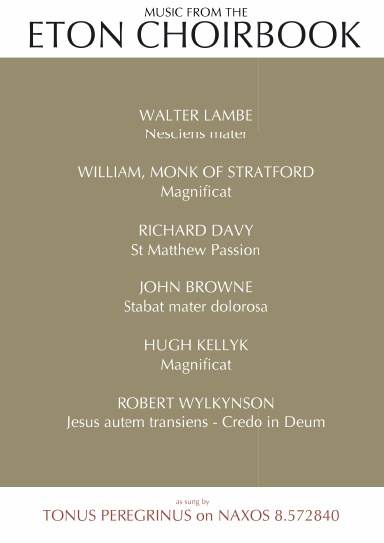
- Walter Lambe · Nesciens mater. Polyphony woven around a plainchant tenor.
- William, Monk of Stratford · Magnificat. Four parts, sung by upper and lower voices in alternation and finally together.
- Plainchant · Nesciens mater, the melody on which Lambe’s polyphony is built.
- Richard Davy · St Matthew Passion, the earliest polyphonic Passion by a named composer. The opening pages are lost, so the story begins with Jesus before Pilate.
- Interval
- A carol from the Fayrfax Manuscript · Jesu, mercy, how may this be? It comes from the early 16th-century Fayrfax Manuscript, not the Eton Choirbook, and is very possibly by John Browne.
- John Browne · Stabat mater dolorosa, for six voices.
- Robert Wylkynson · Jesus autem transiens / Credo in Deum. A canon for 13 voices on the Apostles’ Creed, on the last page of the Choirbook.
- The programme notes, read aloudThe programme notes as a film, 14 minutes 36 seconds, on the ensemble’s own channel.
PROGRAMME: TEXTS
Walter Lambe: Nesciens mater
The Latin text and its English translation.
Latin: Nesciens mater virgo virum peperit sine dolore Salvatorem saeculorum, / ipsum regem angelorum sola virgo lactabat ubere de caelo pleno. English: Not knowing a man, the virgin mother without pain gave birth to the Saviour of the ages; / to the very King of angels the virgin alone gave milk from her heaven-filled breasts.
William, Monk of Stratford: Magnificat
The Latin text and its English translation.
Latin: Magnificat anima mea Dominum. / Et exsultavit spiritus meus in Deo salutari meo, / Quia respexit humilitatem ancille sue, ecce enim ex hoc beatam me dicent omnes generationes. / Quia fecit mihi magna qui potens est, et sanctum nomen eius. / Et misericordia eius a progenie in progenies timentibus eum. / Fecit potentiam in brachio suo, dispersit superbos mente cordis sui. / Deposuit potentes de sede, et exaltavit humiles. / Esurientes implevit bonis, et divites dimisit inanes. / Suscepit Israel puerum suum, recordatus misericordie sue. / Sicut locutus est ad patres nostros, Abraham et semini eius in secula. / Gloria Patri et Filio et Spiritui Sancto. / Sicut erat in principio et nunc et semper: / Et in secula seculorum. Amen. English: My soul doth magnify the Lord, / And my spirit rejoiceth in God my Saviour. / For He hath regarded the lowliness of His handmaiden: For, behold, from henceforth all generations shall call me blessed. / For He that is mighty hath magnified me, and holy is His Name. / And His mercy is on them that fear Him throughout all generations. / He hath shewed strength with His arm; He hath scattered the proud in the imagination of their hearts. / He hath put down the mighty from their seat, and hath exalted the humble and meek. / He hath filled the hungry with good things; and the rich He hath sent empty away. / He remembering His mercy hath holpen His servant Israel, / As He promised to our fathers, Abraham, and to his seed for ever. / Glory be to the Father, and to the Son, and to the Holy Ghost; / As it was in the beginning, and is now, and ever shall be, / World without end. Amen.
Richard Davy: St Matthew Passion (surviving pages)
The Latin text and its English translation.
Latin: Passio Domini nostri Jesu Christi secundum Mattheum / ...Jesus autem stetit ante praesidem: et interrogavit eum praeses dicens: Tu es rex Judaeorum? / Dicit ei Jesus: Tu dicis. / Et cum accusaretur a principibus sacerdotum et senioribus nihil respondit. Tunc dicit illi Pilatus: Non audis quanta adversum te dicant testimonia? / Et non respondit ei ad ullum verbum ita ut miraretur praeses vehementer. Per diem autem sollemnem consueverat praeses dimittere populo unum vinctum quem voluissent habebat autem tunc vinctum insignem qui dicebatur Barabbas [qui propter homicidium missus fuerat in carcerem]. Congregatis ergo illis dixit Pilatus: Quem vultis dimittam vobis, Barabbam an Jesum qui dicitur Christus? / Sciebat enim quod per invidiam tradidissent eum. Sedente autem illo pro tribunali misit ad illum uxor eius dicens nihil tibi et iusto illi multa enim passa sum hodie per visum propter eum. / Principes autem sacerdotum et seniores persuaserunt populis ut peterent Barabbam Jesum vero perderent. Respondens autem praeses ait illis: Quem vultis vobis de duobus dimitti? / At illi dixerunt: Barabbam. / Dicit illis Pilatus: Quid igitur faciam de Jesu qui dicitur Christus? / Dicunt omnes crucifigatur / ait illis praeses: Quid enim mali fecit? / At illi magis clamabant dicentes: Crucifigatur. / Videns autem Pilatus quia nihil proficeret sed magis tumultus fieret accepta aqua lavit manus coram populo dicens: Innocens ego sum a sanguine iusti huius. Vos videritis. / Et respondens universus populus dixit: Sanguis eius super nos et super filios nostros. / Tunc dimisit illis Barabbam Jesum autem flagellatum tradidit eis ut crucifigeretur. Tunc milites praesidis suscipientes Jesum in praetorio congregaverunt ad eum universam cohortem et exuentes eum clamydem coccineam circumdederunt ei et plectentes coronam de spinis posuerunt super caput eius et arundinem in dextera ejus et genu flexo ante eum illudebant ei dicentes: Ave rex Judaeorum. / Et expuentes in eum acceperunt arundinem et percutiebant caput ejus et postquam illuserunt ei exuerunt eum clamide et induerunt eum vestimentis ejus et duxerunt eum ut crucifigerent exeuntes autem invenerunt hominem cyreneum nomine Simonem hunc angariaverunt ut tolleret crucem ejus et venerunt in locum qui dicitur Golgotha quod est calvariae locus et dederunt ei vinum bibere cum felle mixtum et cum gustasset noluit bibere. Postquam autem crucifixerunt eum diviserunt vestimenta eius sortem mittentes, ut adimpleretur quod dictum est per prophetam dicentem diviserunt sibi vestimenta mea: et super vestem meam miserunt sortem. Et sedentes servabant eum et inposuerunt super caput eius causam ipsius scriptam: Hic est Jesus rex Judaeorum. Tunc crucifixi sunt cum eo duo latrones unus a dextris et unus a sinistris. Praetereuntes autem blasphemabant eum moventes capita sua et dicentes: Vah, qui destruit templum et in triduo illud reaedificat salva temet ipsum si Filius Dei es descende de cruce. / Similiter et principes sacerdotum illudentes ei cum scribis et senioribus dicebant: Alios salvos fecit se ipsum non potest salvum facere si rex Israhel est descendat nunc de cruce et credemus ei confidet in Deo liberet nunc eum si vult dixit enim quia Dei Filius sum. / Id ipsum autem et latrones qui crucifixi erant cum eo inproperabant ei. A sexta autem hora tenebrae factae sunt super universam terram usque ad horam nonam et circa horam nonam clamavit Jesus voce magna dicens: Eloy, Eloy, lema sabacthani? / Hoc est: Deus meus, Deus meus, ut quid dereliquisti me? / Quidam illic stantes et audientes dicebant Heliam vocat iste. / Et continuo currens unus ex eis acceptam spongiam implevit aceto et inposuit harundini et dabat ei bibere. Ceteri vero dicebant: Sine videamus an veniat Helias liberans eum. / Jesus autem iterum clamans voce magna emisit spiritum. Et ecce velum templi scissum est in duas partes a summo usque deorsum et terra mota est et petrae scissae sunt et monumenta aperta sunt et multa corpora sanctorum qui dormierant surrexerunt et exeuntes de monumentis post resurrectionem ejus venerunt in sanctam civitatem et apparuerunt multis. Centurio autem et qui cum eo erant custodientes Jesum viso terraemotu et his qui fiebant timuerunt valde dicentes: Vere Dei Filius erat iste. / Erant autem ibi mulieres multae a longe quae secutae erant Jesum a Galilaea ministrantes ei inter quas erat Maria Magdalene et Maria Iacobi et Ioseph mater et mater filiorum Zebedaei... English: The Passion of our Lord Jesus Christ according to Matthew / ...Jesus stood before the governor: and the governor asked Him, saying, Art thou the King of the Jews? / And Jesus said unto him, Thou sayest. / And when He was accused of the chief priests and elders, He answered nothing. Then said Pilate unto Him, Hearest thou not how many things they witness against thee? / And He answered him to never a word; insomuch that the governor marvelled greatly. Now at [that] feast the governor was wont to release unto the people a prisoner, whom they would. And they had then a notable prisoner, called Barabbas. Therefore when they were gathered together, Pilate said unto them, Whom will ye that I release unto you? Barabbas, or Jesus which is called Christ? / For he knew that for envy they had delivered Him. When he was set down on the judgment seat, his wife sent unto him, saying, Have thou nothing to do with that just man: for I have suffered many things this day in a dream because of Him. / But the chief priests and elders persuaded the multitude that they should ask Barabbas, and destroy Jesus. The governor answered and said unto them, Whether of the twain will ye that I release unto you? / They said, Barabbas. / Pilate saith unto them, What shall I do then with Jesus which is called Christ? / [They] all say unto him, Let Him be crucified. / And the governor said, Why, what evil hath He done? / But they cried out the more, saying, Let Him be crucified. / When Pilate saw that he could prevail nothing, but [that] rather a tumult was made, he took water, and washed [his] hands before the multitude, saying, I am innocent of the blood of this just person: see ye [to it]. / Then answered all the people, and said, His blood [be] on us, and on our children. / Then released he Barabbas unto them: and when he had scourged Jesus, he delivered [Him] to be crucified. / Then the soldiers of the governor took Jesus into the common hall, and gathered unto Him the whole band [of soldiers]. And they stripped Him, and put on Him a scarlet robe. And when they had platted a crown of thorns, they put [it] upon His head, and a reed in His right hand: and they bowed the knee before Him, and mocked Him, saying, Hail, King of the Jews! / And they spit upon Him, and took the reed, and smote Him on the head. And after that they had mocked Him, they took the robe off from Him, and put His own raiment on Him, and led Him away to crucify [Him]. And as they came out, they found a man of Cyrene, Simon by name: him they compelled to bear His cross. And when they were come unto a place called Golgotha, that is to say, a place of a skull, They gave Him vinegar to drink mingled with gall: and when He had tasted [thereof], He would not drink. And they crucified Him, and parted His garments, casting lots: that it might be fulfilled which was spoken by the prophet, They parted My garments among them, and upon My vesture did they cast lots. And sitting down they watched Him there; And set up over His head His accusation written, THIS IS JESUS THE KING OF THE JEWS. Then were there two thieves crucified with Him, one on the right hand, and another on the left. And they that passed by reviled Him, wagging their heads, And saying, Thou that destroyest the temple, and buildest [it] in three days, save Thyself. If Thou be the Son of God, come down from the cross. / Likewise also the chief priests mocking [Him], with the scribes and elders, said, He saved others; Himself He cannot save. If He be the King of Israel, let Him now come down from the cross, and we will believe Him. He trusted in God; let Him deliver Him now, if He will have Him: for He said, I am the Son of God. / The thieves also, which were crucified with Him, cast the same in His teeth. Now from the sixth hour there was darkness over all the land unto the ninth hour. And about the ninth hour Jesus cried with a loud voice, saying, Eli, Eli, lama sabachthani? / that is to say, My God, My God, why hast Thou forsaken Me? / Some of them that stood there, when they heard [that], said, This [man] calleth for Elias. / And straightway one of them ran, and took a spunge, and filled [it] with vinegar, and put [it] on a reed, and gave Him to drink. The rest said, Let be, let us see whether Elias will come to save Him. / Jesus, when He had cried again with a loud voice, yielded up the ghost. And, behold, the veil of the temple was rent in twain from the top to the bottom; and the earth did quake, and the rocks rent; And the graves were opened; and many bodies of the saints which slept arose, And came out of the graves after His resurrection, and went into the holy city, and appeared unto many. Now when the centurion, and they that were with him, watching Jesus, saw the earthquake, and those things that were done, they feared greatly, saying, Truly this was the Son of God. / And many women were there beholding afar off, which followed Jesus from Galilee, ministering unto Him: Among which was Mary Magdalene, and Mary the mother of James and Joses, and the mother of Zebedee’s children...
John Browne: Jesu, mercy, how may this be?
The English text.
English: Jesu, mercy, how may this be, / That God Himself for sole mankind / Would take on Him humanity? / My wit nor reason may it well find: / Jesu, mercy, how may this be? / Christ that was of infinite might, / Equal to the Father in deity, / Immortal, impassible, the world’s light, / And would so take mortality? / Jesu, mercy, how may this be? / He that wrought this world of nought, / That made both pain[e]s and joy also, / And suffer would pain as sorrowful thought / With weeping, wailing, yea, swooning for woe. / Jesu, mercy, how may this be? / Ah, Jesu! Why suffered Thou such entreating, / As beating, bobbing, yea, spitting on Thy face? / Drawn like a thief, and for pain sweating / Both water and blood, crucified, an heavy case? / Jesu, mercy, how may this be? / ‘Lo, man, for thee, that were unkind, / Gladly suffered I all this.’ / And why, good Lord? / Express Thy mind! / ‘Thee to purchase both joy and bliss.’ / Jesu, mercy, how may this be?
John Browne: Stabat mater dolorosa
The Latin text and its English translation.
Latin: Stabat mater dolorosa / Iuxta crucem lacrimosa / Dum pendebat filius. / Cuius animam gementem / Contristantem et dolentem / Pertransivit gladius. / O quam tristis et afflicta / Fuit illa benedicta / Mater unigeniti. / Que merebat et dolebat / Dum videbat et gerebat / Poenas nati incliti. / Quis est homo qui non fleret / Matrem Christi si videret / In tanto supplicio. / Quis non potest contristari / Piam matrem contemplari / Dolentem cum filio. / Eia mater fons amoris / Me sentire vim doloris / Fac ut tecum lugeam. / Fac ut ardeat cor meum / In amando Christum Deum / Ut sibi complaceam. / Stabat mater rubens rosa / Iuxta crucem lacrimosa / Videns fere criminosa / Nullum reum crimine. / Et dum stetit generosa / Iuxta crucem lacrimosa / Plebs tunc canit clamorosa: / Crucifige crucifige. / O quam gravis illa poena / Tibi virgo poene plena / Commemorans preamoena / Iam versa in mestitiami. / Color erat non inventus / In te mater dum dementus [detentus] / Stabat natus sic contentus / ad debellandum Sathanam. / Per hec nata preamata / Natum tuum qui peccata / Delet cuncta perpetrata / Deprecare dulciflue / Ut nostra tergens ingrata / in nobis plantet firme grata / Per quem dando prelibata / Prestet eterna requie. / Amen. English: The sorrowful mother stood / weeping at the foot of the Cross / as her Son hung upon it. / Her groaning heart, / sorrowing alongside and grieving, / was pierced by a sword. / O how sad and afflicted / was that blessed / mother of the Only-Begotten! / How she grieved and suffered / as she watched and pondered / the agony of her glorious Son! / Who is the man who would not weep / to see the mother of Christ / in such great torment? / Who could not sorrow with her / thinking on this pure mother / sorrowing together with her Son? / O mother, what a fount of love! / that I might feel the power of that sorrow, / would that I might mourn with you! / Would that my heart might burn / with love for Christ my God, / that I might please Him! / The mother stood, a reddening rose, / weeping at the foot of the Cross / as she saw treated as a criminal / Him who had done no crime. / And as she stood overwhelmed, / weeping at the foot of the Cross, / the crowd roared cacophonously / “Crucify him, crucify!” / O how deep was the pain / you felt, virgin so full of pain, / remembering former joys / now turned to utter sadness! / No colour was to be found / in you, mother, while in torment / stood your Son, content to be so treated / in order for Satan to be defeated. / By all this, highly-favoured lady, / may your Son, who cancels / all the sin which we have committed, / be entreated with sweet prayers, / That, wiping away our uncleanness, / in us He might plant His grace / and His promises might be / fulfilled in everlasting peace. / Amen.
Robert Wylkynson: Jesus autem transiens / Credo in Deum
The Latin text and its English translation.
Latin: Jesus autem transiens / [Petrus] Credo in Deum Patrem omnipotentem, Creatorem caeli et terrae. / [Andreas] Et in Iesum Christum, Filium eius unicum, Dominum nostrum, / [Jacobus] Qui conceptus est de Spiritu Sancto, natus ex Maria Virgine, / [Johannes] passus sub Pontio Pilato, crucifixus, mortuus, et sepultus, / [Thomas] descendit ad inferna, tertia die resurrexit a mortuis, / [Jacobus minor] ascendit ad caelos, sedet ad dexteram Dei Patris omnipotentis, / [Philippus] inde venturus est iudicare vivos et mortuos. / [Bartolomaeus] Credo in Spiritum Sanctum, / [Matthaeus] sanctam Ecclesiam catholicam, sanctorum communionem, / [Simon] remissionem peccatorum, / [Judas Thaddeus] carnis resurrectionem, / [Matthias] et vitam aeternam. / Amen. English: But Jesus passing through the midst of them... / [Peter] I believe in God the Father Almighty, Maker of heaven and earth: / [Andrew] And in Jesus Christ His only Son our Lord, / [James] Who was conceived by the Holy Ghost, Born of the Virgin Mary, / [John] Suffered under Pontius Pilate, Was crucified, dead, and buried; / [Thomas] He descended into hell [Hades]; the third day He rose again from the dead; / [James the less] He ascended into heaven, And sitteth on the right hand of God the Father Almighty; / [Philip] From thence He shall come to judge the quick and the dead. / [Bartholomew] I believe in the Holy Ghost; / [Matthew] The Holy Catholic Church; The communion of saints; / [Simon] The forgiveness of sins; / [Judas Thaddeus] The resurrection of the body; / [Matthias] And the life everlasting. / Amen.
AVAILABILITY
The Eton Choirbook – Crossroads of the Renaissance is available for future performances by TONUS PEREGRINUS, in 2027 to 2028. It is part of the project Opening The Eton Choirbook. TONUS PEREGRINUS gave it at St Martin-in-the-Fields, London, on 7 May 2026, singing from the Choirbook’s original notation and from modern editions, around a facsimile. The programme runs from about 70 minutes with no interval to about 90 minutes plus an interval.
Contact and booking
Email us to enquire about booking this programme, or to hire the singers for a workshop, a rehearsal or a talk.
SHEET MUSIC
Free: Transiens (sign in to download). Printed editions from Lulu.
CONNECT
Share this page as you see it, or pick exactly what to share.
Newsletter
How we use your address: Privacy
Contact and booking
Email us to enquire about booking this programme, or to hire the singers for a workshop, a rehearsal or a talk.