

FILMS
RECORDINGS
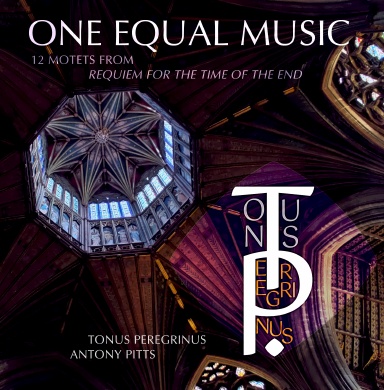
18 of the Requiem's 28 movements have been recorded, 14 of them on One Equal Music, whose three interludes quote The Flower and Why restless, why cast down?
| The Day of Wrath | |
|---|---|
| 1.1 Cogita, anima | One Equal Music |
| 1.2 Requiem aeternam | One Equal Music, track 2 |
| 1.3 Kyrie | not yet recorded |
| 1.4 O malleable Truth | not yet recorded |
| 1.5 There is a green hill | One Equal Music as There is a green hill far away · Jerusalem-Yerushalayim as Interlude · Jerusalem-Yerushalayim [remastered Jubilee Edition]  at Bandcamp as Interlude · Old Masters as There is a green hill far away (STUDIO) |
| 1.6 Dies irae (Procession of the Cross) | not yet recorded |
| The Harrowing of Hades | |
| 2.7 Thou wast present as on this day | One Equal Music · In illo tempore as VIIa. Thou wast present as on this day … in the tomb |
| 2.8 Out of the Depths | not yet recorded |
| 2.9 The strife is o'er | Long days to come |
| 2.10 The Flower |  Known Unknown at tonusperegrinus · Old Masters · One Equal Music, track 5 (quoted) |
| 2.11 Why restless, why cast down? |  Like As The Hart · One Equal Music · One Equal Music, track 11 (quoted) · One Equal Music, track 16 (quoted) |
| 2.12 Sanctus | not yet recorded |
| 2.13 Pie Jesu (Prayer of the Heart) | One Equal Music |
| The Bread of Angels | |
| 3.14 Adoro Te devote | One Equal Music · Seven Letters & other sacred music as Adoro Te · Old Masters as Adoro Te |
| 3.15 On Time | not yet recorded |
| 3.16 Hasten, O God | not yet recorded |
| 3.17 Agnus Dei | not yet recorded |
| 3.18 Lux aeterna / Kontakion of the Departed | One Equal Music as Lux aeterna (Kontakion of the Departed) |
| 3.19 Libera me, Domine | One Equal Music · Old Masters as Libera me |
| The Hope of Glory | |
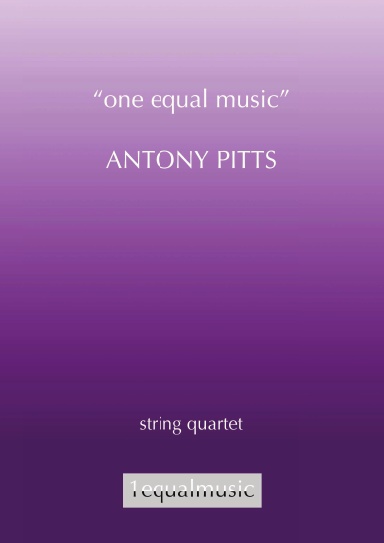
| 4.20 Bring us, O Lord God | One Equal Music as Bring us, O Lord God ("one equal music") |
| 4.21 In My Father’s House | One Equal Music as In My Father's House |
| 4.22 In Paradisum | One Equal Music, track 14 |
| 4.23 Remember your Creator | not yet recorded |
| 4.24 Miserere Domine | Hymns and Songs of the Church at Naxos |
| 4.25 The Twinkling of an Eye (Fanfare of the Last Trumpet) | not yet recorded |
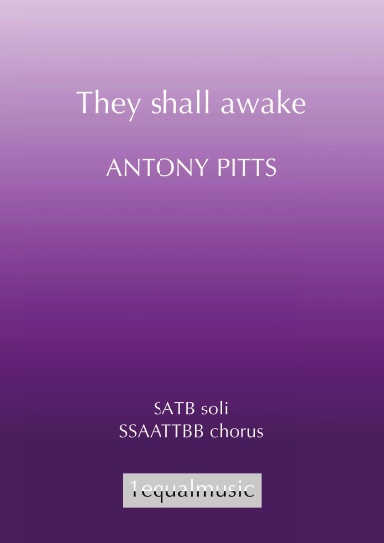
| 4.26 They shall awake | One Equal Music as Bring us, O Lord God ("one equal music") |
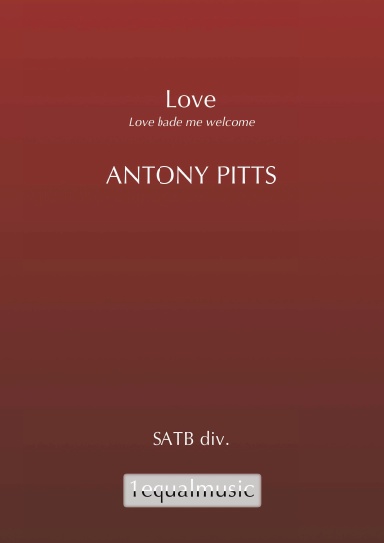
| 4.27 Love bade me welcome | One Equal Music |
| 4.28 Amen | Seven Letters & other sacred music |
STORY
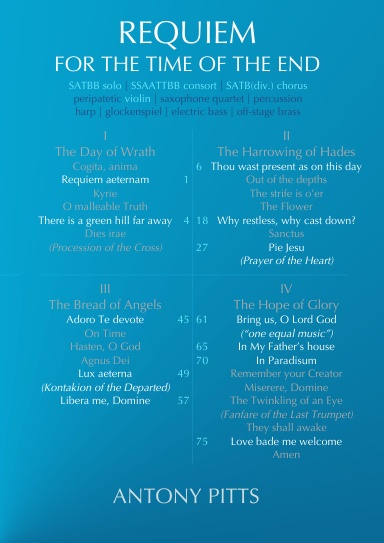
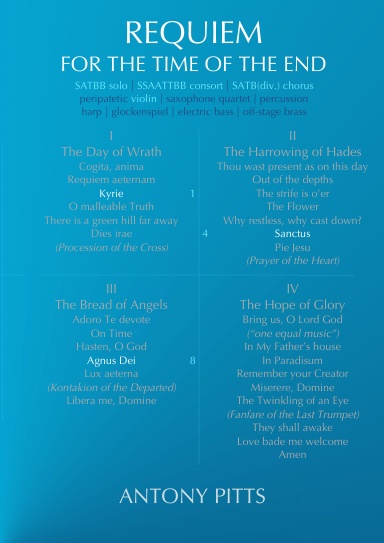
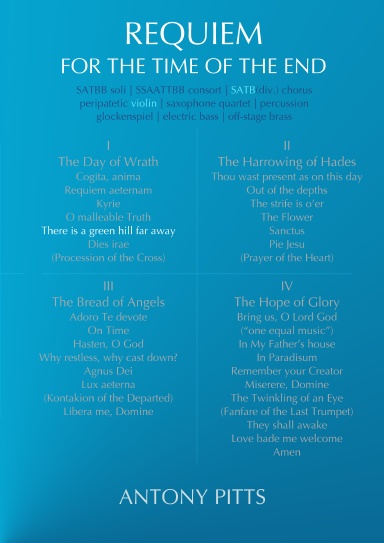
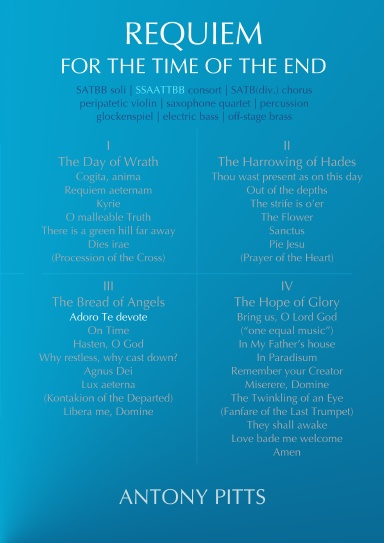
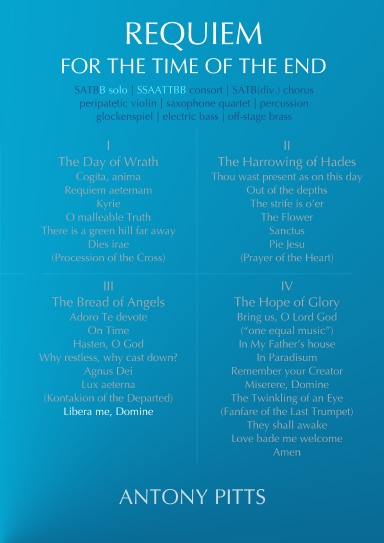
Requiem for the Time of the End is Antony Pitts's op. 210, a Requiem written, revised, and gathered over two decades: the catalogue records its composition from 2006 through 2025, and the printed edition dates individual motets from as early as 1987 and 1990 through to 2019. The work stands in four cantatas, The Day of Wrath, The Harrowing of Hades, The Bread of Angels, and The Hope of Glory, and its own artwork calls for SATBB solo, SSAATTBB consort, and SATB(div.) chorus, with peripatetic violin, saxophone quartet, percussion, harp, glockenspiel, electric bass, and off-stage brass. In June 2025, 1equalmusic released One Equal Music, twelve of the motets in sixteen tracks sung by TONUS PEREGRINUS, and the ensemble's own film of the Lux aeterna carries the movement's closing words: 'Death, where is your sting?'
ONE EQUAL MUSIC
ORIGINS
The Requiem was originally inspired by the death of Alexander Litvinenko in 2006: the programme note for They shall awake speaks of 'the composer's extensive Requiem inspired by the death of Alexander Litvinenko', and the printed edition of the twelve motets says the same. The album's title reaches back further, to John Donne: They shall awake, the Requiem's coda, sets Donne's words 'no noise nor silence but one equal music' from A Sermon Preached at White-hall, February 29, 1627/8, and the twelfth motet is Bring us, O Lord God ('one equal music'). Several movements began life long before the Requiem itself: the edition dates Libera me, Domine to 1987/2024, Adoro Te devote to 1999/2019, and There is a green hill far away to 1990/2009.
PHOTOBOOK
The album as a book: a special edition photobook, printed to order.
MUSOGRAPHY
The musography: how this project connects, drawn live from the Equal Music graph and linked to where each connection comes from.
PEOPLE
Antony Pitts
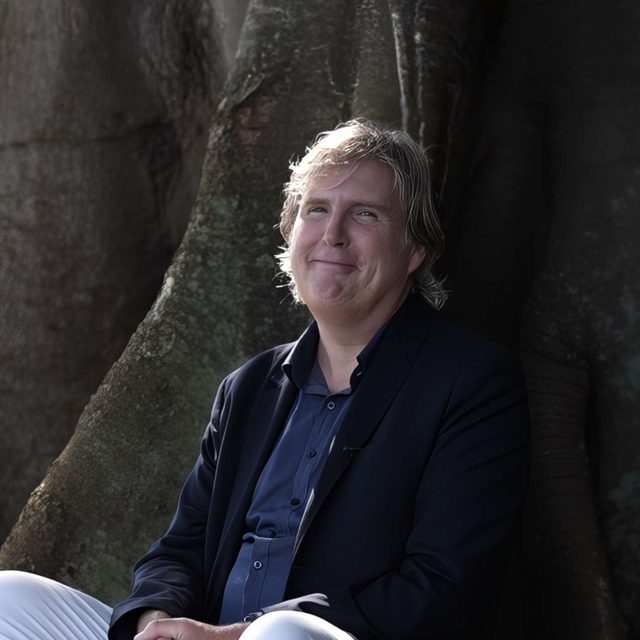
composed the Requiem, op. 210, and conducts on the ensemble's own film of the Lux aeterna.
Antony Pitts is an international composer, conductor, producer, and recipient of the Radio Academy BT Award, the Prix Italia, and a Cannes Classical Award. A Chapel Royal treble, Academic and Honorary Senior Scholar at New College, Oxford, founder-director of British ensemble TONUS PEREGRINUS, Senior Lecturer at the Royal Academy of Music, and Senior Producer at BBC Radio 3, he made his Glastonbury Festival debut in 2014, and from 2016 to 2022 led Australia’s The Song Company as Artistic Director, afterwards establishing TONUS AUSTRALIS. In 2023, he was appointed as the inaugural William Byrd Fellow and Ambassador at Excelsia University College in Sydney. Commissioned for Alexander Litvinenko, Cheltenham Festival, King’s College London, New College Oxford, Rundfunkchor Berlin, The Swingles, Westminster Cathedral, and many others, with premières of his music in London’s Wigmore Hall, Amsterdam’s Concertgebouw, and Berlin’s Philharmonie Kammermusiksaal, and album releases on 1equalmusic, Challenge Records, Delphian, Hyperion, Harmonia Mundi, Naxos, Novum, Signum, and Unknown Public, including the Missa Unitatis and the oratorio-musical Jerusalem-Yerushalayim. Critical acclaim for Antony’s music tends towards hyperbole: “...My first impulse on hearing this disc was to commend it unreservedly to each and every man, woman, and child on the planet...” (Fanfare, on Seven Letters). Sydney Philharmonia Choirs commissioned his 50-part motet, XLX – Mente cordis sui, which was premièred at Sydney Opera House. Antony is currently completing his monumental Requiem for the Time of the End, and is working on a music theatre piece with Adrian Self called The Process, while developing a compositional process of “murmuration”.
TONUS PEREGRINUS
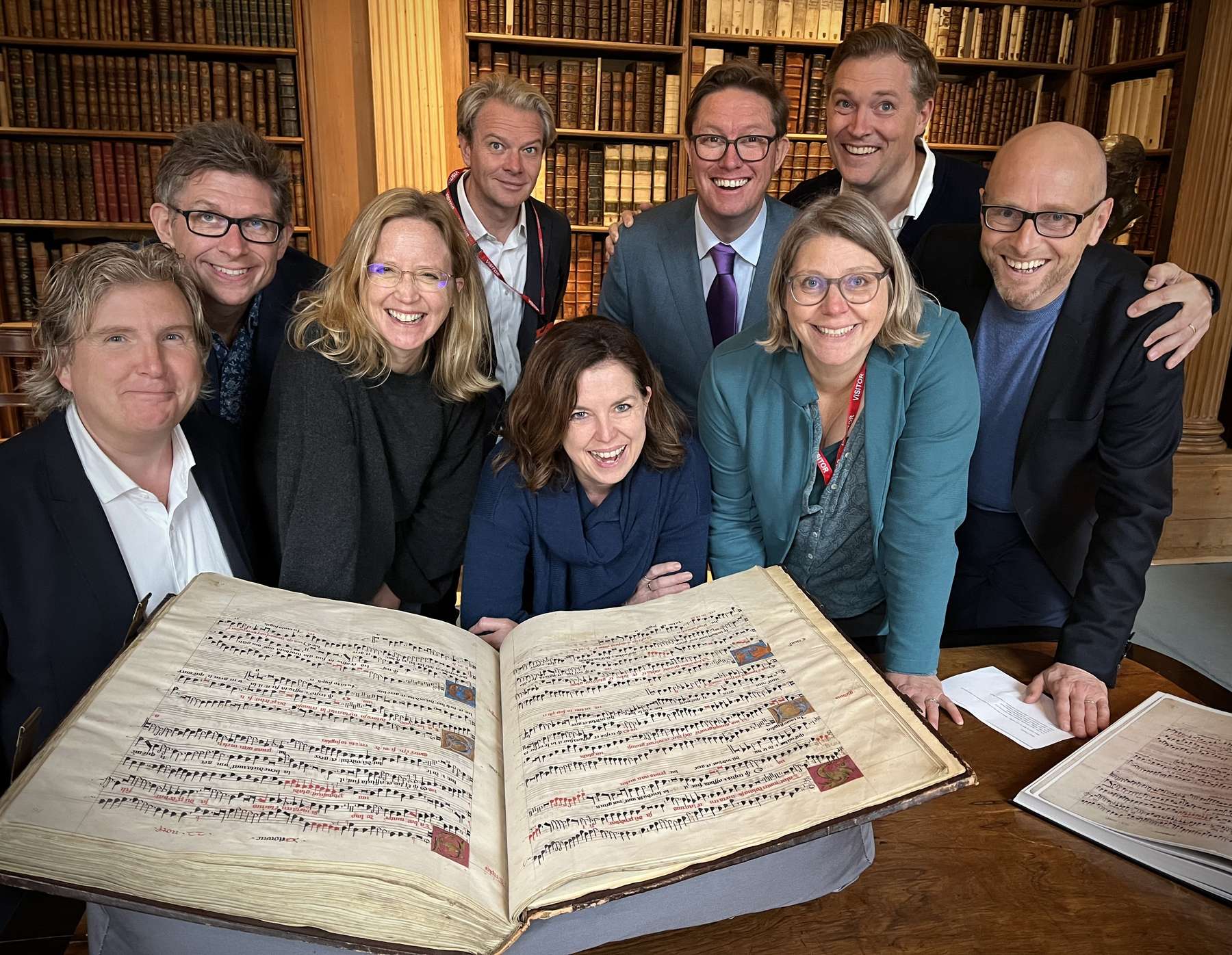
sing the twelve motets on One Equal Music. On the Lux aeterna film: Joanna Forbes L'Estrange, Rebecca Hickey, Kathryn Knight, Alexander L'Estrange, Benedict Hymas, Alexander Hickey, Alex Knight, and Francis Brett.
The vocal ensemble founded and directed by Antony Pitts. This collection was recorded from 28 to 30 September 2004 in Bromley Parish Church and at Finchcocks, Goudhurst, Kent, engineered by Geoff Miles, produced by Geoff Miles and TONUS PEREGRINUS, and released on Naxos 8.557681 in 2006. The record is in eight sequences: Songs of joy (tracks 1 to 6), Songs of love (7 to 12), Songs of sacrifice (13 to 16), Songs of lamentation (17 to 21), Songs of triumph (22 to 27), Songs of unity (28 to 33), Songs of faith (34 to 39), and Songs of hope (40 to 42).
Rob Macdonald
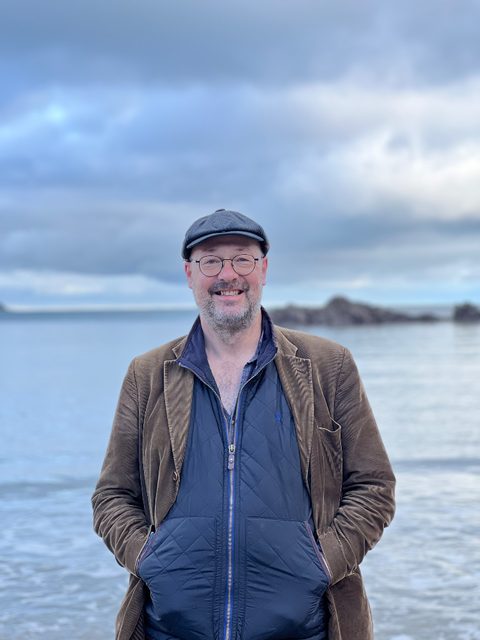
bass soloist in the Lux aeterna, asking its closing question: Death, where is your sting?
Rob Macdonald began singing professionally at an early age as a chorister at Hereford Cathedral under the direction of Dr Roy Massey. Later he was a choral scholar at Christ Church, Oxford where he read Biochemistry and Music. After a short period of study at The Royal Academy of Music Rob has developed a diverse career as both a consort singer and a soloist. In the former capacity he sings regularly with most of the prominent period vocal ensembles of this country including The Tallis Scholars, The King’s consort, and The Hilliard Ensemble while he is also a founder member of two ensembles which have recently won the coveted Gramophone award for Early Music; namely The Cardinall’s Musick and The Clerks’ Group. As a soloist Rob has sung with The City of Birmingham Symphony Orchestra in Symphony Hall, with The Monteverdi Choir under Sir John Eliot Gardiner, for Sir David Willcocks and Raymond Leppard with The London Mozart Players as well as with many choral societies up and down the country. He also has several operatic roles to his name including The Commendatore (Don Giovanni), Sarastro (The Magic Flute), The Abbot (Curlew River) and Il Tempo (Il Ritorno Di Ulisse). Rob was the soloist in the TONUS PEREGRINUS recording of Arvo Pärt’s Passio.
Lyndon Jones
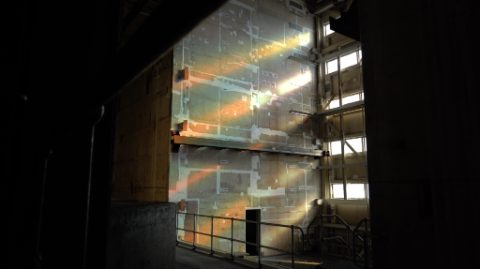
recorded the Lux aeterna at St Peter's Italian Church, Clerkenwell, London.
My career might be called eclectic: I’ve been a rock roadie and a classical music producer. I spent 20 years at the BBC, starting as a Studio Manager (radio sound operator) in London before becoming a Producer in the Music Department in Cardiff: from 2003–2008 I was Senior Producer of Radio 3’s Composer of the Week. Since starting my own company, my portfolio of work has extended beyond audio production and engineering to include festival directorship (Swansea International Festival) and management (Ludlow English Song Weekend), sessional lecturing in media production (University of South Wales), filmmaking (Royal Society of Architects in Wales, Brecon Baroque, Rogers Stirk Harbour Architects) and live web-streaming (City of London Sinfonia). I’ve trained many BBC producers in location recording and audio editing techniques; and have been a key member of the selection panel for the BBC’s prestigious Cardiff Singer of the World competition. Recently I’ve had the privilege of sitting next to Britain’s Marxist national treasure Alexei Sayle, on several long train journeys, making three series of Alexei Sayle’s Strangers on a Train (Ride Productions for BBC Radio 4). Other recent jobs: I’ve recorded podcasts with vegan chef Gaz Oakley, and fair fashion campaigner Venetia la Manna (18sixty for Canopy and Stars) and recorded an interview with Dr Tabitha Stanmore about witches in 16th-century Britain for the Folger Shakespeare Library in Washington DC. Alongside numerous podcast bookings, I’ve produced and recorded many programmes for the BBC including Jazz Now with Soweto Kinch (7Digital for Radio 3), Archive on 4 and How to Play (BBC Audio for Radio 4), Dr Phil’s Bedside Manner (Ride Productions for Radio 4) and In the Studio (BBC Audio for World Service). And alongside the pleasure of recording with Antony Pitts and TONUS PEREGRINUS, I’ve also recorded other distinguished artists around the UK, including Samantha Ege / Castle of our Skins at Turner Sims, Southampton; Isata Kanneh-Mason at Tetbury Festival, Rosalind Ventris and Llŷr Williams at Cowbridge Festival, and the Dunedin Consort at Cheltenham Music Festival.
Joanna Forbes L’Estrange
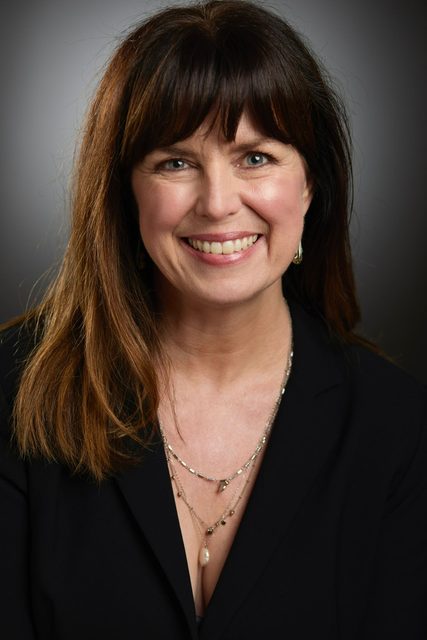
one of the eight singers in the film of the Lux aeterna.
Joanna Forbes L’Estrange is a celebrated British vocalist, composer and conductor known for her versatile artistry. A descendant of an eminent musical family, she earned an MA in Music from Oxford University and began her career with seven years at the helm of the Grammy® Award-winning vocal group The Swingle Singers. As a vocalist she specialises in the performance and recording of contemporary music, from avant-garde works by composers such as Luciano Berio, Steve Reich, John Adams, and Karlheinz Stockhausen, to film and games soundtracks (over 300 to date). She is a popular soprano soloist for Mass in Blue by Will Todd, a work she recorded for the Convivium label. Among her best-selling compositions is A Season to Sing, a revolutionary choral re-imagining of Vivaldi’s The Four Seasons, composed to mark its 300th anniversary. The piece quickly became a global phenomenon, with performances in the UK, Europe, USA, Asia, South Africa and Australia, where the composer conducted its première in Sydney Opera House. The tuneful, singable nature of her choral music has garnered a body of reviews including “Forbes L’Estrange seems to have been born with catchy melodies coursing through her veins” (BBC Music), “a sublime blend of catchy and comforting” (Hyperion) and “full of delicious ear-worms” (Gramophone). Joanna Forbes L’Estrange has gained a reputation as an inspiring choral conductor, drawing vibrant, expressive performances from singers of all ages and abilities. She has judged numerous choral competitions throughout the UK and appeared as a judge for the series SING! Ultimate A Cappella on Sky TV. In 2025 she was made an Honorary Fellow of the Royal School of Church Music.
Rebecca Hickey
one of the eight singers in the film of the Lux aeterna.
Rebecca Hickey started singing in her local church choir at the age of five which fostered an enduring passion for sacred choral music, which is good as she spends much of her time singing it! As well as being a long-standing member of TONUS PEREGRINUS, she sings with the early music vocal ensemble Stile Antico, taking Renaissance polyphony all over Europe, the Americas and Asia. Her solo rendition of Pérotin’s Beata Viscera on TONUS PEREGRINUS’ album Sacred Music from Notre-Dame Cathedral was showcased on BBC Radio 3’s CD Review, and now has over 3 million listens on Spotify. Becky studied English Language and Linguistics at the University of York which perhaps led to her obsession with cryptic crosswords. Her other passions include baking, playing the viola in her local chamber orchestra and walking her dog Gus! She has two (technically adult....) children with husband Alex.
Kathryn Knight
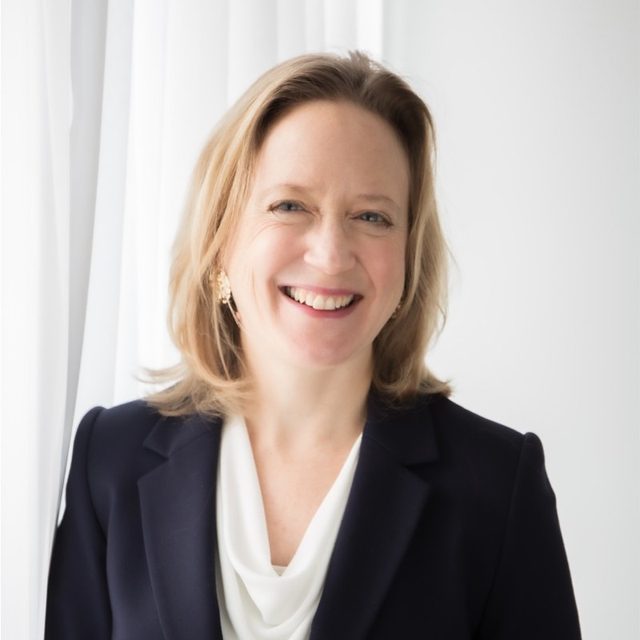
one of the eight singers in the film of the Lux aeterna.
Kathryn Knight read Music at Worcester College, Oxford, where she held a Music Scholarship. She has gone on to pursue a busy and varied musical career in publishing, education and technology in both UK and USA, and continues to sing with various choirs and ensembles, as well as a solo recitalist. Kathryn is a founder-director of the national singing programme for schools, Sing Up, and has guest-presented for BBC TV Proms and BBC Radio 3. Kathryn and her husband Alex, who also performs with TONUS PEREGRINUS, have three children.
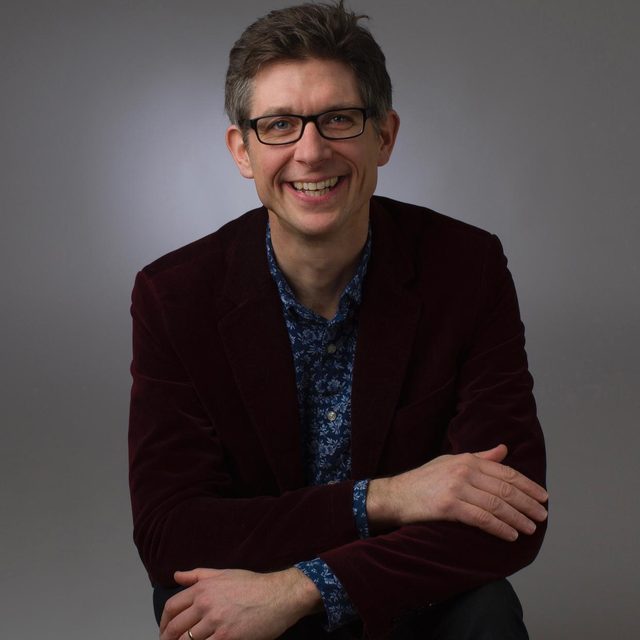
Alexander L’Estrange
one of the eight singers in the film of the Lux aeterna.
Alexander L’Estrange (b.1974) is an award-winning British choral composer, arranger and workshop leader of international acclaim. Educated at Oxford, first as a chorister in New College Choir and later at Merton College, he gained a First Class Honours Master of Arts degree in Music. His compositional voice is characterised by his love for jazz harmony and groove (he is a professional jazz pianist and double bassist as well as a jazz examiner and trainer for the ABRSM) and his background in the English choral tradition. Known for his charismatic and engaging leadership style, L’Estrange presents his music at the annual ACDA conference in the States. L’Estrange is best known for his series of large-scale choral works which draw together singers of all ages across the community. The first of these was Zimbe! Come sing the songs of Africa!, a 40-minute fusion of African song and jazz, which received over 150 performances worldwide within its first five years, establishing his reputation as one of Britain’s most popular living composers. Zadok Rules – Hallelujah!, commissioned by the Hanover Band to commemorate the 60th anniversary for Queen Elizabeth II’s reign, is based on Royal music through the ages; Ahoy! Sing for the Mary Rose is an uplifting fusion of sea shanties and Tudor music, commissioned to mark the opening of the Mary Rose Museum; Song Cycle: vive la vélorution! was commissioned for the 2014 grand départ in Yorkshire of the Tour de France, its ten entertaining songs telling the story of cycling; Wassail! Carols of Comfort and Joy, for which he won the Music Teachers Award for Best Classical Education Initiative in 2018, is a joyous sequence of Christmas songs from the folk tradition and; most recently, Freedom! The power of song, written in collaboration with his wife Joanna Forbes L’Estrange, celebrates the role of singing to effect positive change in the world. With the exception of Zadok, each of these works is scored for an SATB choir, unison children’s choir and jazz quintet. Many of L’Estrange’s sacred choral works have been recorded by the award-winning chamber choir Tenebrae, conducted by Nigel Short, on a disc entitled On Eagles’ Wings (SIGNUM label.) His song output includes Love’s Philosophy, three stunning settings of poems by Shelley, Tennyson and Byron, currently on the ABRSM Singing Syllabus, and Winter Songs, another collaboration with Joanna, commissioned to mark the 60th anniversary of the Finchley Children’s Music Group. Most recent is a setting of three movements from The Prophet by Kahlil Gibran for unaccompanied 8-part choir. L’Estrange is the go-to arranger for world-class a cappella groups including The Swingles, Voces 8 and The King’s Singers, for whom he wrote and produced the acclaimed Great American Songbook album. As Consultant Editor of Faber Music’s popular Choral Basics series, he has written hundreds of arrangements of songs from across the musical spectrum. Television credits include the theme tune for the popular CBeebies programme Magic Hands.
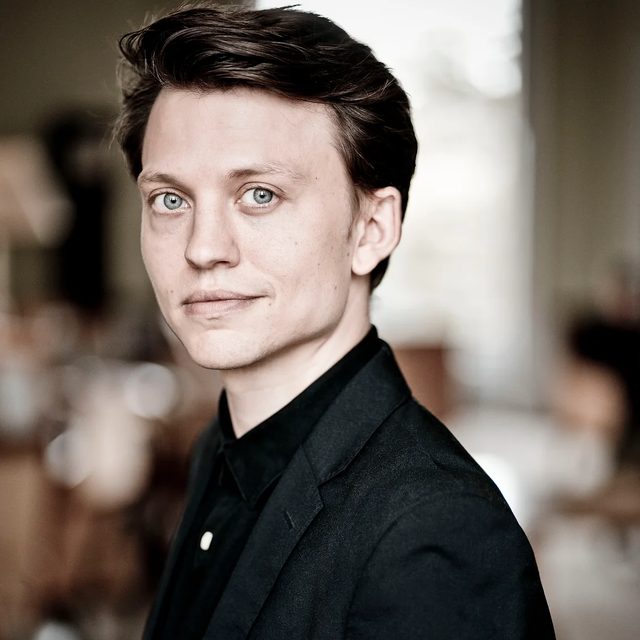
Benedict Hymas
one of the eight singers in the film of the Lux aeterna.
Benedict studied at King’s College London and the Royal College of Music. As a concert soloist he works all over the world with conductors such as Philippe Herreweghe and Jos van Veldhoven. He has wide-ranging experience performing the evangelist in Bach’s Passion settings with one reviewer recently remarking, “Benedict Hymas was exemplary in the narrative role of the Evangelist, knowing when to move the story along, and when to linger over important moments – and his smooth, lithe voice is always a delight to listen to.” Recent operatic engagements include leading roles in Acis and Galatea by Handel, and Purcell’s Dido and Aeneas across Belgium and The Netherlands, as well as a role in Poulenc’s Les Mamelles de Tiresias at the Britten Theatre in London. He is an active recording artist with many credits across a broad range of repertoire. His latest project is an album of lute songs with the Dutch lutenist, Arjen Vehage, due for release in mid 2018. He has sung with TONUS PEREGRINUS since 2008.
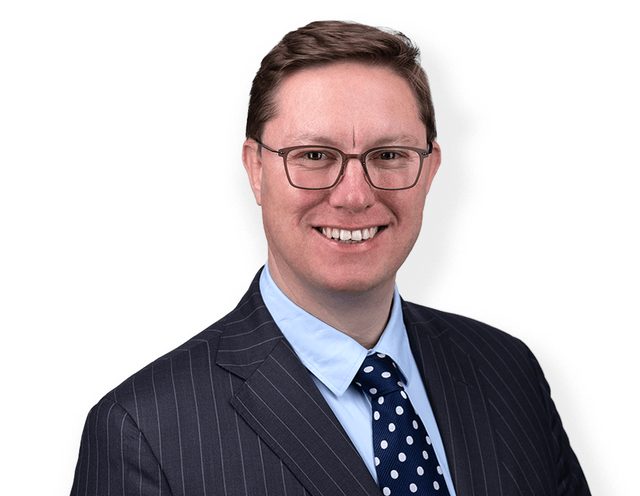
Alexander Hickey
one of the eight singers in the film of the Lux aeterna.
Alexander Hickey KC started singing as a chorister at Hereford Cathedral, went up to Christ Church, Oxford as a choral scholar and now regularly sings with professional choirs in and around London. He combines his singing with a successful career as a barrister specialising in construction law at 4 Pump Court Chambers in the Temple.
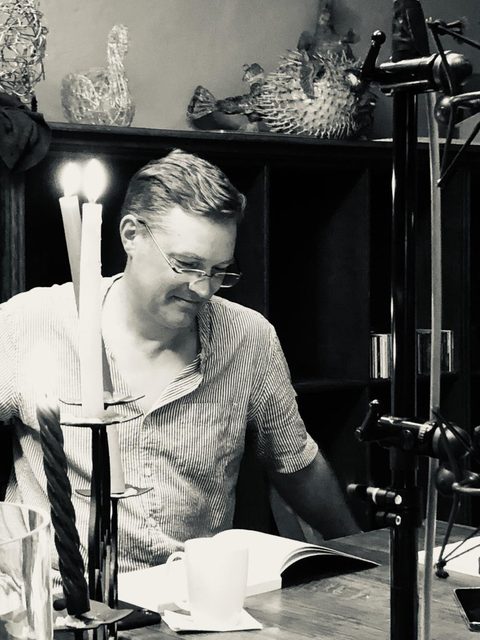
Alex Knight
one of the eight singers in the film of the Lux aeterna.
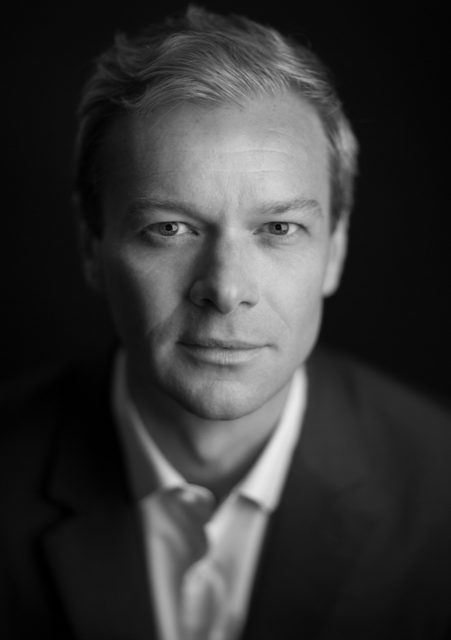
Alex Knight was a chorister at Christ Church, Oxford and a choral scholar at King’s College, Cambridge. He studied singing at the Royal Academy of Music under David Lowe. He now sings when not working as Chief Executive of the Eton Fives Association and raising children with his wife Kathryn. He has worked with a number of groups including TONUS PEREGRINUS, Collegium Musicum 90 and Close Encounters.
Francis Brett
one of the eight singers in the film of the Lux aeterna.
Francis Brett has sung professionally since graduating from King’s College Cambridge and then the Royal College of Music in 1997. During this period he has enjoyed singing with TONUS PEREGRINUS as well as the Royal Opera House and English National Opera, and small ensembles such as The Sixteen and Exaudi. As a soloist he has worked with conductors such as Andrew Litton, Trevor Pinnock, Richard Hickox, Vladimir Yurowski, and Edward Gardner.
Richard Eteson
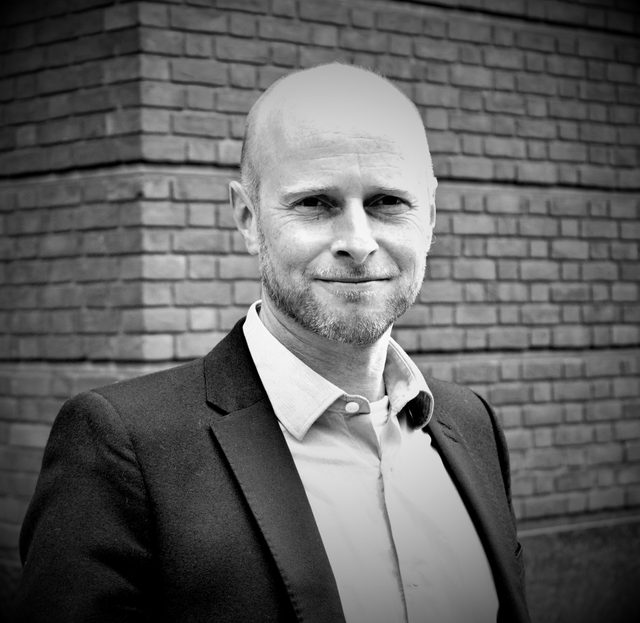
Richard Eteson (b.1975) is a hugely versatile and experienced tenor vocalist, arranger and composer. Starting his musical life as a choirboy in Bingley, West Yorkshire, Richard went on to become Head Chorister at King’s College, Cambridge, a Music Scholar at Shrewsbury School, before returning to King’s as a tenor Choral Scholar (studying Japanese and English) under the direction of Sir Stephen Cleobury. After graduating, Richard became a Choirman of The Temple Church, London and sang with many of London’s finest choirs, consort groups and session choirs (The Gabrieli Consort, Tenebrae, Polyphony, The Cambridge Scholars, Magnificat, TONUS PEREGRINUS, The Brabant Ensemble, The Eric Whitacre Singers, Heritage Voices, The Philharmonia Voices and London Voices). Between 2000-2010 he sang tenor with The Swingle Singers, travelling the world, recording 8 albums and performing in many of the world’s leading venues such as La Scala, Milan; The Concertgebouw, Amsterdam; Suntory Hall, Tokyo; the Esplanade Centre, Singapore; and the Parco della Musica, Rome. In 2010 he founded the London A Cappella Festival. As a tenor oratorio soloist in the UK Richard has given performances of Haydn’s Creation, Bach’s B Minor Mass, Handel’s Messiah, Mendelssohn’s Elijah, Britten’s St. Nicholas, Elgar’s Dream of Gerontius, Stainer’s Crucifixion and performed the Evangelist part in Bach’s St. John Passion and St. Matthew Passion. In the world of contemporary music Richard has given over 50 performances of Berio’s Sinfonia. He has also performed Berio’s a cappella work a ronne & 3 operas by Azio Corghi, and sang chorus and solo tenor parts in the world premiere of Stockhausen’s opera Mittwoch aus Licht with London Voices/Birmingham Opera Company under Graham Vick as part of the London 2012 festival. In recording and live projects he has worked with artists such as Jarvis Cocker, Scott Walker, Hans Zimmer, Sting, Florence & the Machine, Aphex Twin and Goldie. He has made over 50 album recordings and sung on numerous movie soundtracks (e.g. Harry Potter 5/6/7, The Hunger Games and James Bond Spectre). He is frequently called upon as a judge of singing competitions (The Voice Festival UK and various UK schools,) and is a tutor/clinician for the National Youth Choirs of Great Britain and the UK Choir Festival. Richard’s writing is formed from a classical choral heritage but is very much shaped by the large variety of “crossover” vocal work he has taken part in during his professional singing career. His compositional work naturally focuses on the voice, how the music likes to be sung, and how the setting fits the occasion and the place. He writes predominantly with particular voices / choirs in mind rather than generically. In 2023 he completed Under The Hawthorn Tree, a 30 minute song-cycle written for counter-tenor/mezzo & piano, marrying the poems of Hywel John to the natural soundscape of the Preseli hills in Wales.

Jeremy Summerly
Jeremy Summerly, born in 1961, is a British conductor who founded Oxford Camerata in 1984 and has directed the Edington Festival's mixed-voice consort since 1983. Educated at Winchester College and New College, Oxford, where he took a first in music, he worked for BBC Radio before presenting and reviewing for Radios 3 and 4 from 1991. He taught at the Royal Academy of Music, was Director of Music at St Luke's, Chelsea, from 2010, and has taught at Gonville and Caius College, Cambridge, since 2020.
Simon Hewitt Jones
violin on the Lux aeterna film.
Simon Hewitt Jones is an English violinist, born in 1982 into a musical family: he is a grandson of the composer Tony Hewitt-Jones and a brother of the composer Thomas Hewitt Jones. He is Director of ViolinSchool, a researcher at the Royal Academy of Music in London, and Artistic Director of Music and the City. He has played at the Henley and Spitalfields festivals, and in 2011 gave the Beethoven Violin Concerto in Jerusalem with the Ramallah Orchestra under Diego Masson, having co-curated Road to Jericho, a tour of contemporary British and Palestinian music. As a session violinist in London he has recorded for the BBC, EMI, Virgin, and Universal, and has played for Massive Attack, Elton John, and Ed Sheeran. He co-founded the independent classical label Court Lane Music, whose first release, the string chamber music of Imogen Holst, won a BBC Music Magazine award in 2010.
Alexander Litvinenko
whose death in 2006 originally inspired the Requiem.
Alexander Valterovich Litvinenko (30 August 1962 – 23 November 2006) was a British-naturalised Russian defector and former officer of the Russian Federal Security Service (FSB) who specialised in tackling organised crime. A prominent critic of Russian President Vladimir Putin, he advised British intelligence and coined the term "mafia state." On 1 November 2006, Litvinenko suddenly fell ill and was hospitalised after poisoning with polonium-210; he died from the poisoning on 23 November.
Source: Wikipedia, CC BY-SA 4.0 His death inspired Antony Pitts's Requiem for the Time of the End.
The Song Company
brought movements of the Requiem to Sydney: Thou wast present as on this day in In Tempore Paschali (2016), and In Paradisum in Fullness of Joy (2022).
The Song Company was Australia's national vocal ensemble, founded in Sydney in 1984. It mentored emerging singers and programmed widely, from centuries-old works to new commissions. Antony Pitts, who moved from Britain in 2016, was its fourth artistic director and held the post for seven years, programming more than seventy concerts, albums, and films, before an Artistic Advisory Committee chaired by the composer Paul Stanhope took over for the 2023 season. In June 2026 its board resolved to appoint a liquidator, ending forty-two years of work.
Al Kamandjati
Al Kamandjati is a nonprofit organisation based in Ramallah that offers music lessons to Palestinian children in refugee camps and villages in the West Bank, the Gaza Strip, and southern Lebanon, and gives them chances to perform in orchestras in the region and in Europe. It was founded in France in October 2002 by the violist Ramzi Aburedwan, aims to help children discover cultural heritage and develop creative skills, and received a Prince Claus Award in 2006.
Andrew O’Connor
sang Thou wast present on the April 2016 In illo tempore recording of The Song Company.
Andrew O'Connor is a bass, born in Perth, with a Bachelor of Music from the University of Western Australia. He moved to Sydney in 2015 to join The Song Company and is a sought-after soloist with orchestras including the Queensland Symphony Orchestra, Bach Akademie Australia, and the Orchestra of the Antipodes, in works such as Pärt's Passio, Monteverdi's Vespers, and Fauré's Requiem. He also sings regularly with Pinchgut Opera, Cantillation, and the choirs of St Mary's Cathedral and St James.
Anna Fraser
sang Thou wast present on the April 2016 In illo tempore recording of The Song Company.
Anna Fraser is a soprano who specialises in early and contemporary repertoire and became a permanent member of The Song Company in 2007, singing a cappella programmes of traditional and exploratory music. She performs regularly with Sydney groups including Pinchgut Opera, Cantillation, Sydney Chamber Opera, the Sydney Symphony Orchestra, and Ensemble Offspring, and has collaborated with The Wallfisch Band and the New Zealand String Quartet.
Hannah Fraser
sang Thou wast present on the April 2016 In illo tempore recording of The Song Company.
Hannah Fraser is an Australian mezzo-soprano who was offered a full-time place with The Song Company following her graduation. Her interests are opera, art song, consort singing, and education, and she continues to collaborate nationally and internationally with ensembles, musicians, and directors. She sang on The Song Company's April 2016 recording In illo tempore, which includes Antony Pitts's Thou wast present as on this day.
Mark Donnelly
sang Thou wast present on the April 2016 In illo tempore recording of The Song Company.
Mark Donnelly is a baritone who joined The Song Company in 1997 and has performed music spanning eleven centuries for audiences in Australia and abroad. He is in demand for contemporary works, film scores, radio dramas, and commercials, and has appeared with Pinchgut Opera, Opera Queensland, the Australian Chamber Orchestra, the Sydney and Melbourne Symphony Orchestras, Ensemble Offspring, Taikoz, and the Sydney Philharmonia Choirs.
Richard Black
sang Thou wast present on the April 2016 In illo tempore recording of The Song Company.
Richard Black is a tenor who began voice study in 1991 while completing a science degree at Adelaide University, and later sang with the Adelaide Chamber Singers under Carl Crossin. He moved to Sydney in 1994 to join The Song Company, held the position until 2017, and had rejoined in 2002. He is a founding member of ACO Voices and Cantillation, has sung in Pinchgut Opera performances, and formed and directed the ensembles Renaissance Men and Chroma.
Susannah Lawergren
sang Thou wast present on the April 2016 In illo tempore recording of The Song Company.
Susannah Lawergren is a soprano who joined The Song Company as a full-time member in 2011, singing in its subscription concerts, festivals, residencies, tours, and educational workshops, and is regularly broadcast on ABC Classic FM. She has worked with Bach Akademie Australia, Ensemble Offspring, the Australian Chamber Orchestra, and the Sydney and Melbourne Symphony Orchestras, and abroad with the Wallfisch Ensemble and Forma Antiqva. Her solo appearances include recitals, oratorio, and contemporary and dramatic works.
Choir of King’s College, London
The Choir of King's College London is a mixed-voice choir whose main task is to provide music in the college chapel on the Strand. Founded around 1843 by William Henry Monk, it usually has between twenty-five and thirty singers, mostly music undergraduates, with an organ scholar, and has gained an international reputation among university choirs. David Trendell directed it from 1992 to 2014, Gareth Wilson was acting director, and Joseph Fort has led it since 2015. Since 2009 it has recorded mainly for Delphian Records.
David Trendell
David Trendell (1964 to 2014) was College Organist and Director of the Chapel Choir at King's College London from 1992 until his death, and a Senior Lecturer in Music. A chorister at Norwich Cathedral and organ scholar of Exeter College, Oxford, he was Organist of the University Church of St Mary the Virgin, Oxford, before moving to London. He led the Chapel Choir to international recognition, recording English and Spanish Renaissance music and works by Allegri and Rogier, and directed the Edington Festival and music at St Mary's, Bourne Street.
Gareth Wilson
Dr Gareth Wilson is a composer and choral conductor who studied at the Royal Scottish Academy of Music and Drama, Edinburgh University, and the Royal Academy of Music, and took a doctorate in theology at King's College London, where he was Acting Director of the Chapel Choir from 2014. He is Director of Chapel Music and a Bye-Fellow at Girton College, Cambridge, and Director of Music at Christ Church, Chelsea, and has composed, commissioned, and directed more than 150 new works for Anglican worship.
Choir of New College, Oxford
The Choir of New College, Oxford, was provided for in the foundation of the college in 1379 and sings the daily services in New College Chapel. Its adult singers and boy trebles are directed by Robert Quinney. Celebrated for its distinctive and stylish performance of music from five centuries, the choir has made more than 100 recordings and is heard live in webcasts and on concert tours.
Robert Quinney
Robert Quinney is Organist and Tutorial Fellow in Music at New College, Oxford, where he has directed the Choir of New College since 2014, and an Associate Professor in the University's Faculty of Music. A chorister at Dundee Cathedral and organ scholar of King's College, Cambridge, he worked in London at Westminster Cathedral and Westminster Abbey, and directed music at Peterborough Cathedral. He is Director of the Edington Festival and has recorded Bach and Elgar organ works and Sheppard's Media vita with the New College Choir.
Choir of Royal Holloway
The Choir of Royal Holloway, University of London, grew from a choir founded at Royal Holloway College in 1886 for women's voices. It became a mixed-voice choir when men were admitted in 1965, and in 2006 a Chapel Choir of choral scholars was added. Rupert Gough has been Director of Choral Music and College Organist since 2005, and the choir has recorded extensively for Hyperion; its 2018 album of Ola Gjeilo's music, Winter Songs, reached number one in the UK and US classical charts.
Rupert Gough
Rupert Gough has been Director of Choral Music and College Organist at Royal Holloway, University of London, since 2005, and is also Organist and Director of Music at St Bartholomew the Great, London's oldest surviving church. A chorister at the Chapels Royal, he went on to the Purcell School and took a Master's degree in English church music with distinction at the University of East Anglia. He was Assistant Organist at Wells Cathedral for eleven years and has built the Royal Holloway Chapel Choir's Hyperion discography.
Choir of St Pancras
sang In My Father’s House.
Christopher Batchelor
Dr Christopher Batchelor was Director of Music at St Pancras Church, London, for thirty-seven years, stepping down on 23 March 2025 after a valedictory service of Evensong marking his dedicated service to the church and to furthering church music more widely. In 2002 he founded the London Festival of Contemporary Church Music at St Pancras New Church, which presents new liturgical and organ music across London and has seen commissions from Michael Berkeley, Gabriel Jackson, and Cecilia McDowall.
Royal Tunbridge Wells Choral Society
The Royal Tunbridge Wells Choral Society was formed in 1904 by Francis Foote, and its first concert was Brahms's Requiem in the Great Hall, Tunbridge Wells. It took its present name in 1959, at its fiftieth anniversary, and since the Second World War most of its concerts have been given in the Assembly Hall, opened in 1939. Derek Watmough was musical director for about thirty years to 2004, followed by Richard Jenkinson from 2005 and Rebecca Miller from 2012. It is a registered charity, number 273310.
David Pitts
Bass, 1931.
Oxford Camerata
Oxford Camerata is an English chamber choir based in Oxford, founded in 1984 by the conductor Jeremy Summerly with the singers David Hurley and Henrietta Cowling, and giving its first performance on 22 May that year. Its core of about fifteen singers is known mainly for unaccompanied music, with an instrumental ensemble added in 1992 and a baroque orchestra in 2007. After a five-album contract in 1991 it recorded extensively for Naxos, including Machaut's La Messe de Nostre Dame (1996), Tallis's Spem in alium (2005), and Fauré's Requiem.
Ian Dingle
Ian Dingle is a saxophonist who taught himself the instrument, joined Junior Guildhall, and went on to the Guildhall School of Music and Drama, where he studied with Christian Forshaw and John Harle and later became a Fellow. He plays in the Kaleidoscope Saxophone Quartet, whose other members named in his interview are Guy Passey, Sally MacTaggart, and John 'Rittipo' Moore, and which has won multiple awards. Our graph places him in the quartet at Guildhall on 11 January 2012.
Kaleidoscope Saxophone Quartet
The Kaleidoscope Saxophone Quartet is a multi-award-winning chamber ensemble whose repertoire spans four centuries, from Palestrina and Bach to Gershwin, Sondheim, and Gavin Bryars. Players named by the Musicians' Company include Guy Passey, Sally MacTaggart, John 'Rittipo' Moore, and Ian Dingle. It has appeared at Wigmore Hall, the Purcell Room, and Bridgewater Hall, and its debut album Oil, released in 2015, includes Oliver Leith's A Day at the Spa, which won a British Composer Award in 2016.
The Clerks
The Clerks, also known as The Clerks' Group, is a British early-music vocal ensemble formed by Edward Wickham in 1992 from Oxford University choral scholars, the academical clerks from whom it took its name. It is best known for Franco-Flemish Renaissance polyphony, especially Johannes Ockeghem, whose complete sacred music it finished recording in 1999, winning a Gramophone Award. In the late 2000s it moved into contemporary music, premiering works by Robert Saxton, Gabriel Jackson, and Christopher Fox, and recorded for ASV and Sanctuary.
Edward Wickham
Dr Edward Wickham is Director of Music and a Fellow at St Catharine's College, Cambridge, where he has directed the music since 2003, and an Affiliated Lecturer in the University's Faculty of Music. Educated at Oxford and King's College London, where he took a doctorate on fifteenth-century sacred music, he founded the vocal ensemble The Clerks soon after leaving Oxford; it made over two dozen recordings and won a Gramophone Early Music Award. He formed the St Catharine's Girls' Choir in 2008 and founded the Oxford and Cambridge Singing School.
Delphian Singers
The Delphian Singers are a young chamber choir based in London, typically of between eight and twenty-four singers depending on the repertoire. They draw their members from London's best young singers at the start of their professional careers and perform music from the Renaissance to the present day, with a focus on lesser-known and new works. They aim to bring varied choral music to a broad audience, including listeners less familiar with the genre, and have performed Rachmaninov's Vespers at St John's Smith Square.
Toby Young
with the Delphian Singers, Thou wast present.
Elysian Singers of London
The Elysian Singers of London is a chamber choir founded in 1986 by Matthew Greenall, who was succeeded as music director by Sam Laughton in 2000. It is known for adventurous programmes and premières of contemporary music, including works by John Tavener, who was its patron from 2002 until his death in 2013, and by John Habron; Sir James MacMillan is now its patron. It also performs Baroque, Romantic, and twentieth-century masterpieces at venues such as St Martin-in-the-Fields.
Choir of London
sang There is a green hill.
Peter Tregear
Peter Tregear is an Australian musicologist, conductor, and singer, educated at the University of Melbourne and King's College, Cambridge. He was Director of Music at Fitzwilliam College, Cambridge, Dean of Trinity College in the University of Melbourne, and Professor and Head of the School of Music at the Australian National University from 2012 to 2015. He co-founded IOpera and The Consort of Melbourne, won a Green Room Award for opera conducting in 2008, and wrote Ernst Krenek and the Politics of Musical Style (2013).
PRESS
“Antony Pitts’s In Paradisum began with weighty glowing textures in low range, opening out to iridescent still chords, holding the soprano line like a beam of light as the textures mutated towards the cadence...”
“The Amen motet, two separate four-part groups of singers sharing the single word for almost nine minutes, comes at the end of this recital and impresses as a summation of Antony Pitts’ work as represented. It seems rhapsodic but is carefully structured: a rich harmonic and contrapuntal score that always engages and can entrance...”
“...Pitts’s Requiem for the Time of the End – In Paradisum shimmered... A very adroit and virtuoso concert of Renaissance polyphony and related modern works. The music and voices were burnished and compelling.”
“A collection of settings of Psalm 42 in various translations curated by Catherine Alette Clover, author of New College-themed novel The Templar’s Garden... Antony Pitts’s Why restless, why cast down?”
“‘This is an arresting and impressive piece that grabbed and held my attention... Pitts responds to the image-rich words with very intense music.’”
“Thou Wast Present As On This Day by The Song Company’s Artistic Director Antony Pitts appears with increasing intensity in each section of the program: Tomb, Hades, and Throne. The composer’s stark but striking use of harmony and texture works well in this context.”
“Each section also worked in Thou wast present as on this day from Pitts’ Requiem for the Time of the End. The unifying element was the fluidity of time, the connection between past, present and future and, of course, the musical thread of polyphony that can arouse a sense of the eternal in the hands of a dexterous composer.”
“...I was entirely unprepared for the stunning performance by St Pancras Church Choir... and the dark new work they premiered by Antony Pitts came in finely sculpted waves of polyphony. It was quite something to sit in this grand church, proofed against the traffic roaring past outside, and hear such fabulous music free of charge....”
“...Pitts’ music expanded classic polyphonic vocal textures to incorporate modern harmonies within a broadly consonant framework and an original and sensitive understanding of the voice... This was a concert of rare and transcendent beauty.”
“...It is intoxicating stuff: in the Cathedral’s stone crypt voices ring on long after the singers have finished, lending layers of organic polyphony to the artifice of the composer. Music director Antony Pitts and his ensemble sculpt the moving air with superb finesse...”
SHEET MUSIC
Free to download. Donations most welcome.
PRINTED EDITIONS
Print-on-demand, fulfilled by Lulu. Prices shown before shipping.



PUBLISHER
Requiem for the Time of the End (op. 210) and its movements are published by 1equalmusic: the selected motets are listed in the score catalogue at one.equal.music, with print-on-demand fulfilled by Lulu, and the PDFs on the PERFORM tab are free with an Equal Music sign-in. The recording (One Equal Music, 1EMOEM, sixteen tracks from the twenty-eight movements) is a 1equalmusic release, streamed here through the Equal Music Player and linked to the streaming services. Texts include the Latin Requiem, the Liturgy of the Catholic Apostolic Church (Holy Saturday), John Donne, George Herbert, and John Milton. Singing it? We would love to hear. Tell us you are singing it
CONTACT
CONNECT
Share this page as you see it, or pick exactly what to share.