


FILMS
LIVE
- April 2007 The Peace of Jerusalem premiere, Choir of London, Jeremy Summerly Israel
- 8 June 2008 World premiere of the complete oratorio, TONUS PEREGRINUS, Opera Fringe Down Cathedral, Downpatrick, Northern Ireland
- May 2012 U.S. premiere, Choral Arts Cleveland, Martin Kessler
- 2017 The Peace of Jerusalem, The Song Company Australia
- June 2022 2022 Australian Jewish Choral Festival, a specially abridged version of the oratorio
EXTRAS
- Overture, music only
- The Peace of Jerusalem, excerpt
 The coda on Alpha and Omega (Hyperion CDA67668)
STORY
The story
An oratorio for our times. The city of Jerusalem has a complex, multi-layered history stretching back thousands of years, and continues today to be the literal and symbolic focus of many, often conflicting, aspirations. This oratorio traces the outlines of the Biblical story of the city through twelve windows or snapshots in which Jerusalem is either the subject or the background. The libretto is based as closely as possible (given the limitations of English translation, the transliterations of ancient Hebrew, and the musical setting itself) on texts from the Tanakh or Old Testament – texts which are both historical and prophetic, full of archetypes and resonances, and are at the same time about real people with their dreams, tragedies, and hopes. Ultimately, the story is a universal one of hope that extends from these Semitic roots to a vision of lasting peace for all people.
About
The composer Antony Pitts was inspired to begin sketching an oratorio that would tell, simply but powerfully, the Biblical story of Jerusalem – to audiences familiar with both great classical oratorios and popular musicals, and regardless of denomination or religious background, cultural perspective or political viewpoint. The result is an oratorio-musical with a libretto based on texts from the Tanakh (the “Old” Testament) laid out in a narrative order, and with the ancient Hebrew names for familiar Biblical characters and places (e.g. Avraham) – thus the double-barrelled title Jerusalem-Yerushalayim. The Biblical story of the city is told through twelve windows or snapshots in which Jerusalem is either the subject or the background; mirroring the four quarters of Jerusalem’s ‘Old City’, these are divided into four sections of three movements: the city in patriarchal times; the city as the capital of Israel and then of Judah up to its destruction by Nebuchadnezzar in 586BC; the city rebuilt under occupation until its destruction by the Romans in 70AD; the city as prefigured by prophets and unfolded in history; and a coda looking forward to Isaiah’s vision of the wolf living together with the lamb.
The libretto
The libretto was compiled by the composer and is drawn as directly as possible, given the limitations of English translation and the musical setting itself, from Biblical texts – texts which are both historical and prophetic, full of archetypes and resonances, and are at the same time about real people with their dreams, tragedies, and hopes. The music is new, but has strong historical echoes including familiar Western musical references such as Tallis’s Lamentations, Purcell’s My Beloved spake, Handel’s Zadok the Priest, and Parry’s I was glad – as well as various resonances from far outside the classical canon. In terms of practicality and approachability, and even structure, Jerusalem-Yerushalayim is modelled on Handel’s Messiah, and designed for widespread use: by professional vocal ensembles or amateur choirs, or a mix of both – with SATB soloists and flexible accompaniment.
The city
The eyes of the world today are on Jerusalem. More than any other city, Jerusalem has captured hearts and imaginations around the world and continues to reflect the turbulent emotions of our troubled times. The city of Jerusalem has a complex, multi-layered history stretching back thousands of years, and continues today to be the literal and symbolic focus of many, often conflicting, aspirations. Jerusalem – placed at the centre of the world on mediaeval maps – a crossroads between Asia, Europe, and Africa. Jerusalem – occupied by Babylonians, Persians, Greeks, Romans, Crusaders, Ottomans, British etc. Jerusalem – the scene of central events in Jewish history and in the Christian gospel – and now home to Jewish, Christian, and Islamic holy sites. While today’s media story is of division and hopelessness, the Bible tells an extraordinary story with a much longer perspective – a story of incredible hope that begins in Genesis with the wanderings of Abraham, and extends from these Semitic roots to a vision of lasting peace for all people, starting in Jerusalem.
The people
The story of Jerusalem is told through the words of some very famous Biblical characters. Melchizedek (sung by Nathan Vale – tenor) Abraham (sung by Alex Knight – bass) Isaac (sung by Raphael Pitts – treble) Jacob (sung by Edan Umrigar – treble) Moses (sung by Francis Brett – bass) David (sung by Benedict Hymas – tenor) Solomon (sung by Alexander Hickey – tenor) Jeremiah (sung by Lisa Beckley – soprano) Ezekiel (sung by Kathryn Knight – alto) Daniel (sung by Alexander L’Estrange – countertenor) Gabriel (sung by Joanna Forbes L’Estrange – soprano) Cyrus, Darius, Artaxerxes (sung by Nick Flower – bass) Nehemiah (sung by Robin Blaze – countertenor) Micah (sung by Richard Eteson – tenor) Elijah (sung by Rebecca Hickey – soprano)
The words
The libretto was compiled by the composer and is drawn as directly as possible, given the limitations of English translation and the musical setting itself, from Biblical texts – texts which are both historical and prophetic, full of archetypes and resonances, and are at the same time about real people with their dreams, tragedies, and hopes. READ THE LIBRETTO
Credits
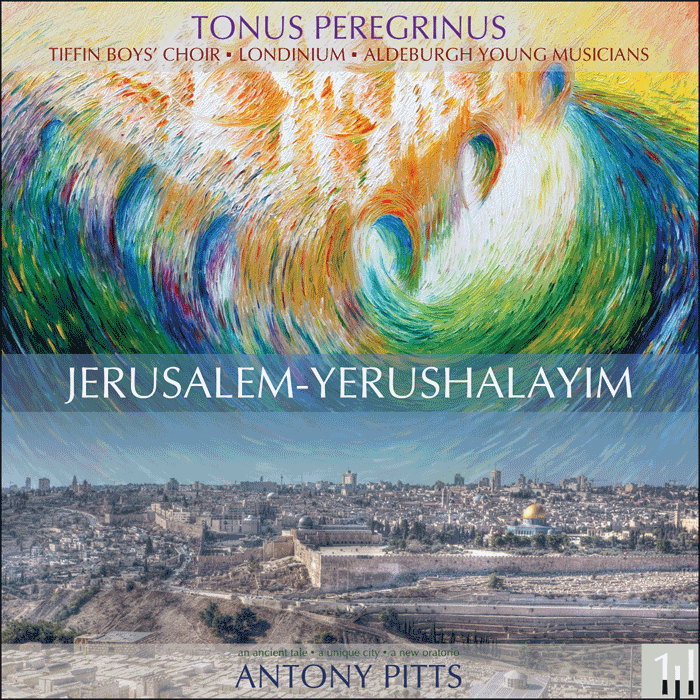
All rights reserved. Artwork: Het nieuwe Jeruzalem by Blandine van Noordt-Grauer. Photographs: Ian Dingle.
Home
AN ORATORIO-MUSICAL BY ANTONY PITTS AVAILABLE IN A DOUBLE-ALBUM RECORDING REMIXED WITH BIBLICAL NARRATION BY DAVID SUCHET, JERUSALEM-YERUSHALAYIM IS AN EXTRAORDINARY MUSICAL CROSS BETWEEN HANDEL’S MESSIAH, BERNSTEIN’S CHICHESTER PSALMS, AND CLASSIC ROCK ANTHEMS, AND TELLS SIMPLY BUT POWERFULLY THE OLD TESTAMENT STORY OF JERUSALEM – IN MODERN ENGLISH BUT WITH ANCIENT HEBREW NAMES FOR FAMILIAR BIBLICAL CHARACTERS AND PLACES. A STORY OF HOPE, REMIXED FOR OUR TIMES: TP 35th anniversary Coral Remix LISTEN & DOWNLOAD AT BANDCAMP SPECIAL EDITION HARDBACK PHOTOBOOK
Home credits
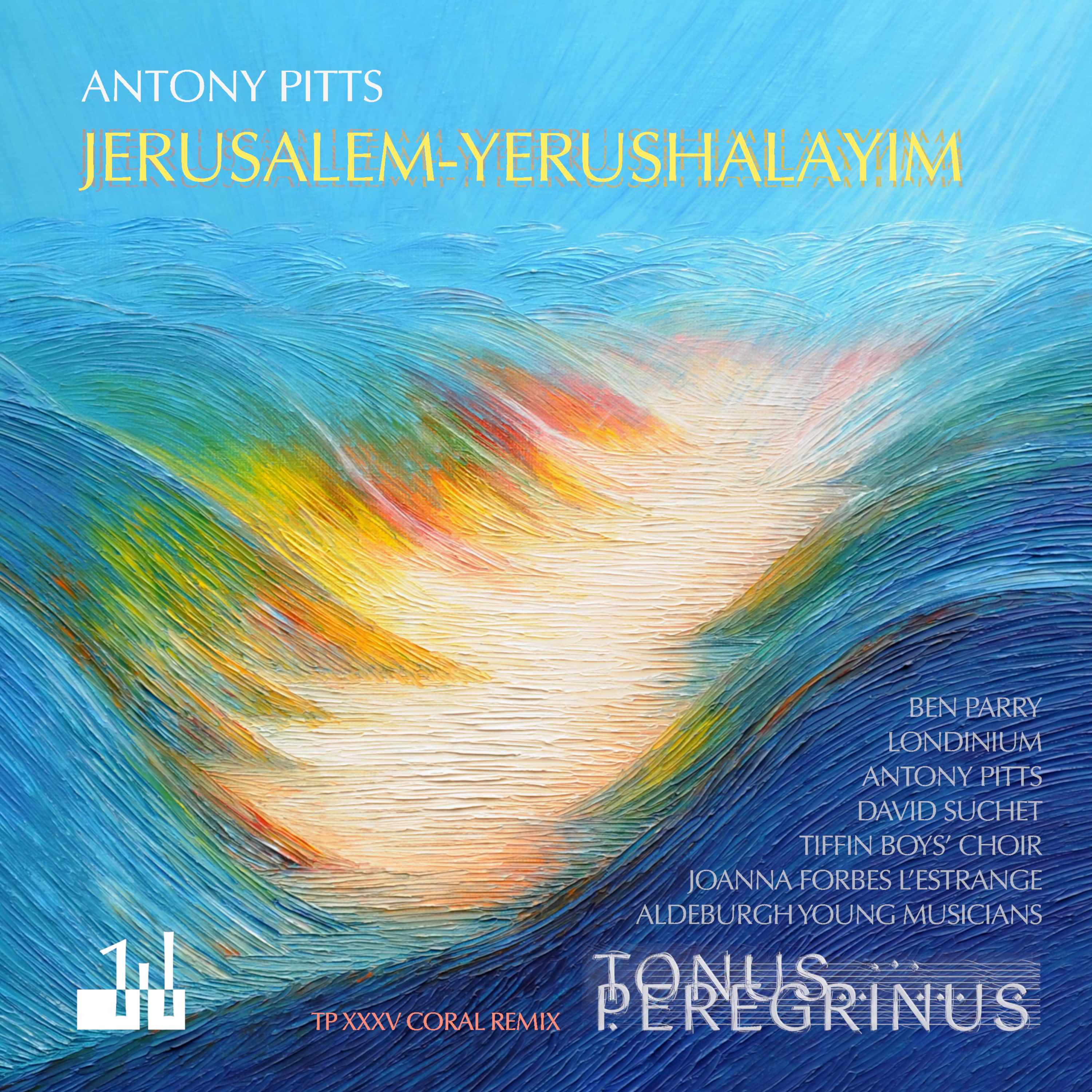
Artwork: Le commencement by Blandine van Noordt-Grauer All photography by Ian Dingle
Programme note
JERUSALEM-YERUSHALAYIM an oratorio on texts from the Tanakh (Old Testament) music by Antony Pitts for chorus, SATB soloists/semi-chorus (SSSAAATTTBBB), (children’s choir), (narrator) flute, alto saxophone (doubling tenor), trumpet, violas (3), harp, piano, organ (& harmonium), (electric) bass, percussion 1. The King of Salem PRELUDE Leave your country Blessed be Avram [tenor – Melchizedek] 2. On Mount Moriah Fear not [bass – Abram] Avraham, take now your son [bass – Abraham, treble/soprano – Isaac] ADONAI Yir’eh [Abraham & Isaac] 3. Blessing and Cursing I carried you on eagles’ wings [bass – Moses] 4. A House for the Lord DANCE I will not go home [tenor – David] I have greatly sinned [David] 5. Called by My Name I was glad [tenor – Solomon] If My people 6. The King of Babylon & the Desolations of Jerusalem Jerusalem, return to Me! I remember you [soprano – Jeremiah] When you were born [alto – Ezekiel] How alone! [Jeremiah] 7. Seventy ‘Weeks’ If I forget you, O Jerusalem [alto – Daniel] O Lord, great God [Daniel] Seventy ‘sevens’... [soprano – Gabriel & Daniel] 8. The Walls of Jerusalem Koresh king of Persia [bass – Cyrus, Darius, Artaxerxes, alto – Nehemiah] They that sow in tears 9. Hosanna! Salvation Break into joy [soprano, alto, tenor, bass] INTERLUDE 10. Many days without a king Tziyon shall be ploughed under [tenor, soprano, bass, alto] O send out Your light and Your truth [soprano, alto] 11. In the Valley of Dry Bones Can a woman’s tender care [soprano, alto, tenor, bass] Our bones are dry [alto - Ezekiel] When Israel lived in their own land [alto] Halleluyah! 12. A House of Prayer for all people Pray for the peace of Jerusalem [soprano – Elijah] The fig tree puts forth… [soprano, alto, tenor, bass] See, I make Jerusalem a cup of trembling [bass] And on that day His feet shall stand You will arise (Shout for joy!) [tenor] You who thirst [soprano, alto, tenor, bass] Then shall living waters stream [soprano, alto, tenor, bass] The Peace of Jerusalem CODA (a cappella) [soprano, alto, tenor, bass] PROGRAMME NOTE The eyes of the world today are on Jerusalem. More than any other city, Jerusalem has captured hearts and imaginations around the world and continues to reflect the turbulent emotions of our troubled times. The city of Jerusalem has a complex, multi-layered history stretching back thousands of years, and continues today to be the literal and symbolic focus of many, often conflicting, aspirations. Jerusalem – placed at the centre of the world on mediaeval maps – a crossroads between Asia, Europe, and Africa. Jerusalem – occupied by Babylonians, Persians, Greeks, Romans, Crusaders, Ottomans, British etc. Jerusalem – the scene of central events in Jewish history and in the Christian gospel – and now home to Jewish, Christian, and Islamic holy sites. While today’s media story is of division and hopelessness, the Bible tells an extraordinary story with a much longer perspective – a story of incredible hope that begins in Genesis with the wanderings of Abraham, and extends from these Semitic roots to a vision of lasting peace for all people, starting in Jerusalem. In 2006 the composer Antony Pitts was inspired to begin sketching an oratorio that would tell, simply but powerfully, the Biblical story of Jerusalem – to audiences familiar with both great classical oratorios and popular musicals, and regardless of denomination or religious background, cultural perspective or political viewpoint. The result is an oratorio-cantata with a libretto based on texts from the Tanakh (Old Testament) laid out in a narrative order, and with the ancient Hebrew names for familiar Biblical characters and places (e.g. Avraham) – hence the double-barrelled title Jerusalem-Yerushalayim. The Biblical story of the city is told through twelve windows or snapshots in which Jerusalem is either the subject or the background; mirroring the four quarters of Jerusalem’s ‘Old City’, these are divided into four sections of three movements each: (A) the city in patriarchal times; (B) the city as the capital of Israel and then of Judah up to its destruction by Nebuchadnezzar in 586BC; (C) the city rebuilt under occupation until its destruction by the Romans in 70AD; (D) the city as prefigured by prophets and unfolded in history; and a coda looking forward to Isaiah’s vision of the wolf living together with the lamb. The libretto is based as closely as possible – given the limitations of English translation and the musical setting itself – on texts from the Tanakh or Old Testament: texts which are both historical and prophetic, full of archetypes and resonances, and are at the same time about real people with their dreams, tragedies, and hopes. The music is new, but has strong historical echoes including familiar Western musical references such as Tallis’s Lamentations, Purcell’s My Beloved spake, Handel’s Zadok the Priest, and Parry’s I was glad – as well as various resonances from far outside the classical canon. In terms of practicality and approachability, Jerusalem-Yerushalayim is modelled on Handel’s Messiah, and designed for widespread use: by professional vocal ensembles or amateur choirs, or a mix of both – with SATB soloists and flexible accompaniment. Unusually, the first part of the oratorio to be completed was the conclusion – the choral coda entitled The Peace of Jerusalem. It was premiered by the Choir of London, conductor Jeremy Summerly, in Israel in April 2007, and has since had performances in the UK by TONUS PEREGRINUS at the London Festival of Contemporary Church Music, and by the Elysian Singers under the direction of the composer in the City of London. TONUS PEREGRINUS has recorded the coda for Hyperion on an album called Alpha and Omega, and in June 2008 gave the world premiere of the complete oratorio at Opera Fringe in Down Cathedral, Downpatrick, Northern Ireland – to a standing ovation. In October 2011 TONUS PEREGRINUS were joined by Aldeburgh Young Musicians, the chamber choir Londinium, and the Tiffin Boys’ Choir, and a cast of soloists including Robin Blaze, to make the world premiere recording of the oratorio, under the direction of Joanna Forbes L’Estrange, Ben Parry, and the composer Antony Pitts, with Alexander L’Estrange. PRINCIPAL MELODIC MOTIFS & THEMES (Divine revelation) (humanity) (promise) (wandering) etc. (sacrifice) (son) (Jerusalem) (freewill) (longing) etc. (king) (Messiah) (decree) (thanksgiving) I have set watchmen on your walls, O Yerushalayim, which shall never hold their peace day nor night: you that call on the LORD, do not keep silent, and give Him no rest, until He establishes, until He makes Jerusalem a praise in the earth. [Isaiah 62:6-7]
ORIGINS
Unusually, the first part of the oratorio to be completed was the conclusion – the choral coda entitled The Peace of Jerusalem. It was premiered by the Choir of London, conductor Jeremy Summerly, in Israel in April 2007, and has since had performances in the UK by TONUS PEREGRINUS at the London Festival of Contemporary Church Music, by the Elysian Singers under the direction of the composer in the City of London, and by The Song Company in Australia in 2017. TONUS PEREGRINUS recorded the coda for Hyperion on an album called Alpha and Omega, and in June 2008 gave the world premiere of the complete oratorio at Opera Fringe in Down Cathedral, Downpatrick, Northern Ireland – to a standing ovation. The revised and expanded version of the oratorio was recorded in October 2011, followed by the U.S. premiere in May 2012 which was given by Choral Arts Cleveland under conductor Martin Kessler – in the presence of the composer.


MUSIC
1. The King of Salem
The oratorio begins with a sung prelude tracing Abra(ha)m’s genealogy all the way from Adam, thus linking the destiny of Jerusalem with the whole human race. The first actual mention of the city comes later in Genesis with the half of the name that still carries the meaning “peace” (shalom in Hebrew, salaam in Arabic) and with the mysterious and symbolic figure of Malki-Tzedek (Melchizedek) as its priest-king. …the four-note motif of the patriarchs’ names morphs into the ‘wandering’ motif and then the ‘promise’ theme – both of which are associated with Abram... [A 1] PRELUDE Leave your country Blessed be Avram [tenor: NV – Melchizedek]
2. On Mount Moriah
Abram’s name is changed to Abraham – from “exalted father” to “father of many (nations)”, and he is promised a son in his old age, Isaac – whose name means “laughter”. But Abraham is asked to sacrifice him. …the laughter in the music: an upside-down version of the first three notes of the ‘sacrifice’ theme... [A 2] Fear not [bass: AK – Abram] Avraham, take now your son [Abraham, treble: RP – Isaac] ADONAI Yir’eh [Abraham, Isaac, treble: EU – Jacob]
3. Blessing and Cursing
The family of Jacob, Abraham’s grandson, migrated to Egypt during a famine; but over time the children of Israel (as Jacob was also known) became enslaved. Miraculously delivered after several hundred years, with Moses leading them on the way to the “promised land”, they have celebrated the night of the Passover ever since. …the ‘thanksgiving’ chant used for Psalm 136 evolves through movements 4, 5, 8, 9, 10, the end of 11, 12… [A 3] I carried you on eagles’ wings [bass: FB – Moses]
4. A House for the Lord
Having captured the stronghold of Zion from the Jebusites some time previously, King David dances wildly as the Ark of the Covenant is brought into the city. Later he orders a (forbidden) census; the punishment is a plague which is only halted on the threshing-floor of Araunah (Ornan) the Jebusite – where David sets up an altar. …the first complete appearance of the ‘Jerusalem’ theme, and echoes of a well-known Handel anthem... [A 4] DANCE I will not go home [tenor: BH – David] I have greatly sinned [David]
5. Called by My Name
Although his father – as a man of war – is not allowed to build the Temple, King Solomon does so on the same threshing-floor and in the very area where Abraham had been ready to sacrifice his son Isaac nearly a thousand years earlier. …as well as strong echoes of Parry, Weelkes, and Zadok the Priest, the ‘king’ motif grows into the first hints of the ‘Messiah’ theme... [A 5] I was glad [tenor: AH – Solomon] If My people
6. The King of Babylon & the Desolations of Jerusalem
Even in the days of Solomon decay sets in, and after several centuries of warnings (by, among others, Jeremiah and Ezekiel) Jerusalem is besieged, captured, and plundered by Nebuchadnezzar. …the ‘king’ motif is repeated as a ground bass underneath the pleading and sighing reminiscent of Tallis’s and White’s settings of Jeremiah’s Lamentations... [A 6] Jerusalem, return to Me! I remember you [soprano: LB – Jeremiah] When you were born [alto: KK – Ezekiel] How alone! [Jeremiah]
7. Seventy ‘Weeks’
Daniel is one of those taken captive to Babylon; towards the end of his life, as he is specifically praying for the city and his people, the angel Gabriel announces a timetable of the city’s restoration, the coming of the anointed One – the Messiah, and the subsequent further destruction of the city. …the first appearance of two longer melodies associated with exile and with intercession – the ‘king’ motif in sackcloth and ashes – and then the seventy times seven of the title counted out literally in a harmonic dance... [A 7] If I forget you, O Jerusalem [alto: ALE – Daniel] O Lord, great God [Daniel] Seventy ‘sevens’... [soprano: JFL – Gabriel & Daniel]
8. The Walls of Jerusalem
Cyrus, king of Persia, has been personally named by earlier prophets as the one who will issue a decree to rebuild the Temple – the first of several decrees for the restoration of the city (one of which seems to be the starting-point for Gabriel’s seventy “weeks” of years). Nehemiah returns from exile... …midway through this movement the transfiguration from longing and darkness to unalloyed thanksgiving and light... [B 1] Koresh king of Persia [bass: NF – Cyrus, Darius, Artaxerxes, alto: RB – Nehemiah] They that sow in tears
9. Hosanna!
Hoshanna means “save” and is both a cry for help and an acclamation. Many of the Messianic prophecies of salvation in the Old Testament refer to Jerusalem, and in due course the city witnesses their fulfilment. …within the outer frame of two hymn quotations many different themes and motifs come together, culminating in a combination of ‘king’ and ‘sacrifice’ first heard at the end of the first movement... [B 2] Salvation Break into joy [soprano: RH/JFL alto: KK/ALE tenor: BH/AH/NV bass: FB/NF/AK] INTERLUDE
10. Many days without a king
Jerusalem has suffered many scatterings of its inhabitants (as the prophet Micah had warned), the longest and most desolate diaspora beginning with the sack of the city by the Romans in 70AD. …the return of Daniel’s melodies juxtaposed with a tune expressing thanksgiving even in great suffering... [B 3] Tziyon shall be ploughed under [soprano: LB alto: RB tenor: RE bass: FB] O send out Your light and Your truth [soprano: JFL, alto: RB]
11. In the Valley of Dry Bones
Ezekiel’s vision of life breathed into a valley of dry bones speaks both of resurrection and of restoration. Hallelujah! …a transformed version of the ‘sacrifice’ theme, and then the ‘promise’ theme is re-invigorated into a furious dance... and a Halleluyah chorus – a quodlibet over three simple chords from the second movement... [B 4] Can a woman’s tender care [soprano: RH alto: ALE tenor: RE bass: FB] Our bones are dry [Ezekiel] When Israel lived in their own land Halleluyah!
12. A House of Prayer for all people
Elijah prays... Famous words about the nations living united in peace and harmony are found alongside visions of a time when Jerusalem becomes a stumbling-block for the world: only God can give her and all of us the peace that passes all understanding. Shout for joy! [B 5] Pray for the peace of Jerusalem [soprano: RH – Elijah] The fig tree puts forth… [soprano: RH alto: KK tenor: AH bass: AK] See, I make Jerusalem a cup of trembling [bass: AK] And on that day His feet shall stand You will arise (Shout for joy!) [tenor: RE] You who thirst [soprano: LB/JFL alto: RB/KK tenor: BH/NV bass: NF/AK] Then shall living waters stream [soprano: JFL/RH alto: KK tenor: RE bass: FB]
The Peace of Jerusalem
…a combination of melodies by Purcell, Handel, and Dunstaple, followed by a recapitulation of the principal motifs and themes in contrasted sections, capped by an extended coda in which lies hidden a golden melody... [B 6] CODA (a cappella) [soprano: JFL/RH alto: KK/ALE tenor: RE/AH bass: FB/NF]
WORDS
The Words
LIBRETTO BASED ON OLD TESTAMENT TEXTS IN MODERN ENGLISH WITH ANCIENT HEBREW PROPER NAMES The libretto was compiled by the composer and is drawn as directly as possible, given the limitations of English translation and the musical setting itself, from Biblical texts – texts which are both historical and prophetic, full of archetypes and resonances, and are at the same time about real people with their dreams, tragedies, and hopes. All the words come from the Tanakh or Old Testament, with the addition of names in brackets from New Testament accounts in the Gospels of Matthew and Luke. In the day that God created man, in the likeness of God made he him; Male and female created he them; and blessed them, and called their name Adam... [Genesis 5:1-2]
1. The King of Salem (Melchizedek)
PRELUDE Adam Shet Enosh Keinan Mahalal’el Yered Hanokh Metushelach Lamekh Noach [Genesis 5 / 1 Chronicles 1:1-4] Shem Arpakhshad Shelah ‘Ever Peleg Re‘u S’rug Nachor Terach Avram [Genesis 11 / 1 Chronicles 1:24-27] Avram, Leave your country and your people, and your father’s house to a land I will show you. I will make of you a great nation, I will bless you... I will bless them that bless you, I will curse them that curse you, in you shall all the families of the earth be blessed. [Genesis 12:1-3] Lift your eyes and look around you north, south, east, west, all this land I will give to you and your seed. I will make your seed as the dust, so if a man can number the dust, then your seed can also be numbered. Walk through the length and breadth of the land, for I will give it to you. [Genesis 13:14-17] Blessed be Avram by El-Elyon, (the most high God,) maker of heaven and earth: And blessed be El-Elyon (the most high God,) who delivered your enemies into your hands. [Genesis 14:19-20] Melchizedek king of Salem brought forth bread and wine: and he was the priest of the most high God. [Genesis 14:18] After these things the word of the LORD came unto Abram in a vision... [Genesis 15:1]
2. On Mount Moriah (Abraham & Isaac)
Fear not, Avram: I am your shield and your very great reward. ADONAI Elohim, what will you give me? See you have given me no child and so another shall be my heir. This man shall not be your heir, but rather one from your own body shall be your heir. Look now towards heaven and count the stars if you can number them, so shall be your seed. I am ADONAI who brought you out of Ur-Kasdim to give you this land. [Genesis 15:1-5,7] I am El-Shaddai. Walk before Me and be perfect... Your name no longer shall be Avram, but your name shall be Avraham; I have made you father of many nations, kings shall come from you, and to your seed I give this land. [Genesis 17:1,5-6,8] How can a man have a child when he is an hundred? Shall Sarah bear a child when she is ninety years old? Sarah shall bear you a son: you shall call him Yitz’chak! [Genesis 17:17,19] Avraham! Here I am. Take now your son, your only son, whom you love, go to Moriyah, and offer him there as a burnt sacrifice on a mountain I shall show you. My father, Here I am, my father, Oh, my son, I see the fire and the wood; but where is the lamb? Oh my son, God will give Himself a Lamb. Avraham! Here I am. Do not lay your hand on the boy, for now I know that you fear God, for you have not withheld your son, your only son. ADONAI Yir’eh I by Myself have sworn, says ADONAI, for you have not withheld your only son, as you have done this I will bless you now, and multiply you as the stars of heaven, and in your seed shall all nations be blessed, for you have listened and obeyed My voice. [Genesis 22:1,2,7,8,11,12,14,16-18] Yitz’chak Ya‘akov – Isra’el Y’hudah [Tamar] Peretz Hetzron Arni [Ram], Admin Amminadav Nachshon [1 Chronicles 1:34, 2:1,4-5,9-10] Now these are the names of the children of Israel, which came into Egypt; every man and his household came with Jacob. Reuben, Simeon, Levi, and Judah, Issachar, Zebulun, and Benjamin, Dan, and Naphtali, Gad, and Asher. And all the souls that came out of the loins of Jacob were seventy souls: for Joseph was in Egypt already. [Exodus 1:1-5] And it came to pass at the end of the four hundred and thirty years, even the selfsame day it came to pass, that all the hosts of the LORD went out from the land of Egypt. It is a night to be much observed unto the LORD for bringing them out from the land of Egypt: this is that night of the LORD to be observed of all the children of Israel in their generations. [Exodus 12:40]
3. Blessing and Cursing (Moses & the children of Israel)
I carried you on eagles’ wings... Now obey My voice and be My people. [Exodus 19:4-6] O give thanks to the LORD, for He is good, for His mercy lasts for ever; [Psalm 136:1] You shall not oppress a stranger: you know how it feels to be a stranger. [Exodus 23:9] O give thanks to the God of gods, for His mercy lasts for ever; [Psalm 136:2] Six years you shall sow and gather in; But the seventh year the land must rest... [Exodus 23:10-11] O give thanks to the Lord of lords, for His mercy lasts for ever. [Psalm 136:3] Blessed in the city, blessed in the field, blessed when you come in, blessed when you go out. [Deuteronomy 28:3,6] To Him who alone has done great wonders, for His mercy lasts for ever; To Him who by wisdom made the heavens, for His mercy lasts for ever; To Him who spread out the earth on waters, for His mercy lasts for ever; To Him who made great lights, for His mercy lasts for ever; The sun to rule the day, for His mercy lasts for ever; The moon and stars to rule the night, for His mercy lasts for ever; [Psalm 136:4-9] If you will not listen: Cursed in the city, cursed in the field, cursed when you come in, cursed when you go out. ADONAI will bring you and your king to a nation which you nor your fathers have known, And you shall become a byword to the nations... And you shall be few once again... Just as He rejoiced, so will He destroy... ADONAI will scatter you among the nations... And there you shall find no rest... [Deuteronomy 28:15-16,19,36-37,62-65] To Him who struck down Egypt’s firstborn, for His mercy lasts for ever; and brought Isra’el out from among them, for His mercy lasts for ever; With mighty hand and outstretched arm, for His mercy lasts for ever; To Him who split apart the Red Sea, for His mercy lasts for ever; And made Isra’el pass through the middle, for His mercy lasts for ever; But drowned the Pharaoh with his army, for His mercy lasts for ever; [Psalm 136:10-15] When these things have come on you, the blessing and the curse, and you return: ADONAI will bring you out of all nations... [Deuteronomy 30:1-3] To Him who led His people through the desert, His mercy lasts for ever; To Him who struck down great kings, His mercy lasts for ever; Yes, He who killed powerful for kings, His mercy lasts for ever; Sichon, the Amorite king, His mercy lasts for ever; And ‘Og the king of Bashan, His mercy lasts for ever; And gave their land a portion, His mercy lasts for ever; To Isra’el His servant, His mercy lasts for ever; [Psalm 136:16-22] See, on one hand, life and good, on the other, death and evil... blessing, cursing, therefore choose life! that you may love the LORD... that you may live in the land... [Deuteronomy 30:15,19-20] Who remembers our misery, for His mercy lasts for ever; Rescues us from our enemies, for His mercy lasts for ever; Who gives food to all things that breathe, for His mercy lasts for ever; [Psalm 136:23-25] As an eagle opens out her wings... As an eagle carries her young... As an eagle carries on her wings... [Deuteronomy 32:11] O give thanks to the God of heaven, for His mercy lasts for ever. [Psalm 136:26] And David gathered all Israel together to Jerusalem, to bring up the ark of the LORD unto his place, which he had prepared for it. [1 Chronicles 15:3] And David danced before the LORD with all his might; and David was girded with a linen ephod. So David and all the house of Israel brought up the ark of the LORD with shouting, and with the sound of the trumpet. [2 Samuel 6:14-15]
4. A House for the Lord (David)
DANCE Salmon (Rachav) Bo‘az (Rut) ‘Oved Yishai David [1 Chronicles 2:11-12,15 / Ruth 4:13,20-22] Give thanks to ADONAI, call on His Name... His word to a thousand generations! [Psalm 105:1,8] I will not go home, nor go to my bed – until I find a place for ADONAI; I will not sleep, nor will I close my eyes – until I find a house for the Mighty God of Ya‘akov. [Psalm 132:3-5] Give thanks to ADONAI, for He is good, His mercy endures for ever, Amen! [1 Chronicles 16:34,36] See, now I live in a palace of cedar, but the Ark of God is kept in a tent! Will you build an house for Me? I took you from tending sheep. I will establish your son, I will establish his kingdom, he will build Me an house, I will establish his throne for ever. I will be his Father, and he shall be My son. Who am I, ADONAI? and what is my family? yet this is a small thing to You, You speak of a great while to come... What more can I say to You, LORD? for You know Your servant David! [2 Samuel 7:2,5,8,12-14,18-20] Great is ADONAI and greatly to be praised in the city of our God, holy mountain, Fair in elevation, joy of the whole earth! Northwards, Mount Tziyon, city of the great King! [Psalm 48:1-2] They that trust in Him shall be as Mount Tziyon, which cannot be shaken, but will always stay! As the mountains are about Jerusalem, so the LORD is round about His people always! [Psalm 125:1-2] I have greatly sinned, (the people numbering,) please put away my sin, I did a foolish thing. Three years’ famine? Three months’ war? Or three days’ plague from the LORD? Let me fall into the hand of the LORD, but not the hand of man. Enough! stay your hand! Was it not I who commanded the people to be numbered, but they, what have they done? I have sinned. Let me have this threshing-floor that I may build an altar for the LORD. I will buy it for the full price, I will not take what is yours, nor make burnt offering without cost. This is the house of the LORD God, and this is the altar for Israel! [1 Chronicles 21:8,12,13,15,17,22,24, 22:1] Shout for joy to ADONAI, all the earth, Serve the LORD with gladness, come to Him, singing, Know that ADONAI is God, He made us, We are His people, the sheep of His pasture. Enter with thanksgiving, into His gates, Go into His courts with praise, and bless His Name: ADONAI is good, His mercy endures, And His faithfulness to all generations! [Psalm 100] Give thanks to ADONAI, call on His Name... His word to a thousand generations! [Psalm 105:1,8] Give thanks to ADONAI, for He is good, His mercy endures for ever. Amen! [Psalm 106:1,48] And it came to pass in the four hundred and eightieth year after the children of Israel were come out of the land of Egypt, in the fourth year of Solomon’s reign over Israel... that he began to build the house of the LORD. [1 Kings 6:1]
5. Called by My Name (Solomon)
Give thanks to ADONAI for He is good, for His mercy lasts for ever! [Psalm 118:1 / 2 Chronicles 5:13] I was glad when they said unto me: We will go into the house of the LORD. [Psalm 122:1] ADONAI said He would live in thick darkness, but I have built a house for You. I have chosen Yerushalayim that My Name shall be there. [2 Chronicles 6:1-2,6] Pray for the peace of Jerusalem... [Psalm 122:6] But will God live with men on earth? for the heavens cannot hold Him! how much less this house I have built! If the stranger come and pray in this house, then hear and do: that all people may know Your Name. Arise, O LORD... [2 Chronicles 6:18,32-33,41] Give thanks to ADONAI for He is good, for His mercy lasts for ever! [Psalm 118:29 / 2 Chronicles 7:3] If My people, called by My Name will humble themselves and pray, and seek My face, and turn from wickedness, Then will I hear from heaven, and forgive, and heal their land. I have chosen this house, that My Name may be there for ever. But if you turn away... then this house I will cast aside. [2 Chronicles 7:14,16,19-20] Jehoiakim was twenty and five years old when he began to reign; and he reigned eleven years in Jerusalem... And he did that which was evil in the sight of the LORD, according to all that his fathers had done. In his days Nebuchadnezzar king of Babylon came up, and Jehoiakim became his servant three years: then he turned and rebelled against him. [2 Kings 23:36-24:1] Jehoiachin was eighteen years old when he began to reign, and he reigned in Jerusalem three months... And he did that which was evil in the sight of the LORD, according to all that his father had done. At that time the servants of Nebuchadnezzar king of Babylon came up against Jerusalem, and the city was besieged. And Nebuchadnezzar king of Babylon came against the city, and his servants did besiege it... And he carried out thence all the treasures of the house of the LORD, and the treasures of the king’s house, and cut in pieces all the vessels of gold which Solomon king of Israel had made in the temple of the LORD, as the LORD had said. And he carried away all Jerusalem, and all the princes, and all the mighty men of valour, even ten thousand captives, and all the craftsmen and smiths: none remained, save the poorest sort of the people of the land. And he carried away Jehoiachin to Babylon, and the king’s mother, and the king’s wives, and his officers, and the mighty of the land, those carried he into captivity from Jerusalem to Babylon... And the king of Babylon made Mattaniah his father’s brother king in his stead, and changed his name to Zedekiah. Zedekiah was twenty and one years old when he began to reign, and he reigned eleven years in Jerusalem... And he did that which was evil in the sight of the LORD, according to all that Jehoiakim had done. For through the anger of the LORD it came to pass in Jerusalem and Judah... that Zedekiah rebelled against the king of Babylon. And it came to pass in the ninth year of his reign, in the tenth month, in the tenth day of the month, that Nebuchadnezzar king of Babylon came, he, and all his host, against Jerusalem, and pitched against it; and they built forts against it round about. And the city was besieged unto the eleventh year of king Zedekiah. [2 Kings 24:8-25:2]
6. The King of Babylon and the Desolations of Jerusalem (Jeremiah & Ezekiel)
Jerusalem, return to Me! [Jeremiah 3:1 – see also Isaiah 44:22 / Jeremiah 3:22 / Jeremiah 4:1 / Hosea 14:1 / Malachi 3:7] I remember you, the kindness of your youth, you followed Me into the wilderness... [Jeremiah 2:2] If you make your oppression cease – shedding innocent blood, and following other gods – I will make you live in this place, in the land I gave to your fathers for ever, Is this house which bears My Name become for you a den of thieves? [Jeremiah 7:6-7,11] Shlomo Rechav‘am Aviyah [1 Chronicles 3:5,10] (Natan) (Mattatah) (Manah) (Mal’ah) Jerusalem, return to Me! If you will not listen to Me, walk in the Torah which I have set before you, I will make this house like Shiloh, I will make this city a curse among the nations, You shall die for you have said this city shall be desolate! – Then you will bring innocent blood on you! [Jeremiah 26:4,6,8-9,15] You have not listened, so I shall send for N’vukhadretzar the king of Bavel, and I will destroy you, no sound of laughter turn you to ruin, no voice of bridegroom and you shall serve him no noise of millstone seventy years. [Jeremiah 25:8-11] Jerusalem, return to Me! Jerusalem, O Yerushalayim! When you were born, you were not washed or dressed, no one pitied you, you were thrown into the field. When I passed, I saw you lying in your blood, “Live” I said to you, you shall grow and grow and grow, [Ezekiel 16:2,4-7] Asa Y’hoshafat Yoram ‘Uziyahu Yotam Achaz Hizkiyahu [1 Chronicles 3:10-13] (Elyakim) (Yonam) (Yosef) (Y’hudah) (Shim‘on) (Levi) (Mattat) (Yoram) Jerusalem, return to Me! Now when I passed again it was the time of love, a covenant with you then I made, and you were Mine, I washed away the blood, anointed you, clothed and crowned you, and you were very beautiful! But you trusted in your beauty, played the harlot, woe to you! So I will bring your lovers against you. [Ezekiel 16:8-13,15,37] This is the day: no sound of gladness the king of Babylon no voice of bride is come against no light of candle Yerushalayim. [Ezekiel 24:2 & Jeremiah 25:10] Woe! How alone! Jerusalem... M’nasheh Amon Yoshiyahu Y’khanyahu [1 Chronicles 3:13-15] (Eli‘ezer) (Yeshua) (Er) (Elmadan) (Kosam) (Addi) (Malki) (Neri) Jerusalem, return to Me! How alone! widow, alone! [Lamentations 1:1] When the seventy years are done at Babylon, I will bring you home. [Jeremiah 29:10] In the first year of Darius the son of Ahasuerus, of the seed of the Medes, which was made king over the realm of the Chaldeans; In the first year of his reign I Daniel understood by books the number of the years, whereof the word of the LORD came to Jeremiah the prophet, that he would accomplish seventy years in the desolations of Jerusalem. And I set my face unto the Lord God, to seek by prayer and supplications, with fasting, and sackcloth, and ashes: And I prayed unto the LORD my God, and made my confession... [Daniel 9:1-4]
7. Seventy ‘Weeks’ (Daniel & Gabriel)
If I forget you, O Jerusalem... my tongue may it cleave to the roof of my mouth. [Psalm 137:5-6] My soul thirsts for God, for the living God: when shall I come and appear before God? My tears have been my meat day and night, while they continually say unto me, “Where is your God?” [Psalm 42:2-3] O Lord, great God, keeping covenant and showing mercy to them that love Him, to them that keep His Word; we have sinned, and rebelled, neither have we listened to Your prophets, who spoke to us our kings, our fathers, all the people: O Lord, hear, O Lord, forgive, O Lord, listen and act! O Lord, ADONAI, righteousness belongs to You, but shame belongs to all of us; we have sinned against You, men of Y’hudah, Yerushalayim, all Isra’el, wherever scattered by You, O Lord, hear, O Lord, forgive, O Lord, listen and act! As in the Torah of Moshe, all this evil is come on us, O Lord, we have done wrong, let Your anger turn from Jerusalem O Lord, hear, O Lord, forgive, O Lord, listen and act! O God, hear me, cause Your face to shine upon Your sanctuary; see our desolations, we plead with You for Your great mercy, delay not, for Your city and Your people bear Your Name. [from Daniel 9:4-19] Daniel, Seventy ‘sevens’ for your people and your city to finish the transgression, to make an end of sin, and atone for iniquity, to bring in everlasting good, seal vision and prophecy, to anoint the Most Holy. Know therefore and understand that from the going forth of the commandment to restore and to rebuild Yerushalayim unto Mashiach the Prince shall be seven ‘sevens’, and sixty-two ‘sevens’: the street and the wall shall be built again, even in troubled times. After sixty-two ‘sevens’ shall Messiah be cut off (with nothing) and the city and sanctuary shall be destroyed by people of a prince to come, and its end shall be with a flood, desolation to the end of war. And he shall strengthen the covenant for many, one ‘seven’, and in the middle of the ‘seven’ he shall bring an end to sacrifice and offering; abomination shall cause desolation... [Daniel 9:22,24-27] Now in the first year of Cyrus king of Persia, that the word of the LORD spoken by the mouth of Jeremiah might be accomplished, the LORD stirred up the spirit of Cyrus king of Persia, that he made a proclamation throughout all his kingdom, and put it also in writing, saying... [2 Chronicles 36:22]
8. The Walls of Jerusalem (Cyrus to Nehemiah)
Koresh king of Persia: The LORD God of heaven has given me all the kingdoms of the earth and has charged me to build Him an house at Jerusalem. Who is there among you of all His people? let him go up to Jerusalem and build the house of the LORD God of Israel, in Jerusalem. [2 Chronicles 36:23, Ezra 1:2-3] Run to this young man, say that Jerusalem will be inhabited without walls, for the multitude of men and animals, I will be a wall of fire, and I will be the glory within her! [Zechariah 2:4-5] Be strong, build the house! [Haggai 1:8, 2:4] My house shall be built! I will return to Yerushalayim with mercies. [Zechariah 1:16] I, Daryavesh, have made a decree. [Ezra 6:12] The sacrifices of God are a broken spirit: a contrite heart, God, You will not despise. In Your good pleasure make Tziyon prosper, rebuild the walls of Yerushalayim! [Psalm 51:17-18] Artach’shashta, king of kings, to ‘Ezra the cohen, I make a decree that all they that are minded to go to Jerusalem: they shall go with you; silver and gold they shall bring to make offering. [Ezra 7:12-13,15-17] Why do you look sad? You are not sick; this is sorrow of heart. Why should I not look sad? when the city of my fathers lies waste, and the gates are burnt up with fire? What is your desire? O send me to the city of my fathers, that I may build it! [Nehemiah 2:2-5] You see our distress: how Jerusalem lies waste, and the gates burnt up with fire; come, let us build the wall of Jerusalem! Let us rise and build! [Nehemiah 2:17-18] They that sow in tears... When the LORD brought home exiles of Tziyon, Then were we just like a people dreaming, Then our mouths were filled with our all laughing, And our tongues with singing, Then went out the word among the nations, “Look! the LORD has done for them such great things!” Yes! for us ADONAI has done great things! And we are rejoicing. Sh’althiel Z’rubavel [1 Chronicles 3:17-19 / Ezra 3:2 / Nehemiah 12:1 / Haggai 1:1] Bring us home, LORD, like a desert streaming, They that sow in tears, in joy are reaping, They, who carrying precious seed, went, weeping, joyful, sheaves home shall bring. [Psalm 126] (Avihud) (Elyakim) (‘Azur) (Tzadok) (Yakhin) (El’ichud) (El‘azar) (Mattan) (Ya‘akov) (Yosef) (Reisha) (Yochanan) (Yodah) (Yosef) (Shim‘i) (Mattityahu) (Machat) (Naggai) (Hesli) (Nachum) (Amotz) (Mattityahu) (Yosef) (Yannai) (Malki) (Levi) (Mattat) (Eli) (Miryam) Hodu L’Adonai ki tov, ki l’olam chasdo! And they sang together by course in praising and giving thanks unto the LORD; because [he is] good, for his mercy [endureth] for ever toward Israel. And all the people shouted with a great shout, when they praised the LORD, because the foundation of the house of the LORD was laid. But many of the priests and Levites and chief of the fathers, [who were] ancient men, that had seen the first temple, when the foundation of this temple was laid before their eyes, wept with a loud voice; and many shouted aloud for joy: So that the people could not discern the noise of the shout of joy from the noise of the weeping of the people: for the people shouted with a loud shout, and the noise was heard afar off. [Ezra 3:11-13] ...Take silver and gold, and make crowns, and set [them] upon the head of Joshua the son of Josedech, the high priest; And speak unto him, saying, Thus speaketh the LORD of hosts, saying, Behold the man whose name [is] The BRANCH; and he shall grow up out of his place, and he shall build the temple of the LORD: Even he shall build the temple of the LORD; and he shall bear the glory, and shall sit and rule upon his throne; and he shall be a priest upon his throne: and the counsel of peace shall be between them both. [Zechariah 6:11-13]
9. Hosanna!
Yeshua [salvation] Break into joy, sing together, you waste places of Jerusalem, for the LORD has comforted His people and redeemed Yerushalayim, All the ends of the earth shall see the salvation of our God! Behold My servant, He shall be exalted. So disfigured was He to see. [Isaiah 52:9-10,13-14] Listen to Me, you that seek the LORD, look to Avraham your father, and Sarah, For the the LORD will comfort Tziyon and make her wilderness like Eden, joy and gladness, and the voice of of melody. [Isaiah 51:1-3] Awake, awake, put on your strength, put on your beauty, O Yerushalayim, Shake yourself from the dust, arise, sit down, set yourself free, O daughter of Tziyon, for you have sold yourselves for nothing, you shall be redeemed without money! [Isaiah 52:1-3] Hoshanna! Hoshanna! [Psalm 118:25] He will cover, cover you with His feathers, under His wings... [Psalm 91:4] Rejoice, o Daughter of Zion and shout O Daughter of Jerusalem! Behold your King coming to you lowly, riding on an ass, and on a colt, an ass’s foal, He comes to you, just, and with salvation. [Zechariah 9:9] Open to me the gates of salvation. See the stone which the builders refused is become the chief cornerstone. Jerusalem! Blessed is He who comes in the Name of the LORD. Baruch haba b’shem ADONAI. Hoshanna! Hoshanna! [Psalm 118:19,22,26,25] He was led as a lamb to the slaughter but He opened not His mouth. He was cut off from the land of the living. [Isaiah 53:7-8] Be merciful to me, O God, be merciful to me, in You I put my trust, in the shadow of Your wings, [Psalm 57:1] He will deliver you from snare and from calamity, He will cover you with feathers, refuge under His wings [Psalm 91:3-4] O give thanks to the LORD for He is good, for His mercy lasts for ever [Psalm 118:29] My righteous servant shall justify many, He has poured out His soul unto death... [Isaiah 53:11-12] O give thanks to the LORD for He is good, for His mercy lasts for ever. Therefore My people shall know My Name, that I who speak, here I am! [Isaiah 52:6] INTERLUDE For the children of Israel shall abide many days without a king, and without a prince, and without a sacrifice, and without an image, and without an ephod, and without teraphim: Afterward shall the children of Israel return, and seek the LORD their God, and David their king; and shall fear the LORD and his goodness in the latter days. [Hosea 3:4-5]
10. Many days without a king
Tziyon shall be ploughed under like a field, Yerushalayim become a heap of ruins. [Micah 3:12] O God,... If I forget you, O Jerusalem, O let my right hand wither away! [Psalm 137:5] how long? They cast fire into Your sanctuary. We see no signs: how long? [Psalm 74:7,9-10] If I do not remember you, O Yerushalayim, O let my tongue cleave to the roof of my mouth. [Psalm 137:6] how long? And the mountain of the Temple a hill of woods. [Micah 3:12] Woe! woe! woe! Hope in God, for I will yet praise Him for He is my Deliverer, and my God! [Psalm 43:5] They have defiled Your holy Temple, and turned Jerusalem into rubble. [Psalm 79:1] Hope in God, for I will yet praise Him for He is my Deliverer, and my God! O send out Your light and Your truth, let them lead me unto Your holy hill and to Your tabernacle. Then will I go unto the altar of God, unto God my exceeding joy, yes, upon the harp will I praise You, O God my God! [Psalm 43:3-4] O LORD, how long? [Psalm 90:13] The hand of the LORD was upon me, and carried me out in the spirit of the LORD, and set me down in the midst of the valley which was full of bones, And caused me to pass by them round about: and, behold, there were very many in the open valley; and, lo, they were very dry. And he said unto me, Son of man, can these bones live? And I answered, O Lord GOD, thou knowest. [Ezekiel 37:1-3]
11. In the Valley of Dry Bones
Can a woman’s tender care cease towards the child she bare? Yes, she may forget, it’s true, yet will I remember you. [Isaiah 49:15] Our bones are dry, our hope is lost, and we are cut off! Prophesy to these bones: Hear the Word of the LORD! I will make breath enter you, you shall live so that you know I am ADONAI, I will put sinews and flesh and skin on you so that you know I am ADONAI. Prophesy to the wind: Come from the four winds, O breath, and breathe upon these dead, that they live! I will open up your graves and bring you to the land of Is’rael. You shall know that I am ADONAI. [Ezekiel 37:11,4-6,9,12-13] When Israel lived in their own land, they defiled it by what they did... so I scattered them among the nations: so was profaned My holy Name! I do this for My holy Name’s sake, so the nations shall know that I am the LORD. I will gather you from all nations. Then I will sprinkle clean water on you, and you shall be cleansed... a new heart I will give you... a heart of flesh, and I will put My spirit in you... and you shall live in the land I gave your fathers... [Ezekiel 36:17,19-20,22-28] There shall yet old men and old women live in the streets of Yerushalayim; and the city shall be full of boys and girls playing... Halleluyah! I will bring My people from the East and from the West... [Zechariah 8:4-5,7] O how good it is to sing praises to our God; It is sweet and right to praise Him: Halleluyah! ADONAI is building up Yerushalayim; He is gathering in the outcasts of Is’rael. Halleluyah! He is healing the broken heart; He is binding up their wounds, oh, Halleluyah! ADONAI is counting up, one by one, the stars; He is calling them all by name: Halleluyah! [Psalm 147:1-4] O give thanks to ADONAI, the LORD, for He is good, for His mercy lasts for ever and ever. Halleluyah! [Psalm 107:1] But in the last days it shall come to pass, that the mountain of the house of the LORD shall be established in the top of the mountains, and it shall be exalted above the hills; and people shall flow unto it. And many nations shall come, and say, Come, and let us go up to the mountain of the LORD, and to the house of the God of Jacob; and he will teach us of his ways, and we will walk in his paths: for the law shall go forth of Zion, and the word of the LORD from Jerusalem. And he shall judge among many people, and rebuke strong nations afar off; and they shall beat their swords into plowshares, and their spears into pruninghooks: nation shall not lift up a sword against nation, neither shall they learn war any more. [Micah 4:1-3]
12. A House of Prayer for all people
Pray for the peace of Jerusalem... [Psalm 122:6] LORD, God of Avraham, Yitzchak, and [Y’]israel, let it be known this day: that You are God in Israel, and I am Your servant and have done all this at Your Word. Hear me, O LORD, hear me that this people may know: You are the LORD God and have turned back their hearts to You! [1 Kings 18:36-37] The fig tree puts forth its green figs. [Song of Songs 2:13] As one whom his mother comforts, so I will comfort you; and you shall be comforted in Jerusalem. [Isaiah 66:13] Sing and rejoice, O daughter of Zion: for, see, I come, and I will live among you. And many nations... shall be my people:... the LORD shall choose Jerusalem again. [Zechariah 2:10-12] See, I make Jerusalem a cup of trembling, a heavy stone, though all the nations of the earth be gathered against her… I will pour on the house of David and those who live in Yerushalayim a spirit of grace; they will look on Me whom they have pierced, and they shall mourn for Him, as for a son. [Zechariah 12:2-3,10] And on that day His feet shall stand upon the Mount of Olives. [Zechariah 14:4] You will arise, and have mercy on Zion; for the time to favour her; yes, the time is come. When ADONAI builds up Tziyon, then He will appear in His glory: oh, Halleluyah! [Psalm 102:13,16] He sends the springs into the valleys, which run among the hills: there’s water for the animals, and a place for the birds to sing. He makes the grass to grow for cattle, and crops for you and me: here’s wine for gladness, oil for healing, and bread to make us live! How many are Your works, O Lord, in wisdom You made them all. Your riches are throughout the earth and in the deep blue sea. The glory of the Lord endures, He delights in all His works. And I will sing unto the Lord, and praise Him while I live! [Psalm 104:10-12,14,15,24,25,31,33] Shout for joy and sing to the Lord! You who thirst... and you without money... come... I will bring them to My holy mountain. My house shall be called a house of prayer for all people. Come, buy wine and milk for nothing! Come, buy, and eat! [Isaiah 55:1 & 56:7] Baruch haba b’shem ADONAI [Psalm 118:26] Then shall living waters stream out from Yerushalayim, Then shall ADONAI be king of all the earth, and only Him. [Zechariah 14:8-9] ‘A city of truth’ [Zechariah 8:3] Then Jerusalem shall they call the throne of ADONAI; All the nations shall be gathered to Him, to Jerusalem. [Jeremiah 3:17] ‘ADONAI Tzidkenu’ ‘The LORD our righteousness’ [Jeremiah 33:16] O give thanks to ADONAI, for He is good, for His mercy lasts for ever and ever. [Psalm 107:1] Re‘uven, Y’hudah, Levi. Yosef, Binyamin, & Dan. Shim‘on, Yissakhar, Z’vulun. Gad, Asher, & Naftali. ‘The LORD is there’ ‘ADONAI Shamah!’ [from Ezekiel 48:31-35] CODA The Peace of Jerusalem Though the mountains be removed... Yet My covenant of peace shall not leave you... Sing, O barren... great shall be your children’s peace. [Isaiah 54:1,10,13] Jerusalem, the voice of weeping shall no more be heard in her, the voice of crying no more. [Isaiah 65:19] Comfort, comfort... Jerusalem, proclaim to her that her warfare is over... [Isaiah 40:1-2] The LORD upon this mountain will make a feast for all peoples... ADONAI- Tzva’ot (the LORD of hosts) [Isaiah 25:6] I will lay foundations and your walls with precious stones... [Isaiah 54:11-12] The shroud upon all nations here will the LORD destroy... [Isaiah 25:7] ADONAI ELOHIM (the Lord GOD) I will walk among you, and My people you shall be. [Leviticus 26:12] He, swallowing death in victory, will wipe away all tears from all faces... [Isaiah 25:8] ‘immanu-El [Isaiah 8:8] The wolf and the lamb shall feed together, the lion shall eat straw... They shall not hurt nor destroy on all My holy mountain... [Isaiah 65:25] Be glad in His salvation, our God, we will rejoice! See, this is our God; we have waited for Him, and He will save us... we have waited for Him, we will be glad and rejoice in His salvation. ADONAI [Isaiah 25:9] I create new heavens, and a new earth... [Isaiah 65:17] And in Jerusalem I will rejoice! Yerushalayim! [Isaiah 11:9 / 65:19]
MUSOGRAPHY
PEOPLE
Antony Pitts
The composer
TONUS PEREGRINUS
TONUS PEREGRINUS was founded by Antony Pitts in 1990, during his studies with Dr Edward Higginbottom at New College, Oxford, to record Music for a Large Audience, and today is an established ensemble in Britain and abroad with a significant discography on Hyperion and Naxos. Acclaim in the BBC Music Magazine, Fanfare, Gramophone, and The Telegraph speaks for itself: “utterly spellbinding”, “heatedly recommended”, “utterly beguiling”, “gloriously sung by this superb choir”, as does the prestigious Cannes Classical Award for the ensemble’s debut release and No.1 album of Arvo Pärt’s Passio – Editor’s Choice in Gramophone, as was the Hyperion album Seven Letters and other sacred choral music. TONUS PEREGRINUS has a history of performing at extraordinary occasions such as the memorials for Alexander Litvinenko – a former audience member – and in remarkable live productions such as a semi-staged version of Le Voir Dit by Guillaume de Machaut; other innovative projects include The Naxos Book of Carols – circulated to millions of homes in the UK and available as a printed carol-book from Faber Music – and the ensemble’s studio a cappella rendition of Tears for Fears’s Mad World. At the core of TONUS PEREGRINUS are a dozen musicians who combine their diverse expertise to interpret a repertoire ranging from the Dark Ages to scores where the ink is still wet. This breadth is reflected in the name of the ensemble which comes from an ancient plainsong psalm tone with Jewish origins, directly linked to the Passover and the Last Supper: the tonus peregrinus chant starts on a different note in each half, hence “wandering tone” and was nicknamed tonus novissimus, the “newest”. The journey continues with a new disc of Music from the Eton Choirbook – the jewel in the crown of the series of “milestones of Western Music” recorded by TONUS PEREGRINUS for Naxos – and the founding vision is as strong as ever: authentic & original.
Joanna Forbes L'Estrange
soprano (Gabriel)
Ben Parry
conducted by Joanna Forbes L’Estrange, Ben Parry, and Antony Pitts produced by Ben Parry, Alexander L’Estrange, Antony Pitts
Alexander L'Estrange
countertenor (Daniel)
David Suchet
with narration by David Suchet
Simon Toyne
chorus master: Simon Toyne
The soloists
Joanna Forbes L’Estrange – soprano (Gabriel) · Rebecca Hickey – soprano (Elijah) · Lisa Beckley – soprano (Jeremiah) · Raphael Pitts – treble (Isaac) · Edan Umrigar – treble (Jacob) · Kathryn Knight – alto (Ezekiel) · Alexander L’Estrange – countertenor (Daniel) · Robin Blaze – countertenor (Nehemiah) · Benedict Hymas – tenor (David) · Richard Eteson – tenor (Micah) · Nathan Vale – tenor (Melchizedek) · Alexander Hickey – tenor (Solomon) · Alex Knight – bass (Abraham) · Francis Brett – bass (Moses) · Nick Flower – bass (Cyrus etc.)
The orchestra
Hannah French – flute · George Parry – trumpet · Andy Williamson – saxophone (with Hylton Mowday) · Drew Balch – viola · Anna Hughes (AYM) – viola · Imogen Parry (AYM) – viola · Anneke Hodnett – harp · Paul Ayres – harmonium/organ · Antony Pitts – piano · Matthew Dickinson – percussion · Jonny Gee – electric double bass (with Alexander L’Estrange)
Jeremy Summerly
It was premiered by the Choir of London, conductor Jeremy Summerly, in Israel in April 2007
Martin Kessler
followed by the U.S. premiere in May 2012 which was given by Choral Arts Cleveland under conductor Martin Kessler – in the presence of the composer.
Blandine van Noordt-Grauer
Artwork: Het nieuwe Jeruzalem by Blandine van Noordt-Grauer.
Ian Dingle
Photographs: Ian Dingle.
LONDINIUM
LONDINIUM is a dynamic London-based chamber choir which particularly specializes in the performance of unusual a cappella repertoire, ranging from the Renaissance to the 21st century. Since its debut in November 2005, this versatile group has been noted for its “fine line and clear sound” and “lovely transparency of texture” (Robert Hugill, Music and Vision) and its innovative programming of rarely performed works, such as Palestrina’s Missa Tu es Petrus, Liszt’s Missa Choralis, Hubert Parry’s Songs of Farewell, Schoenberg’s Friede auf Erden and, most recently, Mäntyjärvi’s Canticum Calamitatis Maritimae, Vasks’ Māte Saule and Pizzetti’s Requiem. Londinium has been praised for its performances of contemporary repertoire: composer Cecilia McDowall found the choir’s sound “just gorgeous – both luscious and true”, and Eric Whitacre commended Londinium for “One of the most beautiful performances of Sleep I have ever heard”. In May 2010 Londinium featured in the Classical Brit Awards at the Royal Albert Hall as the chorus in live performances by Bryn Terfel and Rolando Villazón. The ensemble has performed at the British Library and Cliveden House, and for Special Olympics Great Britain. In May 2011 Londinium provided the music at a fabulous gala dinner for the David Shepherd Wildlife Foundation to celebrate the artist’s 80th birthday. In June 2011 Londinium gave the world premiere of Jessica Curry’s Perpetual Light: Requiem for an Unscorched Earth.
ALDEBURGH YOUNG MUSICIANS
ALDEBURGH YOUNG MUSICIANS (AYM) is a distinctive Centre for Advanced Training (CAT) designed to realize the artistic potential of 45 exceptionally talented young musicians (8-18 years) across a wide range of music. AYM combines a bespoke curriculum for each member with a collaborative exchange of creative ideas, taught by leading performers, including many Aldeburgh alumni who they can aspire to be. Forming part of Aldeburgh Music’s artistic development ladder and performance programme, AYM is shaping the musicians of tomorrow and is rapidly gaining a national reputation for pushing the boundaries of what young musicians can achieve. The young musicians rub shoulders with the professionals, working together as equals, rather than in a more traditional teacher/student setting. AYM is less about formal teaching and more about encouragement to question and experiment, using their talents to explore new ways of working, including creating new music and performing in different styles. Recent performances have included: The Royal Festival Hall and Clore Ballroom (Sound Moves - March 2010), Pumphouse, Aldeburgh Festival (June 2010), The Moller Centre, Cambridge (July 2010), the Snape Proms (August 2010), Spirit Level, Southbank Centre (March 2011) and the Spitalfields Festival (June 2011) – as part of Road to Jericho.
TIFFIN BOYS’ CHOIR
TIFFIN BOYS’ CHOIR has been one of the few state school choirs to have been continually at the forefront of the choral music scene in Britain since its foundation in 1957. It has given the premiere performances of works by, among others, John Gardner, Christopher Brown, Elizabeth Poston, and Antony Pitts, recorded widely for the major recording companies, and undertaken frequent concerts and tours in England and abroad. The choir has worked with all the London orchestras and performs regularly with the Royal Opera. Recent engagements have included productions of Carmen (Antonio Pappano) and A Midsummer Night’s Dream (Richard Hickox), Boris Godunov with the Bolshoi Opera, Hänsel und Gretel (Sir Colin Davis), also broadcast on BBC2 TV, performances of Britten’s War Requiem with Antonio Pappano, a series of a cappella concerts at the Spoleto Festival and throughout Romania, Britten’s Spring Symphony (LSO/ Harding) and Mahler’s Third Symphony with the LSO under Gergiev and the LPO under Rozhdestvensky. The choir has made recordings of most of the orchestral repertoire that includes boys’ choir. Notable releases have included Mahler’s Eighth Symphony with Klaus Tennstedt, which was nominated for a Grammy Award, Il Trittico (Puccini), Werther (Massenet) and Tosca (Puccini) for EMI and Antonio Pappano, Billy Budd (Britten) with the LSO and Richard Hickox, Mahler’s Third Symphony with the Philharmonia and Benjamin Zander, and Britten’s War Requiem with the LPO and Kurt Masur. Recent releases include Mahler 3 (LSO/Gergiev), Carmina Burana (LSO/Hickox) and Owen Wingrave (CLS/Hickox).
The album
An oratorio for our times by Antony Pitts, Jerusalem-Yerushalayim is an extraordinary musical cross between Handel’s Messiah, Bernstein’s Chichester Psalms, and classic rock anthems, and tells simply but powerfully the Old Testament story of Jerusalem – in modern English but with ancient Hebrew names for familiar Biblical characters and places. Performed by TONUS PEREGRINUS and friends with a cast of outstanding singers and players, and now available on streaming platforms. The Biblical narration by David Suchet can be heard at Bandcamp and Hyperion. The vocal and instrumental forces of TONUS PEREGRINUS are joined by Londinium, Tiffin Boys’ Choir, and Aldeburgh Young Musicians – under the batons of Joanna Forbes L’Estrange, Ben Parry, and the composer Antony Pitts – in this world première recording of the oratorio-musical Jerusalem-Yerushalayim. Recorded in the Memorial Chapel at Charterhouse and originally released on 1equalmusic, the double album was remixed for digital release with narration by David Suchet and was specially remastered in 2022 for the Jubilee Edition; in 2025 the landmark première recording has been remixed for TONUS PEREGRINUS’s 35th anniversary.download from the Hyperion website-->
The performers
TONUS PEREGRINUS with ALDEBURGH YOUNG MUSICIANS TIFFIN BOYS’ CHOIR LONDINIUM conducted by Joanna Forbes L’Estrange, Ben Parry, and Antony Pitts (with Alexander L’Estrange, Jonny Gee, Matthew Dickinson) Joanna Forbes L’Estrange – soprano (Gabriel) Rebecca Hickey – soprano (Elijah) Lisa Beckley – soprano (Jeremiah) Raphael Pitts – treble (Isaac) Edan Umrigar – treble (Jacob) Kathryn Knight – alto (Ezekiel) Alexander L’Estrange – countertenor (Daniel) Robin Blaze – countertenor (Nehemiah) Benedict Hymas – tenor (David) Richard Eteson – tenor (Micah) Nathan Vale – tenor (Melchizedek) Alexander Hickey – tenor (Solomon) Alex Knight – bass (Abraham) Francis Brett – bass (Moses) Nick Flower – bass (Cyrus etc.) orchestra: Hannah French – flute George Parry – trumpet Andy Williamson – saxophone (with Hylton Mowday) Drew Balch – viola Anna Hughes (AYM) – viola Imogen Parry (AYM) – viola Anneke Hodnett – harp Paul Ayres – harmonium/organ Antony Pitts – piano Matthew Dickinson – percussion Jonny Gee – electric double bass (with Alexander L’Estrange) semichorus: Joanna Forbes L’Estrange, Rebecca Hickey, Lisa Beckley, Jo Goldsmith-Eteson – soprano Kathryn Knight, Fiona Clark, Geraldine Mynors, Karen Pitts – alto Alexander L’Estrange, Robin Blaze, Christopher Field – countertenor Richard Eteson, Benedict Hymas, Nathan Vale, Alexander Hickey, Paul French – tenor Alex Knight, Francis Brett, Nick Flower, Jeremy Birchall – bass chorus: LONDINIUM Fiona Clark, Kathy Dallas, Yvonne Light, Natasha Price, Claire Samson, Helen Statham – soprano Andrei Caracoti, Sophie Morrison, Alison Shiers, Frances Watson – alto Alex Bates, Will Drake, Jeremy James, Gareth Moss – tenor Chris Lemar, Dan Miller, David Stocks, Maurice Wren – bass with Rosemary Pitts – soprano Anne Webster, Helen Williams, Verity Pitts – alto Peter Roberts, John Pitts, Duncan Knowles – bass and TIFFIN BOYS’ CHOIR chorus master: Simon Toyne
The recording
recorded by Daniel Halford & Richard Bland produced by Ben Parry, Alexander L’Estrange, Antony Pitts with Daniel Halford, Joanna Forbes L’Estrange, Richard Bland 24-29/10/2011 Memorial Chapel, Charterhouse, Godalming originally mastered by Guy Denning and Antony Pitts at The Granary Studio, Lamberhurst and The Welcome Stranger, Flimwell with assistance from Nick Flower, Joanna Forbes L’Estrange, Thomas Pitts, Matthew Dickinson, and Geoff Miles remixed by the composer at The House on the Hill, East Killara remixed/mastered by Hylton Mowday & Antony Pitts at We Love Jam, Sydney & Golden Radio, with Emma Warburton with narration by David Suchet
PRESS
Limelight
Tony Way, June 2018, on the 2017 remix (1EMJOY)
“Antony Pitts is something of a musical polymath: composer, choir director, conductor, teacher and radio producer are some of the strings to his musical bow. He may be best known to Australian audiences as Artistic Director of The Song Company... Textually, the work uses the Jewish (and by extension, Christian) scriptures to evoke the city regarded as holy by Jews, Christians, and Muslims, beginning with the genealogy of Abraham and concluding with Isaiah's vision of a peaceful Jerusalem. Musically, the score is thoroughly postmodern. Pitts peppers his kaleidoscopic pop-style writing with numerous references to Western art music ranging from Dunstaple, White, and Tallis through to Handel and Parry. This studio remix of a 2011 recording (with biblical verses read by David Suchet) eagerly communicates the commitment of the young performers, underlining the composer's hope that the oratorio will have wide audience appeal, regardless of listeners' backgrounds. The challenging but rewarding score could provide a unifying focus for performers of different origins in the midst of very real conflict in the Middle East.”
Gramophone
Pwyll ap Siôn, April 2018, on the Missa Unitatis album
“As director of TONUS PEREGRINUS, Antony Pitts’s spiritually imbued sacred settings have evolved hand in hand with his vocal ensemble over the years, as heard on recordings such as ‘ Alpha and Omega ’ (Hyperion) and the modern oratorio Jerusalem-Yerushalayim (1equalmusic).”
MusicWeb International
Brian Wilson, September 2013, on the world premiere recording (1EMJ2O)
“These are the first fruits of a collaboration between Hyperion, who have already recorded some of Antony Pitts’ colourful music, and the label 1equalmusic. If you have heard the Hyperion recording of Alpha and Omega [CDA67668] you’ll have heard the coda from Jerusalem-Yerushalayim... I am not alone among my MusicWeb colleagues in enjoying Pitts’ own music and the performances by his group TONUS PEREGRINUS of his music and that of others; the new release is equally fine.”
MusicWeb International
Brian Wilson, September 2012, on Alpha and Omega and Seven Letters
“The enthralling opening work is the coda from Pitts’ Jerusalem-Yerushalayim... The received etymology of the name Jerusalem links it with the Semitic root s-l-m, peace, and that’s the spirit that breathes through this work...”
BBC Music Magazine
Barry Witherden, on Alpha and Omega (CDA67668)
“...with Hyperion [TONUS PEREGRINUS] have embarked on a programme of recording works by Pitts himself, and Alpha and Omega is a companion album to Seven Letters . Embracing both large public works (the a cappella coda for an oratorio, Jerusalem-Yerushalayim commissioned for a concert hall in Israel) and intimate occasions..., all the pieces here confirm the composer’s command of the entire history of choral music...”
Fanfare
2008, on Alpha and Omega (CDA67668)
“The first piece on the disc, The Peace of Jerusalem, is actually the choral coda of a new oratorio called Jerusalem-Yerushalayim... Pitts shapes the piece as a single trajectory from gentle pianissimos through to radiant climax. The singers of TONUS PEREGRINUS are exquisitely blended.”
Choir & Organ
Shirley Ratcliffe, 2008, on Alpha and Omega (CDA67668)
“TONUS PEREGRINUS is proving to be one of the most skilful vocal groups around. Its composer/founder/director demands much from his singers, which they accomplish with impressive fluency and musicality. Pitts shows considerable ingenuity and flair in his settings of sacred texts, which include The Peace of Jerusalem,...”
Allmusic
Stephen Eddins, February 2008, on Alpha and Omega (CDA67668)
“...[in] TONUS PEREGRINUS, Pitts has assembled an ensemble for which he can write with impunity. Their ability to negotiate the music’s extreme demands is staggering, and they do it with wonderfully pure tone, warm blend, and impassioned expressiveness. Pitts is a composer to watch out for: these remarkably assured and compelling works [Alpha and Omega CDA67668] should be strong interest to any fan of contemporary choral music”
Classical.net
Gerald Fenech, April 2008, on Alpha and Omega (CDA67668) and Seven Letters (CDA67507)
“Not yet 40, Antony Pitts, together with John Rutter and Taverner is perhaps one of the most sought-after British composers of contemporary choral works. He is already the recipient of several prestigious awards such as the Prix Italia... The first Hyperion issue [Seven Letters CDA67507] dedicated to choral works by this prodigious composer got some truly rave reviews, and this second disc [Alpha and Omega CDA67668] will undoubtedly make its mark... TONUS PEREGRINUS... perform with spellbinding excitement matching spirituality with technical prowess. This is a sumptuously beautiful disc on all counts.”
Fanfare
2005, on Seven Letters (CDA67507)
“...My first impulse on hearing this disc [Seven Letters CDA67507] was to commend it unreservedly to each and every man, woman, and child on the planet, including those who think they don’t like religious music, choral music, or music... Heatedly recommended...”
Gramophone Editor’s Choice
August 2005, on Seven Letters (CDA67507)
“A composer on a spiritual quest who’s found the near-perfect singers for it... they sound as ideal a group... as he is likely to find this side of the Heaven to which so much of his music aspires... Gloriously sung by this superb choir, Antony Pitts's collection of choral music [Seven Letters CDA67507] has the potential to be a real runaway success. His is a compositional voice of real personality and imagination...”
The Independent on Sunday
“...it turned out it was by Antony Pitts of TONUS PEREGRINUS, who has remarkable ways with music...”
EXTRAS

SHEET MUSIC
PRINTED EDITIONS


LICENSING
Selected verses taken from the Holy Bible, New International Version ® (Anglicised), Audio Edition (Narrated by David Suchet) Audio Copyright ℗ 2013 by Biblica, Inc. Used with permission. All rights reserved worldwide. Holy Bible, New International Version ® (Anglicised), NIV ® Copyright © 1979, 1984, 2011 by Biblica, Inc. Used with permission. All rights reserved worldwide. The “New International Version” is a trademark registered in the European Union Intellectual Property Office (EUIPO) and United States Patent and Trademark Office by Biblica, Inc. The “NIV”, “Biblica”, “International Bible Society” and the Biblica Logo are trademarks registered in the United States Patent and Trademark Office by Biblica, Inc. Used with permission.
CONTACT
Contact
CONNECT
Share this page as you see it, or pick exactly what to share.
Newsletter
How we use your address: Privacy